



Resource Recycling
  • The Latest
  • Analysis
    • All
    • Certification Scorecard
    • Industry Announcements
    • Opinion
    Rainforest

    Inside the Circle: What the rainforest can teach us about EPR

    Closeup of a printed circuitboard

    Hardware demand puts new focus on parts harvesting

    Rare look inside the world’s largest plastics recycler

    Mass balance matters: Why different rules can lead to different outcomes 

    Certification Scorecard — Week of June 1, 2026

    IT asset disposition and electronics recycling: Now and then

    $60 billion in AI servers will create an ITAD challenge

    The independent ITAD at a crossroads

    DMD acquires ITAD firm Lifespan, outlines acquisition strategy

  • Conferences
    • Resource Recycling Conference
    • Plastics Recycling Conference
    • E-Scrap: The Longevity Conference
    • Textiles Recovery Summit
  • Publications
    • E-Scrap News
    • Plastics Recycling Update
    • Policy Now
    • Resource Recycling
    • Other Topics
      • All Topics
      • Brand Owners
      • Critical Minerals
      • Glass
      • Grant Watch / RFPs
      • Markets
      • Organics
      • Packaging
      • Research
      • Technology
      • Textiles
Subscribe
No Result
View All Result
Resource Recycling
  • The Latest
  • Analysis
    • All
    • Certification Scorecard
    • Industry Announcements
    • Opinion
    Rainforest

    Inside the Circle: What the rainforest can teach us about EPR

    Closeup of a printed circuitboard

    Hardware demand puts new focus on parts harvesting

    Rare look inside the world’s largest plastics recycler

    Mass balance matters: Why different rules can lead to different outcomes 

    Certification Scorecard — Week of June 1, 2026

    IT asset disposition and electronics recycling: Now and then

    $60 billion in AI servers will create an ITAD challenge

    The independent ITAD at a crossroads

    DMD acquires ITAD firm Lifespan, outlines acquisition strategy

  • Conferences
    • Resource Recycling Conference
    • Plastics Recycling Conference
    • E-Scrap: The Longevity Conference
    • Textiles Recovery Summit
  • Publications
    • E-Scrap News
    • Plastics Recycling Update
    • Policy Now
    • Resource Recycling
    • Other Topics
      • All Topics
      • Brand Owners
      • Critical Minerals
      • Glass
      • Grant Watch / RFPs
      • Markets
      • Organics
      • Packaging
      • Research
      • Technology
      • Textiles
Subscribe
No Result
View All Result
Resource Recycling
No Result
View All Result
Home Plastics

Pacific Northwest states ponder paper and packaging EPR

byJared Paben
September 30, 2020
in Plastics
A committee in Oregon envisions a uniform statewide “accepted recyclables list,” as well as “truth-in-labeling” requirements, which would require packaging to have accurate labeling indicating whether it should be recycled, composted or disposed of in the trash. | emmavgerard/Shutterstock

A multi-stakeholder group in Oregon is urging state leaders to implement an extended producer responsibility program for printed paper and packaging. In Washington, officials are developing recommendations to reduce plastic packaging waste.

Oregon’s Recycling Steering Committee, which was convened by the state’s Department of Environmental Quality (DEQ), released a Sept. 18 document with its recommendations for modernizing the Beaver State’s recycling system. Broadly speaking, the proposal calls for implementing extended producer responsibility (EPR) for printed paper and packaging, something no U.S. state has done but several have explored.

“While residents can buy less stuff and reuse what they have, consumer brands, packaging producers and plastics manufacturers hold the most power to influence change,” according to the report. “Consumer brands have made recent public commitments to invest in recycling infrastructure, address plastic pollution and use more recycled content in their products. However, experience and history have shown that we cannot rely on voluntary industry commitments. There is a clear need to obligate packaging producers to make good on their promises to the public.”

Meanwhile, in Washington state, consultants and state government officials are developing recommendations for lawmakers to tackle the problem of plastic packaging waste.

Group’s vision for Oregon

The committee has representation from waste and recycling membership associations, nonprofit groups, local governments, haulers and recyclables processors and others.

The group’s report envisions that the Oregon Department of Environmental Quality (DEQ) would have oversight over the EPR program, which would be carried out by a stewardship group representing producers. The producers would have both operational and financial responsibilities, although Oregon’s local governments would retain control over which companies provide recycling service to their residents. A new Oregon Recycling System Council (ORSC) would provide feedback to DEQ on various facets of the program.

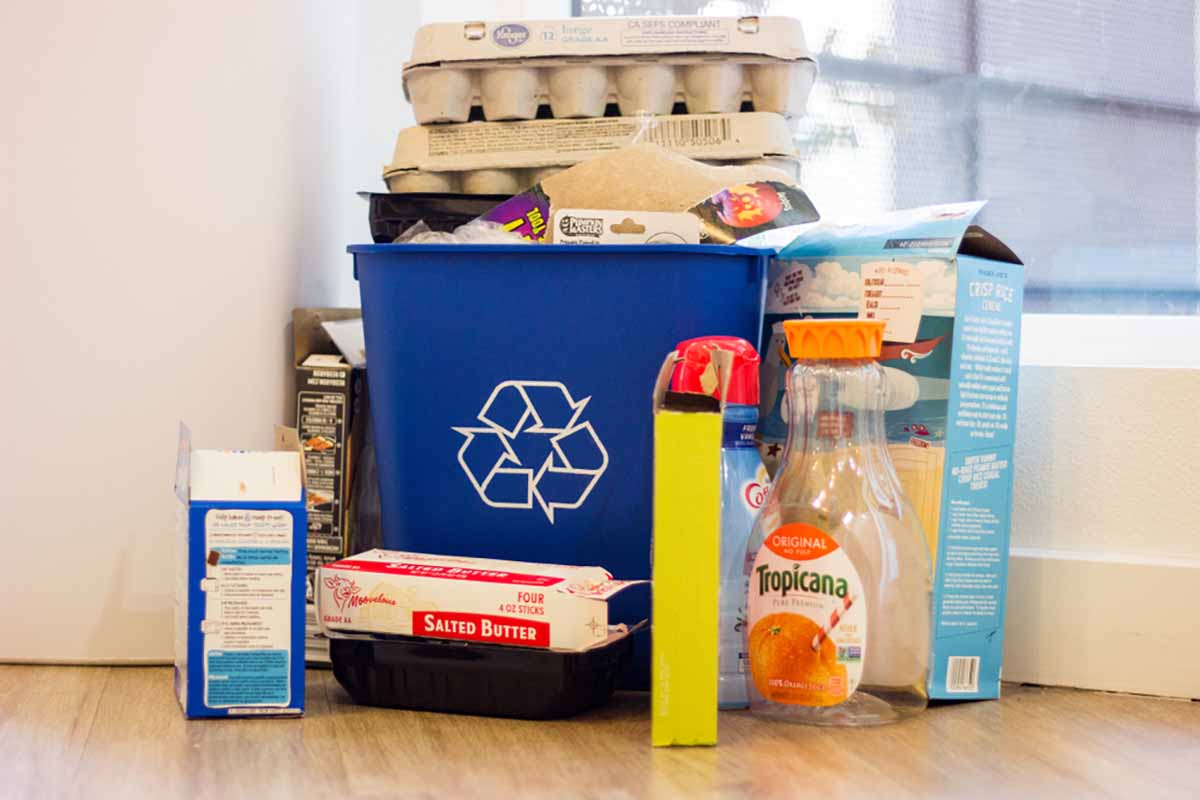
The committee envisions a uniform statewide “accepted recyclables list,” as well as “truth-in-labeling” requirements, which would require packaging to have accurate labeling indicating whether it should be recycled, composted or disposed of in the trash. Life-cycle analyses would inform the end-of-life management that different materials receive.

The state would also develop a framework to permit and certify MRFs. The goals would be to ensure clean bales are sent downstream, helping to protect residents living near the bale buyers, and to ensure that newly developed MRF employee equity goals and standards are achieved.

Under the committee’s proposal, Oregon would also establish a waste prevention and reuse grant program to help local governments, schools and businesses shift from single-use packaging to durable reusable alternatives.

The recommendations are part of a DEQ-led project to improve the state’s recycling system, which, like others, has been challenged by downstream market changes in recent years. The committee has been working since May 2018, several months after China imposed scrap import bans as part of its National Sword campaign.

Earlier this year, DEQ released a report that was prepared by consulting firm Resource Recycling Systems (RRS) and laid out five possible approaches. They ranged from adding permitting and certification requirements for MRFs, to implementing full-fledged EPR systems.

Policies recommendations in Washington

The Washington Department of Ecology hired Seattle-based Cascadia Consulting Group to study and help develop proposed solutions for the problem of plastic packaging waste. The exercise is in response to legislation passed last year.

On Sept. 14, the department uploaded final recommendations from Cascadia Consulting and three firms it collaborated with: Eunomia Research & Consulting, Full Circle Environmental, and MORE Recycling. Their main recommendations are for the Evergreen State to implement EPR for all consumer packaging and paper, create a deposit system for all beverage containers (Washington has no bottle bill; Oregon has the oldest bottle deposit program in the U.S.) and impose recycled-content requirements for all plastic packaging.

“These policies create feedback loops between producers of plastic packaging and those involved in its collection and management after it enters the solid waste system,” according to the report. “These policies use economic incentives and outcome-based regulatory principles to solve problems related to both the supply of and demand for plastic packaging, and they are designed to ensure that plastic packaging management systems are supported with sustainable funding sources.”

As a next step, Ecology department staff will take the consultants’ report and submit their own recommendations to the legislature by Oct. 31.

A number of studies have been produced through the project. In June, Plastics Recycling Update wrote about one focused on the use of post-consumer resin in packaging.

A version of this story appeared in Resource Recycling on September 29.

 

Tags: EPRIndustry Groups
TweetShare
Jared Paben

Jared Paben

Related Posts

House resolution aims to make recyclability central to product design

NY EPR bill fails to advance after third try

byStefanie Valentic
June 8, 2026

This marks the third session in which the bill cleared the Senate only to stall in the Assembly.

Rainforest

Inside the Circle: What the rainforest can teach us about EPR

byBill Shireman
June 8, 2026

We have a lot to learn from jungles, particularly as we fight the thorny problem of plastic pollution.

CalRecycle withdraws proposed regs for SB 54

Oceana, NRDC, CAW sue CalRecycle over SB 54 regs

byStefanie Valentic
June 5, 2026

The groups allege that the new regulations have too many loopholes for packaging producers.

Rare look inside the world’s largest plastics recycler

Mass balance matters: Why different rules can lead to different outcomes 

bySarah Edwards, Eunomia
June 5, 2026

Mass balance is a critical piece of the recycling puzzle—and one that's important to get right.

Circular Materials to supply PlasCred chem recycling plant

Circular Materials to supply PlasCred chem recycling plant

byAntoinette Smith
June 4, 2026

The planned chemical recycling plant in Alberta, Canada, also has a five-year, fixed price offtake contract, ahead of reaching a...

In My Opinion: Comparing the nation’s first packaging EPR laws

What Maine’s vape EPR law means for recyclers

byStefanie Valentic
June 4, 2026

Maine is the first state to require vape manufacturers to fund end-of-life management for their products. Vape recycler Michael Duckworth...

Load More
Next Post

LyondellBasell deepens involvement in recycling sector

More Posts

Recycling industry addresses Beyond Plastics report

Recycling industry addresses Beyond Plastics report

May 26, 2026
House resolution aims to make recyclability central to product design

NY EPR bill fails to advance after third try

June 8, 2026
Fire at an EMR recycling facility in Camden, New Jersey May 29, 2026.

EMR faces shutdown calls after numerous fires

June 2, 2026
CalRecycle withdraws proposed regs for SB 54

Oceana, NRDC, CAW sue CalRecycle over SB 54 regs

June 5, 2026
IT asset disposition and electronics recycling: Now and then

$60 billion in AI servers will create an ITAD challenge

June 3, 2026
The independent ITAD at a crossroads

DMD acquires ITAD firm Lifespan, outlines acquisition strategy

June 2, 2026
Our top stories from June 2021

Colorado advances EV battery EPR law

June 3, 2026
In My Opinion: Comparing the nation’s first packaging EPR laws

What Maine’s vape EPR law means for recyclers

June 4, 2026
Rare look inside the world’s largest plastics recycler

Mass balance matters: Why different rules can lead to different outcomes 

June 5, 2026
Circular Materials to supply PlasCred chem recycling plant

Circular Materials to supply PlasCred chem recycling plant

June 4, 2026
Load More

About & Publications

About Us

Staff

Archive

Magazine

Work With Us

Advertise
Jobs
Contact
Terms and Privacy

Newsletter

Get the latest recycling news and analysis delivered to your inbox every week. Stay ahead on industry trends, policy updates, and insights from programs, processors, and innovators.

Subscribe

Welcome Back!

Login to your account below

Forgotten Password?

Retrieve your password

Please enter your username or email address to reset your password.

Log In

Add New Playlist

No Result
View All Result
  • The Latest
  • Analysis
  • Recycling
  • E-Scrap
  • Plastics
  • Policy Now
  • Conferences
    • E-Scrap Conference
    • Plastics Recycling Conference
    • Resource Recycling Conference
    • Textiles Recovery Summit
  • Magazine
  • About Us
  • Advertise
  • Archive
  • Jobs
  • Staff
Subscribe
This website uses cookies. By continuing to use this website you are giving consent to cookies being used. Visit our Privacy and Cookie Policy.