
Resource Recycling
  • The Latest
  • Analysis
    • All
    • Certification Scorecard
    • Industry Announcements
    • Opinion
    Malaysia clamps down on illegal e-waste imports amid probes

    Malaysia clamps down on illegal e-waste imports amid probes

    URT builds alliance to remake electronics plastics at scale

    ICYMI: Top 5 e-scrap stories from January 2026

    Server resale values surge in AI-driven markets

    Certification scorecard for the week of Feb. 2, 2026

    Auditors warn EU may fall short on critical metals

    Auditors warn EU may fall short on critical metals

    Industry announcements for January 2026

    Industry announcements for February 2026

    ICYMI: Top 5 recycling stories from January 2026

    Certification scorecard for week of Jan. 26, 2026

    New entrepreneurs bring renewed energy to e-cycling

    Europe pulls ahead on ITAD now while US growth remains slower

    Recyclers are facing unprecedented changes

  • Conferences
  • Publications

    Other Topics

    Textiles
    Organics
    Packaging
    Glass
    Brand Owners

    Metals
    Technology
    Research
    Markets
    Grant Watch

    All Topics

Subscribe
No Result
View All Result
Resource Recycling
  • The Latest
  • Analysis
    • All
    • Certification Scorecard
    • Industry Announcements
    • Opinion
    Malaysia clamps down on illegal e-waste imports amid probes

    Malaysia clamps down on illegal e-waste imports amid probes

    URT builds alliance to remake electronics plastics at scale

    ICYMI: Top 5 e-scrap stories from January 2026

    Server resale values surge in AI-driven markets

    Certification scorecard for the week of Feb. 2, 2026

    Auditors warn EU may fall short on critical metals

    Auditors warn EU may fall short on critical metals

    Industry announcements for January 2026

    Industry announcements for February 2026

    ICYMI: Top 5 recycling stories from January 2026

    Certification scorecard for week of Jan. 26, 2026

    New entrepreneurs bring renewed energy to e-cycling

    Europe pulls ahead on ITAD now while US growth remains slower

    Recyclers are facing unprecedented changes

  • Conferences
  • Publications

    Other Topics

    Textiles
    Organics
    Packaging
    Glass
    Brand Owners

    Metals
    Technology
    Research
    Markets
    Grant Watch

    All Topics

Subscribe
No Result
View All Result
Resource Recycling
No Result
View All Result
Home Recycling

How packaging EPR could take shape in Oregon

Dan LeifbyDan Leif
February 4, 2020
in Recycling
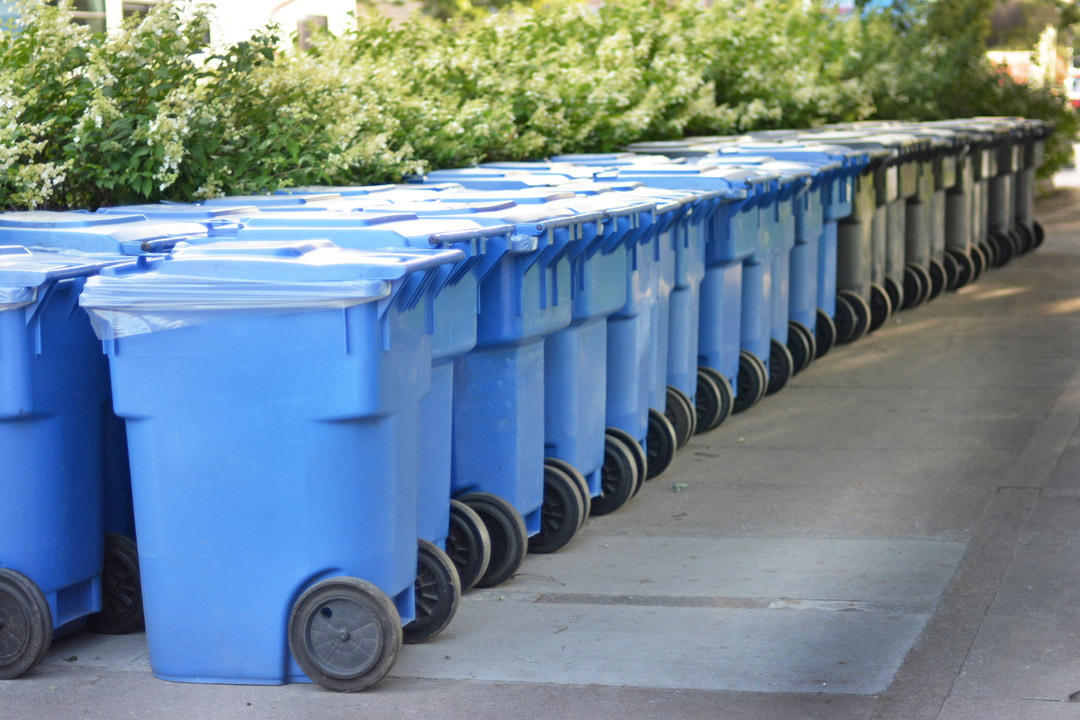
 A steering committee is reviewing five scenarios to potentially reshape the future of recycling in Oregon. | kipgodi/Shutterstock

Industry leaders in one West Coast state are pondering a variety of different frameworks to help recycling programs and processors find greater resilience in the wake of National Sword. Producers may ultimately be asked to play a big role in the solution.

Since May 2018, a steering committee of 16 recycling stakeholders convened by the Oregon Department of Environmental Quality (DEQ) has been discussing strategies to “modernize the Oregon recycling system.” As part of that work, DEQ commissioned consultancy RRS to develop a report laying out five possible pathways to progress.

The report, published last week and presented Jan. 31 at a public information session in the state capital of Salem, offers five separate framework “scenarios” to potentially reshape Oregon recycling in the years ahead.

The scenarios range dramatically in terms of how much change would come to Oregon’s existing system.

On one end is a structure in which recycling in Oregon would stay largely the same with the exception of a new permitting/certification protocol for MRFs to help state officials instill basic processing requirements.

On the other end is full-fledged extended producer responsibility (EPR) for paper and packaging, where brands and retailers would be responsible for funding and managing the collection, transport and processing of recyclables across the state. Currently, no U.S. state has ushered in EPR for paper and packaging, though discussion around the approach has grown over the past two years as recycling programs have felt the effects of major declines in pricing for key recyclables.

In Oregon, the steering committee is not obliged to choose a single scenario, and moving toward implementation on any of them would likely require legislation that would not be introduced to lawmakers until 2021 at the earliest. But the concepts laid out in the report do show the general direction of Oregon’s recycling revamp.

“By identifying the core elements, advantages, and challenges of the five scenarios evaluated, this report aims to inform consideration of options by all stakeholders and deliberation within Oregon’s Recycling Steering Committee,” notes the framework report.

Feeling market reverberations

It’s no surprise Oregon is looking to take action. Municipalities and MRFs in the state of 4.2 million people have been particularly hard hit by shifts in global recyclables markets that have occured since China implemented its National Sword restrictions on material imports at the outset of 2018.

“Oregon’s current policy framework was created decades ago when no one imagined commingling [of collected recyclables],” David Allaway of Oregon DEQ said in opening remarks at the public information session last week. “National Sword has shined a light on its limitations.”

The five scenarios laid out in the RRS report are based on research into a wide variety of different recycling frameworks used in jurisdictions across the globe. The steering committee is reviewing the concepts, and starting with a meeting March 18, that committee will try to develop a consensus for a plan to bring forward.

“DEQ and other steering committee members will spend the next six weeks-plus chewing on this,” noted Allaway, who represents DEQ on the committee.

Under the first scenario presented to the steering committee, MRFs in Oregon would need to be certified or permitted by DEQ, allowing the state agency to set certain pricing and material quality standards. The agency would also have increased authority to create a statewide “accepted materials” list.

In scenario two, the state itself would pay for the cost of recyclables processing in MRFs. This would require a substantial funding source – possibly through tax or tip-fee increases – but it would remove the element of market volatility from local programs, which would just need to worry about collecting materials.

Such a scenario would lead to “equal access to processing for all parts of state,” noted Resa Dimino, who presented the report details on behalf of RRS. “Whether you are close or far from MRF, your costs would be the same.”

The final three scenarios would start to incorporate funding from packaging and paper producers.

Scenario three, described in the report as “post-collection producer responsibility,” would have MRFs be permitted or certified by the state. But the processors would then contract with a producer responsibility organization (PRO) that represents brands and retailers selling paper and packaging in the state. The PRO funding would cover the costs of material transport from communities as well as the actual processing of recyclables.

Scenario four takes it a step further, with the PRO covering processing, transport and collection. In this scenario, called “producer responsibility with local control,” communities would continue to handle recycling collection (either using city crews or private contractors) and the PRO would reimburse cities the costs to collect.

The final scenario – “full producer responsibility with optional local involvement” – requires producers to contract for collection of materials as well as transport and processing. If a community wanted to continue managing collection, it would be able to serve as the contractor for the PRO. If the community wanted to remove itself from recycling collection all together, it would have that option, and the PRO would contract private companies to manage collection in that area.

“The local government could still do garbage and organics,” said Dimino of RRS. “But recycling would be separated out.”

As the Oregon steering committee moves forward assessing the five scenarios and what members think could work for the state, DEQ is circulating a survey for industry members who want to bring their voice into the conversation. To participate in the survey, email DEQ staffer Tom Lang at [email protected].
 

Tags: EPRLocal ProgramsMRFsResearch
TweetShare
Dan Leif

Dan Leif

Dan Leif is the managing editor at Resource Recycling, Inc., which publishes Resource Recycling, Plastics Recycling Update and E-Scrap News. He has been with the company since 2013 and has edited different trade publications since 2006. He can be contacted at [email protected].

Related Posts

Greenchip launches fund for community impact and trust

byScott Snowden
February 5, 2026

The Greenchip Legacy Foundation formalizing the company's community work while reinforcing its 2026 focus on domestic processing, compliance and transparency...

UT Austin spinout Supra launches to recover rare earths

byScott Snowden
February 3, 2026

Supra Elemental Recovery launched today, aiming to recover gallium and scandium from US waste streams to help reduce import dependence...

States push recycling reform forward in new year

byStefanie Valentic
February 2, 2026

New Jersey just passed a bill restricting single-use plastic items, California has opened another round of public comment on SB...

Cirba Solutions: Battery fires stoking EPR bill movement

byStefanie Valentic
February 2, 2026

As batteries appear in everything from light-up shoes to electric vehicles, new EPR laws are reshaping recycling requirements.

Stakeholders respond to California recyclability report

CalRecycle opens SB 54 draft for comments

byStefanie Valentic
February 2, 2026

Editor’s Note: California EPR will be featured in sessions at the co-located 2026 Resource Recycling Conference and Plastics Recycling Conference,...

Emerging state EPR shows trend toward harmonization

Emerging state EPR shows trend toward harmonization

byAntoinette Smith
January 29, 2026

During an APR webinar, recycling policy experts explored the growing list of EPR bills for packaging, and the implications for...

Load More
Next Post

DS Smith expands North American recycled fiber capacity

More Posts

Agilyx leaves US chem recycling, Houston sorting center

Agilyx leaves US chem recycling, Houston sorting center

February 4, 2026

Greenchip launches fund for community impact and trust

February 5, 2026
Stakeholders respond to California recyclability report

CalRecycle opens SB 54 draft for comments

February 2, 2026

Eastman looks to recycling plant to drive growth

February 2, 2026

Cirba Solutions: Battery fires stoking EPR bill movement

February 2, 2026
Third ExxonMobil recycling plant operational

Third ExxonMobil recycling plant operational

February 4, 2026
Chinese processing group details goals for US visit

AMP lays out vision of next-generation, AI-driven MRFs

July 24, 2024

Allied Industrial portfolio companies complete two early-year deals

February 5, 2026
Ace Metal and Metro Metals take the most weight in Washington

US-EU trade rift adds risk now for ITAD and e-scrap trade

February 2, 2026
Emerging state EPR shows trend toward harmonization

Emerging state EPR shows trend toward harmonization

January 29, 2026
Load More

About & Publications

About Us

Staff

Archive

Magazine

Work With Us

Advertise
Jobs
Contact
Terms and Privacy

Newsletter

Get the latest recycling news and analysis delivered to your inbox every week. Stay ahead on industry trends, policy updates, and insights from programs, processors, and innovators.

Subscribe

Welcome Back!

Login to your account below

Forgotten Password?

Retrieve your password

Please enter your username or email address to reset your password.

Log In

Add New Playlist

No Result
View All Result
  • The Latest
  • Analysis
  • Recycling
  • E-Scrap
  • Plastics
  • Policy Now
  • Conferences
    • E-Scrap Conference
    • Plastics Recycling Conference
    • Resource Recycling Conference
    • Textiles Recovery Summit
  • Magazine
  • About Us
  • Advertise
  • Archive
  • Jobs
  • Staff
Subscribe
This website uses cookies. By continuing to use this website you are giving consent to cookies being used. Visit our Privacy and Cookie Policy.