

At this point, no informed person can honestly deny the world’s plastic waste issue.
Researchers have delivered sobering statistics about the amount of plastics ending up in waterways. Media outlets have offered a regular stream of stories and imagery, mobilizing consumers and nonprofit groups.
Today, the plastics industry itself is quick to acknowledge the severity of the problem.
“We cannot continue business as usual,” the American Chemistry Council’s Steve Russell noted recently. “It’s time for change.”
That quotation from Russell came in “Plastics Wars,” an hour-long episode aired by PBS investigative news show “Frontline” last week. (Russell, who retired from the ACC earlier this year, was the head of the group’s plastics division at the time he was interviewed.)
The “Frontline” report has been on the recycling industry radar for some time now. In fact, the Plastics Recycling Update editorial department offered industry background information to “Frontline” producers in mid-2019.
The depth of reporting “Frontline” was clearly doing around plastic waste and the show’s reputation for in-depth insight seemed to offer hope that we’d be in for a well-researched perspective on why plastics mismanagement keeps happening – and what we as a society should be trying to do about it.
Surprisingly, however, the news show puts its focus on the relationship between the plastics industry and recycling, failing to note some important recycling realities in the process. What is lost is an opportunity to investigate the deeper factors at the heart of plastics pollution.
A strategy for backlash
The “Frontline” team, represented on-screen by correspondent Laura Sullivan, certainly does bring fresh reporting to the table.
Through research and interviews with former plastic executives, the episode makes the point that plastics giants have developed a fairly trusted strategy of deflecting ire from the general public across decades.
America’s environmental awakening in the 1970s, the Mobro barge incident in the 1980s, the marine plastics crisis of today – all have resulted in major criticism of polymers and packaging. In each case, “Frontline” points out, plastic makers have used public messaging to highlight the benefits of their products and rolled out investment and pledges around recycling to help assuage policymakers bent on product bans.
The first part of the strategy – hyping the upsides of plastics – is not exactly shocking. As Don Loepp of Plastics News wrote last week: “No one should be surprised when an industry trade group is exposed for advocating on behalf of the industry. That’s not a scandal.”
But what about the second half of resin makers’ pollution-response plan? If plastic companies and their lobbyists regularly promise to help improve plastics recycling but materials recovery regularly fizzles, citizens and lawmakers need to be alerted.
It’s here that “Frontline” goes all in.
The reporting team shows low-value plastics buried in a West Coast landfill. It tracks the fate of exported plastics, dumped illegally in residential areas of Indonesia. It introduces viewers to Garten Recycling, a Salem, Ore. organization that was the beneficiary of a high-priced, industry-backed recycling system in 1994, only to see it sold for scrap years later. Then we see a similar plastics sortation line that was sited in Portland, Ore. last year as part of a pilot project coordinated by the Plastics Industry Association and others.
The viewer is left with the impression that the plastics industry is up to its well-worn tricks – promising to grow recycling despite lackluster results in the past.
“Deja vu all over again,” Lew Freeman, a former Society of the Plastics Industry executive who now runs an environmental group, tells Sullivan.
Few details on recycling innovation
But in reality, the narrative is not that cut and dry.
First is the fact that the plastics recycling industry in the U.S. is far more capable than “Frontline” seems to want viewers to believe.
Sullivan does note early in the episode that “some items, like milk jugs and PET are easier to recycle, so there’s money to be made.” But beyond that sentence and a line stating that the plastics industry has backed mechanical and chemical recycling efforts of late, there is no recognition that any plastics recycling actually occurs in this country.
The viewer is left with the impression that the plastics industry is up to its well-worn tricks – promising to grow recycling despite lackluster results in the past.
We meet one individual who works in U.S. plastics recovery – Sunil Bagaria of New Jersey-based GDB International – but he functions primarily to show recovered materials being sent to export, setting up the powerful segment on plastic dumping in Indonesia.
Certainly, it’s not the responsibility of “Frontline” to highlight plastics recycling success stories – the show is engaged in investigative journalism, not PR. But the episode ends up implying plastics recycling innovation isn’t happening. That just isn’t true.
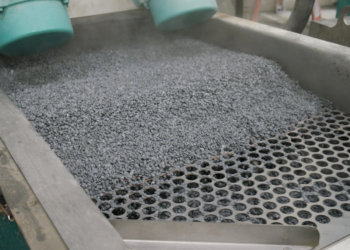
Advancements in plastics processing in North America have been a regular occurrence, and these have included improvements for the lower-value materials that are too often polluted or landfilled. Examples from just the past several months include two separate operations geared toward recycling PET thermoforms, a processing expansion and important domestic offtake agreement around recycled LDPE, and a multi-stakeholder effort that has opened the door to successful sortation of black plastics.
Such work has come alongside growth in the “bread and butter” of U.S. plastics recycling – bottle reclamation. Seeing greater demand for recycled PET from brands, some U.S. reclaimers have opened additional facilities and others have been acquired by virgin plastic manufacturers. Domestic processing of recovered plastic bottles increased from 1.5 billion pounds in 2008 to over 2.5 billion pounds in 2018, according to the industry’s most recent bottle recycling report.
This is not to say that the U.S. plastics recycling industry is just rolling along problem-free – the U.S. bottle recycling rate is moving in the wrong direction, for instance. But the work continuously being done in the recycling marketplace does deserve recognition in any report diving into the wider issue of plastic waste. And to ignore it completely runs the risk of causing viewers to incorrectly assume any and all plastics they put in their recycling carts will be trashed.
Additionally, though it is certainly true the plastics industry continues to turn to recycling-based proclamations when backlash begins, it’s not quite fair to say that plastic makers are approaching the issue just as they always have.
“Frontline” interviews former plastics exec Ron Liesemer, who says that in the late 1980s, he was handed the mission to make plastics recycling happen in America. “I had no staff, but I had millions of dollars to do what I felt was necessary,” he says.
Today, plastics companies are still moving money into recycling, but their approaches are much better informed. One example is The Recycling Partnership, which is supported by plastics companies and the brands that rely on plastic packaging, as well as stakeholders from other material sectors.
The group includes dozens of staffers, most of whom have a lot of experience actually setting up recycling programs and processing material. That’s a far cry from sending one plastics leader out into the field with a pile of money and a pipe dream.
Not surprisingly, the plastic efforts from The Recycling Partnership have been far more data-oriented and holistic than the failed Garten Recycling sort system and other plastic-backed projects of the past.
Time to disrupt the economics
Still, the fact remains that the current recycling infrastructure can’t keep pace with plastic production and the material evolution happening in the market.
“Frontline” drives home the important (and increasingly cited) statistic that global production of new plastics is on pace to triple by 2050.
The issue we need to try to better understand and address is not the plastic industry’s public perception playbook – rather, it’s the economics lying at the foundation of plastics production itself.
This, of course, is not happening by accident. The growth of the shale gas industry in North America and other factors have helped reduce costs for the building blocks of plastic. And fuel efficiency and renewable energy trends are expected to reduce demand in traditional petroleum markets over time.
It’s no surprise then that companies such as Chevron, Dow and ExxonMobil are putting their vast supply chains and R&D departments to work to find ways to boost production of plastic products that have already shown notable competitive advantages in the marketplace.
The issue we need to try to better understand and address is not the plastic industry’s public perception playbook – rather, it’s the economics lying at the foundation of plastics production itself.
Certainly, there is plenty of complexity in why more and more single-use plastics are moving onto grocery store shelves, but the situation can also be boiled down to basic terms: Plastics have proven to fulfill society’s material-use needs in an increasingly cost-effective manner. And, as “Frontline” points out, without action, that’s the trend we can expect to see for decades to come.
The issue with the current economic equation is that the environmental and social impacts of plastic production and post-use waste are not accounted for in the cost of resin manufacturing, the cost of use by a brand owner, or the cost consumers pay at checkout.
Solving the quagmire of how to somehow account for the environmental costs of plastic is where the real work (and debate) lies.
Could legislative approaches like extended producer responsibility or expanded container deposits play a role? Should the industry institute a tax or fee on resin sales to create a continuous funding source for end-of-life management? Are there other answers in the growing “circular economy” discussions taking place across the globe?
Clearly, implementing some of the frameworks noted above would require big shifts from the plastics industry’s usual positioning. If the ACC’s Russell is to believed, plastic makers are ready to move beyond business as usual.
With plastic pollution at a crisis level, that needs to be the mindset of stakeholders across the board.
Dan Leif is the managing editor of Plastics Recycling Update and can be contacted at dan@resource-recycling.com.
A version of this story appeared in Resource Recycling on April 7.