


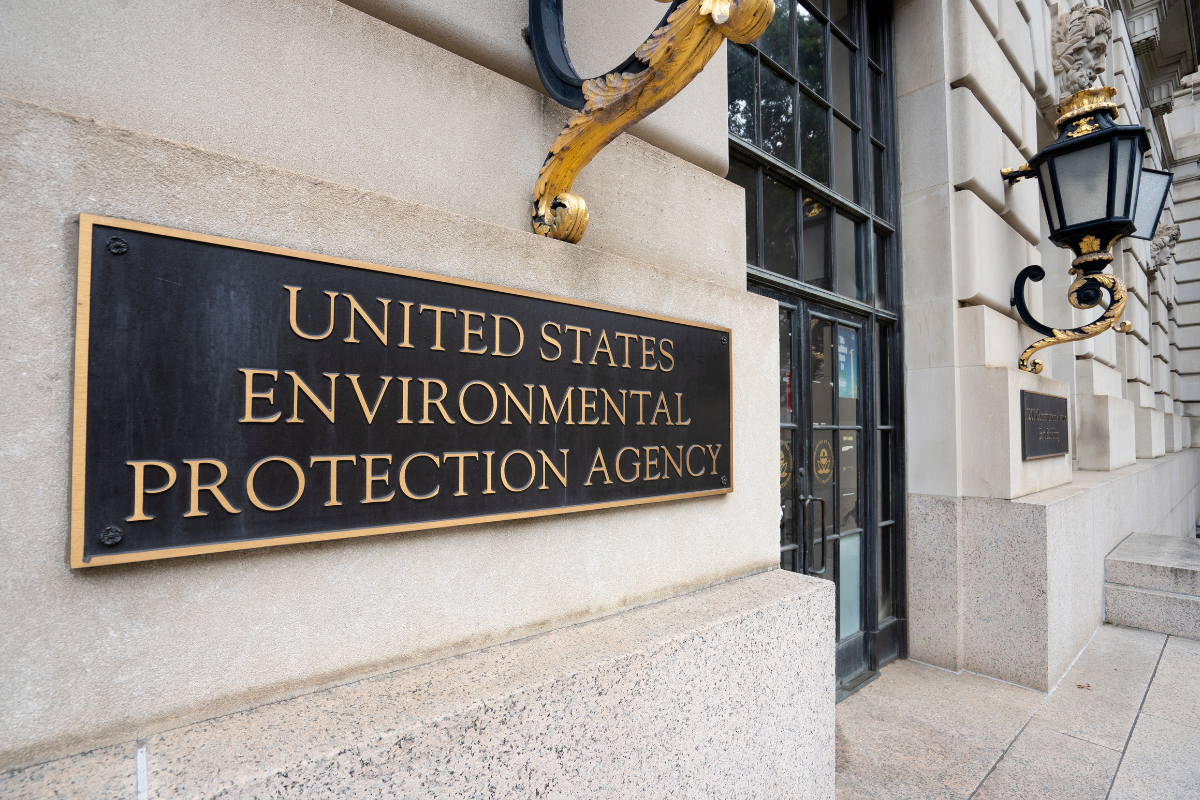
There are few indications how incoming U.S. EPA administrator Lee Zeldin might shift the agency’s solid waste and recycling work, but he won the support of multiple recycling industry associations, and stakeholders say he likely brings an understanding of local solid waste management challenges.
Zeldin, a Republican and former U.S. representative from New York, was nominated for the job in November and was confirmed on a 56-42 Senate vote on Jan. 29. He will now lead the government agency that has historically been closest to the recycling sector.
EPA oversees a variety of recycling data collection and reporting projects through its Office of Resource Conservation and Recovery, producing the periodic Facts and Figures report that provides a national look at waste generation and diversion. The agency also administers numerous grant programs for materials recovery, some of which have been recently paused by executive order.
During his confirmation hearing, Zeldin wasn’t asked directly about the recycling system as a whole, although he was asked about chemical recycling and PFAS, or “forever chemicals.”
During that hearing, Sen. Jeff Merkley, D-Oregon, asked whether Zeldin was familiar with chemical recycling’s limited applicability and the chemical industry’s stance of, as Merkley framed it, “don’t worry, be happy, on plastics.” Zeldin said he was aware.
When asked whether he knew about what Merkley characterized as inaccuracies that are publicized about chemical recycling, Zeldin noted he is researching and reading “all that’s being provided on all sides of this issue.”
During that hearing, Zeldin also referenced the Save Our Seas and Save Our Seas 2.0 acts, which were bipartisan legislative efforts to tackle marine plastic pollution through a more industry-friendly approach. The American Chemistry Council strongly supported the bills.
These bills “should be a model to be followed of bipartisanship to go even further,” Zeldin said.
Sen. Dan Sullivan, R-Alaska, also touched on the Save Our Seas legislation, describing it as the “most comprehensive ocean clean-up legislation in the history of the country.” Sullivan asked for Zeldin’s support for additional marine debris clean-up efforts, noting that lawmakers are “already working on 3.0.” Sullivan also said the Trump administration is “very committed” to reducing ocean plastic pollution.
Zeldin committed to continuing to implement provisions of the past Save Our Seas bills and to support future marine debris reduction efforts.
Local experience means familiarity with industry
The fact Zeldin hails from Long Island, and the fact he served not only as a Congressional representative but also in the state legislature suggest he brings certain knowledge to the job.
“He has to be aware of the impacts of garbage on local politics in particular,” said Chaz Miller, a recycling industry expert who worked for the EPA in the 1970s and 1980s before shifting to the private sector. “You just can’t avoid that on Long Island.”
Long Island has had its share of waste management challenges over the years, including current landfill constraints. And trash that largely originated on Long Island became world famous — and helped spur a rush of new interest in the recycling industry — in 1987 with the Mobro garbage barge saga.
Zeldin’s experience representing Long Island contributed to the National Waste & Recycling Association’s support for his nomination.
“As a lifelong Long Islander, Mr. Zeldin successfully fought in the State Senate and Congress for coastal resilience and nature preservation projects and repeatedly looked for bipartisan compromise on environmental issues,” wrote Michael Hoffman, president and CEO of NWRA, in a statement shared by the EPA.
Hoffman added that Zeldin “continuously sought a balance between economic development and advocating on behalf of New York’s environment.” The Recycled Materials Association, which strongly supported his nomination before the vote, issued similar congratulations in a written statement to Resource Recycling this week.
“The recycled materials industry and ReMA strongly believe that achieving environmental protection while also securing economic growth and fostering innovation is possible and look forward to working with Administrator Zeldin to meet these goals,” ReMA wrote.
The Glass Packaging Institute added in a statement to Resource Recycling that the group looks forward to working with Zeldin to advance recycling policy and infrastructure, “to help make domestic glass industry more resilient with access to more domestic materials.”
Previous Trump term brought mixed recycling interest
During President Trump’s first term, his EPA administrator pick — Scott Pruitt, confirmed in 2017 — drew ire from former EPA employees, including officials in the agency’s Office of Land and Emergency Management, which oversees EPA’s recycling and sustainable materials management work.
One criticism was that Pruitt, a former attorney general from Oklahoma, was so focused on deregulation that he showed little interest in working with corporate or government partners to improve materials management.
But Pruitt lasted less than a year and a half, resigning in 2018 after facing mounting allegations of ethics violations, and his successor struck a far different tone towards the recycling sector.
Andrew Wheeler, who took the top job after Pruitt, brought previous EPA experience and a willingness to work closely with the recycling industry. His time in the administrator position brought three consecutive America Recycles Day summit events in Washington, in 2018, 2019 and 2020.
These events brought together industry groups and other recycling stakeholders for a Recycling Summit, which coincided with public statements by the agency affirming support for the recycling system. These ranged from general pledges to improve materials recovery in 2018, to Wheeler in 2020 announcing EPA’s goal to hit a 50% national recycling rate by 2030.
And Wheeler himself spoke at the events, showing interest from the top of the agency in topical recycling challenges. For instance, in 2020, Wheeler described how the EPA had “led a revival of the United States recycling system, which faces significant challenges ranging from consumer confusion, reduced international markets and old recycling infrastructure that has not kept pace with modern material streams.”
Project 2025 goals for solid waste work
One additional factor in how the EPA could shift its recycling work during this Trump administration is how much Zeldin pulls from the Project 2025 document, which outlines priorities for EPA’s Office of Resource Conservation and Recovery.
The Trump administration distanced itself from the document prior to the election, and how closely the Trump administration has been following Project 2025 has been the subject of much debate and analysis since he took office Jan. 20.
The relevant section of Project 2025 offers several bullet points to “streamline waste management.” The list includes specific regulatory changes covering landfills, changing enforcement responsibility for air emissions standards and shifting the hazardous waste e-manifest system to be all-digital.
It also advises the agency to “modify regulations that impede resource efficiency, recycling, and reuse by providing clearly that these materials are not waste. This can be done by promulgating a rule that provides an alternative pathway to hazardous waste regulation to allow the transport of material to legitimate recyclers or back to manufacturers to support the recycling and reuse of material.”
The document also advises changes to the Superfund law, including rolling back the agency’s 2024 designation of PFAS as a hazardous material that could trigger cleanup cost liability. That has been a key concern for some recycling advocates.