




Resource Recycling
  • The Latest
  • Analysis
    • All
    • Certification Scorecard
    • Industry Announcements
    • Opinion
    Industry announcements for January 2026

    Industry announcements for May 2026

    Apple store

    Apple leads on inputs, faces questions on ITAD

    Unlocking the power of source reduction in US EPR

    Unlocking the power of source reduction in US EPR

    Following petition, Microsoft extends Windows 10 support

    Windows AI Recall is pushing data destruction upstream

    Certification Scorecard — Week of April 27, 2026

    Five trends shaping PCR packaging to 2031

  • Conferences
    • Resource Recycling Conference
    • Plastics Recycling Conference
    • E-Scrap: The Longevity Conference
    • Textiles Recovery Summit
  • Publications
    • E-Scrap News
    • Plastics Recycling Update
    • Policy Now
    • Resource Recycling
    • Other Topics
      • Brand Owners
      • Critical Minerals
      • Glass
      • Grant Watch
      • Markets
      • Organics
      • Packaging
      • Research
      • Technology
      • Textiles
      • All Topics
Subscribe
No Result
View All Result
Resource Recycling
  • The Latest
  • Analysis
    • All
    • Certification Scorecard
    • Industry Announcements
    • Opinion
    Industry announcements for January 2026

    Industry announcements for May 2026

    Apple store

    Apple leads on inputs, faces questions on ITAD

    Unlocking the power of source reduction in US EPR

    Unlocking the power of source reduction in US EPR

    Following petition, Microsoft extends Windows 10 support

    Windows AI Recall is pushing data destruction upstream

    Certification Scorecard — Week of April 27, 2026

    Five trends shaping PCR packaging to 2031

  • Conferences
    • Resource Recycling Conference
    • Plastics Recycling Conference
    • E-Scrap: The Longevity Conference
    • Textiles Recovery Summit
  • Publications
    • E-Scrap News
    • Plastics Recycling Update
    • Policy Now
    • Resource Recycling
    • Other Topics
      • Brand Owners
      • Critical Minerals
      • Glass
      • Grant Watch
      • Markets
      • Organics
      • Packaging
      • Research
      • Technology
      • Textiles
      • All Topics
Subscribe
No Result
View All Result
Resource Recycling
No Result
View All Result
Home Recycling

Revised formula gives lower OCC recycling rate

Colin StaubbyColin Staub
November 19, 2024
in Recycling
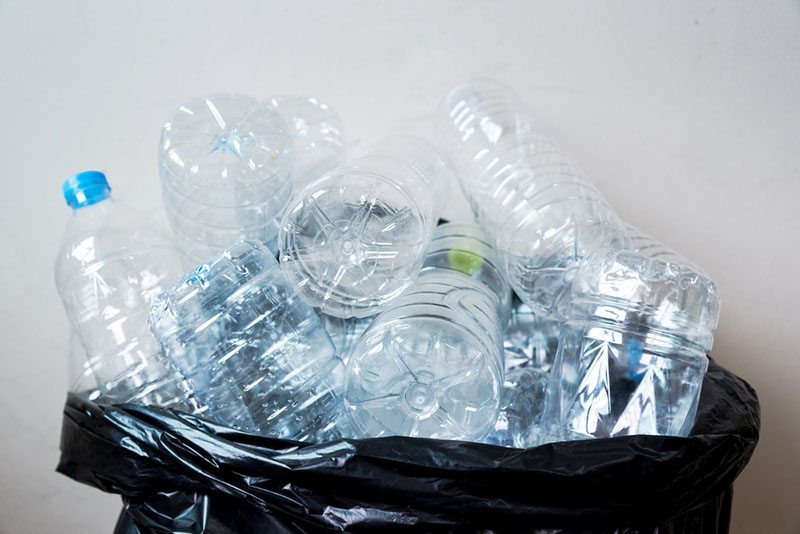
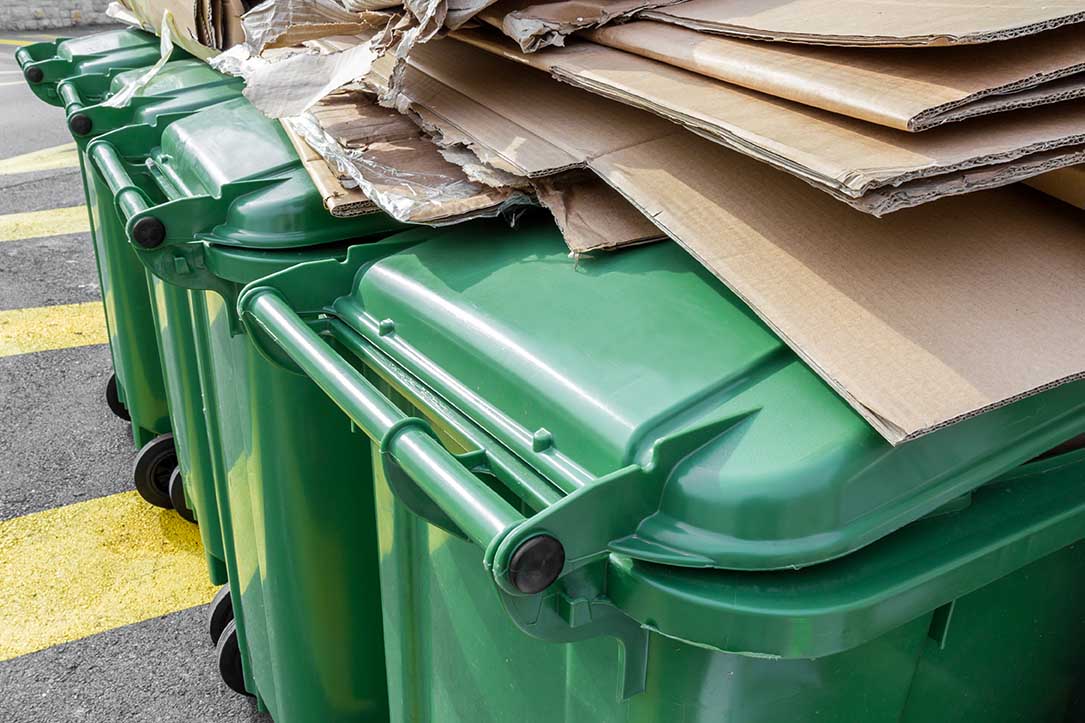
The industry group’s recycling rate now considers additional international trade data, allowing it to better capture imported material that ends up in the recycling stream. | Kyna Studio/Shutterstock

The American Forest & Paper Association has overhauled its methodology for calculating fiber recycling rates, bringing a significantly lower OCC recovery figure than the industry previously reported.

The 2023 U.S. paper recycling rate came in at a range of 65-69%, AF&PA announced during a Nov. 14 media briefing, and the OCC recycling rate came in at a range of 71-76%.

The rates were calculated using a new “supply-based” methodology that aims to capture the amount of material recycled out of the amount of that material that’s available for recycling, including imports. The previous methodology was “use-based,” looking specifically at the amount of paper recycled as a share of the amount of paper produced in the U.S., minus exports of new paper.

“Utilizing extensive industry data, subject matter expertise and detailed U.S. trade data, this updated methodology now reflects the amount of paper recycled as a share of the amount of paper available for recovery, rather than the share of the amount of paper used,” said Terry Webber, AF&PA’s vice president of industry affairs, during the press call.

Webber added AF&PA believes it is “the most thorough and fact based recycling rate possible,” and he said the changes “acknowledge the way U.S. consumers interact with our recycling system is changing, combined with rapidly evolving global supply chain and paper recovery markets.”

It represents a significant change for how the OCC recycling rate is calculated: In 2022, AF&PA reported an OCC recycling rate of 93%, or roughly 20 percentage points higher than its 2023 rate. For an apples-to-apples comparison, AF&PA recalculated the 2022 rate under its new methodology and found it was a range of 70-75%.

The paper recycling rate has remained closer to its value under the previous calculation. Under the old method, it was 68% in 2022, and recalculated, it is 62-66%.

Abigail Sztein, AF&PA’s executive director of recovered fiber, said during the press call that the new rates are reported as a range “to acknowledge aspects of the calculations that are based on estimates.”

One key change contributing to the OCC rate change is how imported material factors into the calculation. Sztein explained that “AF&PA has improved our estimate of net imported product packaging using more detailed trade data and better estimates for packaging dimensions.” The calculation will take into account both overseas and North American imports using the harmonized tariff schedule system for paper products, Sztein said.

That’s an important change: AF&PA openly acknowledged over the years that its OCC rate didn’t take into account boxes that enter the country holding imported goods, and that if it did, the rate would be lower. The group explained in a 2019 press release that “these particular boxes are not included in the OCC recovery for recycling rate calculation because there is no reliable data on their volume.”

The new calculation also sought to exclude paper that is not suitable for recovery from the equation, Sztein said.

“We deducted an estimate of materials in recovered paper bales that are not used in manufacturing; in other words, paper not suitable for use in the specific grade, non paper materials and net moisture,” she said.

For its AF&PA’s OCC recycling rate, “we made adjustments for cardboard and other paper-based consumer packaging in different grades of commodity bales,” Sztein said.

Change follows paper rate debate, and amid policy development

The change in AF&PA’s methodology comes after multiple alternative recycling rates for overall fiber and specifically OCC have been put forth over the last couple years, and it also comes amid a wider shift in how recycling data is reported.

In 2022, fiber industry analysts from Bloomberg Intelligence and Circular Ventures presented a case that the OCC recycling rate was 69%, far lower than the AF&PA’s calculation of 92% at that time. Bloomberg further revised that rate down for 2023, calculating a 66% OCC recycling rate. In a Resource Recycling article this year, Circular Ventures founder Myles Cohen expanded on the methodology he and Bloomberg’s Ryan Fox used to calculate their rate.

Late last year, a study from the National Renewable Energy Laboratory estimated the amount of landfilled fiber is far higher than what is reported by the U.S. EPA in its Facts & Figures report. NREL researchers estimated 62 million tons were landfilled in 2019, while the EPA estimated 16 million tons was landfilled in 2018. The different figures created a NREL paper recycling rate of 38%, lower than the 68% reported by the EPA in its most recent data release.

Finally, an EPA official recently said the agency is completely reworking how it calculates recycling rates for the Facts & Figures report. At an electronics recovery conference in October, EPA Office of Resource Conservation and Recovery Director Carolyn Hoskinson said the agency hadn’t taken a hard look at its methodology for a while, and that after its 2020 Facts & Figures report, “we basically found that our data was horrible.” A lot of the information was “very limited,” and sometimes even included data from one community, being extrapolated nationally.

All of that adds up to significant cross-sector momentum in rethinking how the paper recycling rate is calculated. 

During the press call, AF&PA’s Webber added that “the benchmarks and definitions that are being set in regulation and policy” are also factoring into the methodology change.

As an example, one growing policy in the U.S. is extended producer responsibility for packaging, now approved by lawmakers in five states. In packaging EPR systems, when policymakers are thinking about recycling rates, “they are thinking about it as a percentage of total material available for recovery,” Webber said. In that way, AF&PA’s calculation closer aligns with how the industry will be benchmarked as these policies play out.


Tags: Industry GroupsPaper Fiber
TweetShare
Colin Staub

Colin Staub

Colin Staub was a reporter and associate editor at Resource Recycling until August 2025.

Related Posts

Fiber producers push for June price increases

Fiber producers push for June price increases

byAntoinette Smith
May 5, 2026

Ahead of the announcements, International Paper, Smurfit Westrock and others pointed to a sudden rise in demand, higher costs and...

Lithium-ion battery recycler to build New York facility

Why battery EPR doesn’t have a packaging problem

byStefanie Valentic
May 4, 2026

While packaging EPR fights injunctions, battery EPR has achieved a mostly harmonized legal framework across nearly every state that has...

Electronics are the fire risk battery EPR keeps missing

Electronics are the fire risk battery EPR keeps missing

byStefanie Valentic
May 4, 2026

Pretty much everyone has had a fire at one point or another. That's how Kristyn Oldendorf, senior director of public...

New version of California EPR regulations released

CalRecycle approves SB 54 regulations

byStefanie Valentic
May 2, 2026

CalRecycle approved permanent regulations under SB 54, the state's landmark packaging EPR law. The rules took effect immediately upon filing...

Five trends shaping PCR packaging to 2031

bySmithers editorial
April 29, 2026

Growing steadily but falling short of legislative demands, the global market for PCR plastic packaging is at a crossroads.

California extends compostable labeling law

Report finds path forward for compostable packaging

byKeith Loria
April 28, 2026

A new report by Closed Loop Partners’ Composting Consortium examined five years of research, field testing and cross-industry collaboration and...

Load More
Next Post

Fiber exports slip in third quarter, plastics flat from 2023

More Posts

New version of California EPR regulations released

CalRecycle approves SB 54 regulations

May 2, 2026

What Netflix’s ‘Plastic Detox’ gets wrong – and right

April 23, 2026
Plastic Ingenuity to use PureCycle PP for coffee lids

Plastic Ingenuity to use PureCycle PP for coffee lids

April 30, 2026
Intel sign on company building with blue sky and trees.

Intel boosts margins by selling what it used to scrap

April 29, 2026
EPR fees are a market signal. Here’s what they’re telling you.

Oregon DEQ flags 250 producers for RMA noncompliance

April 21, 2026
Unlocking the power of source reduction in US EPR

Unlocking the power of source reduction in US EPR

May 1, 2026
Our top stories from April 2022

Peters-Michaud named CEO, Houghton chair of Sage Sustainable Electronics

April 28, 2026
Float-sink technology at the Quantum Lifecycle Partners facility in Toronto, Canada enables the processing of e-plastics.

E-plastics recovery line opens in Canada

April 28, 2026
Birch Plastics gets FDA green-light for post-industrial PP

LyondellBasell upgrade to PreZero assets on hold

April 23, 2026
Study quantifies lithium battery threat to infrastructure

Battery fires remain elevated in early 2026: report

May 1, 2026
Load More

About & Publications

About Us

Staff

Archive

Magazine

Work With Us

Advertise
Jobs
Contact
Terms and Privacy

Newsletter

Get the latest recycling news and analysis delivered to your inbox every week. Stay ahead on industry trends, policy updates, and insights from programs, processors, and innovators.

Subscribe

Welcome Back!

Login to your account below

Forgotten Password?

Retrieve your password

Please enter your username or email address to reset your password.

Log In

Add New Playlist

No Result
View All Result
  • The Latest
  • Analysis
  • Recycling
  • E-Scrap
  • Plastics
  • Policy Now
  • Conferences
    • E-Scrap Conference
    • Plastics Recycling Conference
    • Resource Recycling Conference
    • Textiles Recovery Summit
  • Magazine
  • About Us
  • Advertise
  • Archive
  • Jobs
  • Staff
Subscribe
This website uses cookies. By continuing to use this website you are giving consent to cookies being used. Visit our Privacy and Cookie Policy.