





Resource Recycling
  • The Latest
  • Podcast
  • Analysis
    • All
    • Certification Scorecard
    • Industry Announcements
    • Opinion
    IT asset disposition and electronics recycling: Now and then

    Data center moratoriums cast development shadow

    Recycling tracking data is already on your truck

    Recycling tracking data is already on your truck

    A five star ranking with one under a microscope

    Certification scorecard — week of Nov. 9

    Data centers and AI combine to create ITAD ‘growth engine’

    Component shortages drive demand for data center hardware

    Ingram Micro again files to take company public

    Ingram Micro sees lifecycle services rise 35%

    Inside the Circle: Will we lose our shirts over CA textile EPR?

    Inside the Circle: Will we lose our shirts over CA textile EPR?

  • Conferences
    • Resource Recycling Conference
    • Plastics Recycling Conference
    • E-Scrap: The Longevity Conference
    • Textiles Recovery Summit
  • Publications
    • E-Scrap News
    • Plastics Recycling Update
    • Policy Now
    • Resource Recycling
    • Other Topics
      • All Topics
      • Brand Owners
      • Critical Minerals
      • Glass
      • Grant Watch / RFPs
      • Markets
      • Organics
      • Packaging
      • Research
      • Technology
      • Textiles
Subscribe
No Result
View All Result
Resource Recycling
No Result
View All Result
Home Analysis Opinion

In My Opinion: A new way forward for packaging EPR

byKristine Kubat, Recycle Hawaii
August 31, 2021
in Opinion
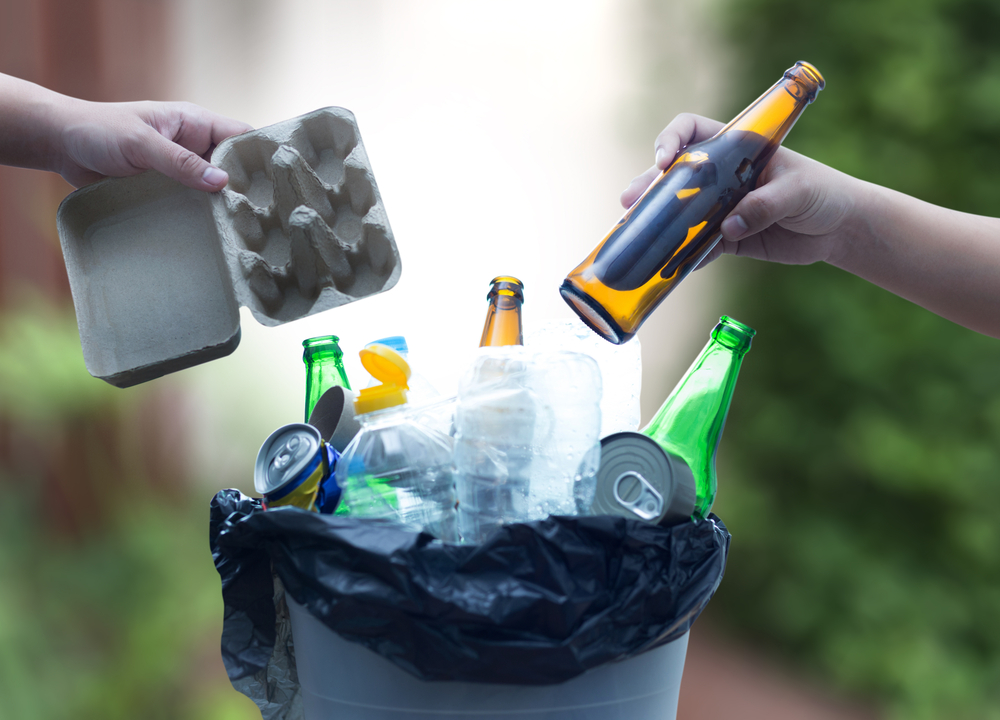
Recycle Hawaii’s executive director suggests “transitional EPR” as a way to find consensus among stakeholders. | One Photo / Shutterstock

As someone actively engaged in a collaboration to craft the ideal extended producer responsibility (EPR) legislation for Hawaii, I spend a great deal of time analyzing and comparing EPR system models. I do this not because I’m unsure which model best addresses the environmental and social justice concerns that drive my interest in the issue, but because I know my effectiveness as an advocate for community-driven, waste-to-wealth initiatives depends on my ability to also understand the needs of those motivated primarily by profit.

Current support for EPR policy falls into two general categories. Those in favor of producer-run programs assert it makes more sense to let the producers charged with funding these programs control how they operate; those calling for municipal reimbursement agree that producers should pay but say it’s better to keep decision-making at either the city or county level.

When I learned the online Resource Recycling Conference (held earlier this month) included a session called “Why We’re Ready to Support Producer Responsibility for Packaging,” I signed up hoping to understand what was bringing representatives for the American Beverage Association and Unilever together with municipal officials from New York City and Seattle.

Kristine Kubat
Kristine Kubat

This hour-long discussion offered two critical insights. First, although differences regarding who should control discarded materials have not been resolved, there is broad consensus regarding the need to redesign products and packaging in ways that facilitate their repair, reuse and recycling. And, second, if everyone is clear this type of upstream innovation is needed but at odds over what happens next, creating space for the downstream “waste-scape” to evolve before locking ourselves into strategies for managing it is the prudent thing to do.

Decoupling upstream and downstream responsibilities

The issue of system and material control was illustrated during the conference session when the New York City representative, Kate Kitchener, explained that EPR legislation moving forward in her state excludes items covered by its existing bottle bill. That fact inherently complicates EPR support from producers because the high-quality plastic and aluminum recovered through the redemption system might not necessarily be theirs to move back into packaging (and help them reach content goals).

While access to post-consumer materials in a regulatory environment that requires their use is a legitimate concern, there is no need to insist on a model that hamstrings other producers.

The best way to address this concern for beverage manufacturers is to establish a national bottle bill that includes standards for deposit fees, redemption targets and a mandate to return beverage containers to the producers who put them on the market. The standard this policy sets can be extended to materials beyond beverage containers.

The most expedient way to get producers innovating upstream is to establish a single comprehensive set of federal standards that require increased use of recycled content alongside better labeling and eco-modulation. A nationwide approach provides the certainty producers need and allows the movement to progress without creating a power struggle over who will manage downstream resources.

Notion of transitional EPR

Moving on to differences over who will pay for these reforms and how, once again the idea of decoupling upstream and downstream responsibilities offers a resolution.

Producers alone control how their products are made and packaged, and their business models have always included budgets that fund those choices. Similarly, municipalities have always had access to taxpayer funding to support the collection and disposal of discarded materials.

The challenge faced by those seeking to reduce wastefulness is to take the trillions of dollars already spent making waste and reallocate the money to reduction, reuse and recovery initiatives that build wealth in economically deprived sectors instead.

To this end, I introduce the concept of transitional EPR, the idea that producers should not be expected to pay for downstream operations in perpetuity. What we should expect instead is a willingness for them to reimburse municipalities for the costs associated with transitioning to a world in which products and packaging are readily repaired, reused or recycled.

We have every reason to expect that, once mandated upstream innovations kick in, the volume of non-recyclable materials will decrease and the value of recovered materials will increase in ways that ultimately bring the cost of handling them well within the reach of municipalities across the U.S.

This approach essentially eliminates the need for producers to manage downstream resources through producer-run EPR schemes.

Final thoughts

My takeaway from the Resource Recycling Conference discussion is that no argument in favor of a strategy that divides us is as compelling as the call to move forward on what unites us. Broad consensus in favor of upstream innovations is enough to allow the EPR movement to proceed with the support of high-profile producers.

A national, unified standard for less wasteful packaging is the place to begin. Let’s work together to provide producers the certainty they need to effectively innovate upstream and create space for the downstream waste-scape to take shape.

I personally believe that municipalities are better positioned to create the customized downstream solutions required to turn our wasteful economy into a circular one. But I am also willing to take a “wait and see” approach in anticipation of the changes a concerted national packaging redesign effort will bring.


Kristine Kubat is executive director of Hawaii’s state recycling organization, Recycle Hawaii. She can be contacted at admin@recyclehawaii.org.

The views and opinions expressed are those of the author and do not imply endorsement by Resource Recycling, Inc. If you have a subject you wish to cover in an op-ed, please send a short proposal to news@resource-recycling.com for consideration.

 

Tags: EPR
TweetShare
Kristine Kubat, Recycle Hawaii

Kristine Kubat, Recycle Hawaii

Related Stories

Goodwill eyes EPR revenue, starting with waste audit

byStefanie Valentic
November 12, 2026

Goodwill sustainability leaders say the nonprofit’s donation network could serve packaging and textile EPR programs, but they first need hard...

Produce packers face narrow exits under SB 54

byStefanie Valentic
November 11, 2026

Fiber, compostables, PCR and monomaterial films all come with tradeoffs for fresh produce, and no single swap will work across...

Textile EPR needs end markets, not just collection

Textile EPR needs end markets, not just collection

byStefanie Valentic
November 10, 2026

Reju CEO Patrik Frisk said textile EPR programs will fall short unless they also create demand for recycled material.

Inside the Circle: Will we lose our shirts over CA textile EPR?

Inside the Circle: Will we lose our shirts over CA textile EPR?

byBill Shireman
November 9, 2026

Some advocates have worked to block chemical recycling under the packaging law, but their strategy is going to backfire.

New CAA chief talks markets, industry support

New CAA chief talks markets, industry support

byAntoinette Smith
November 4, 2026

Interim CEO Jeff Meyers outlined the producer responsibility organization's strategy for navigating state EPR rollouts, building recycling markets and supporting...

Electronics recycling legislation evolves with devices

byStefanie Valentic
November 2, 2026

Wisconsin adds wearables, Oregon moves to a PRO model and Illinois and Hawaii broaden scope as states retool electronics EPR...

Load More
Next Post

MRFs face 'brunt of the negative impact' from battery fires

2026 Buyers’ Guide

Equipment, services and technology suppliers serving the recycling industry.

Browse the Guide

More Posts

NexPoint Materials to shutter Alabama plastics plant

NexPoint Materials to shutter Alabama plastics plant

November 4, 2026
PureCycle sees easing headwinds to R-PP adoption

PureCycle shifts focus, secures feedstock

November 5, 2026
Inside the Circle: Will we lose our shirts over CA textile EPR?

Inside the Circle: Will we lose our shirts over CA textile EPR?

November 9, 2026
Artificial intelligence is altering the marketplace for ITAD providers in numerous ways. | Shutterstock

AI alters ITAD economics

November 3, 2026
PET bottles for recycling

PET imports reshape US markets as demand grows

November 11, 2026
Textile EPR needs end markets, not just collection

Textile EPR needs end markets, not just collection

November 10, 2026
The missing link in e-plastic recycling

The missing link in e-plastic recycling

October 28, 2026
UC Riverside expands reusable takeout program

UC Riverside expands reusable takeout program

November 6, 2026
New CAA chief talks markets, industry support

New CAA chief talks markets, industry support

November 4, 2026
Partnership targets mixed nylon waste

Partnership targets mixed nylon waste

November 4, 2026
Load More

About & Publications

About Us

Staff
Job Listings

Archive

Magazines

Work With Us

Advertise
Contact
Terms and Privacy

Newsletters

Get the latest recycling news and analysis delivered to your inbox every week. Stay ahead on industry trends, policy updates, and insights from programs, processors, and innovators.

Subscribe

Welcome Back!

Login to your account below

Forgotten Password?

Retrieve your password

Please enter your username or email address to reset your password.

Log In

Add New Playlist

No Result
View All Result
  • The Latest
  • Podcast
  • Analysis
  • Recycling
  • E-Scrap
  • Plastics
  • Policy Now
  • Conferences
    • E-Scrap Conference
    • Plastics Recycling Conference
    • Resource Recycling Conference
    • Textiles Recovery Summit
  • Magazines – Old
  • About Us
  • Advertise
  • Archive
  • Job Listings
  • Staff
Subscribe
This website uses cookies. By continuing to use this website you are giving consent to cookies being used. Visit our Privacy and Cookie Policy.