



This article appeared in the September 2025 issue of Resource Recycling. Subscribe today for access to all print content.
Distributors face a formidable task turning the state’s bottle bill stagecoach into an airplane.
Maine beverage distributors are building a new stewardship model to administer the state’s aging beverage container recycling program, better known as the bottle bill. Since the law’s inception in 1976 and implementation in 1978, redemption sites have had to sort containers by brand to enable cost allocation to the right distributor. Most of this is done manually. Distributors are now working to create a system under which redemption sites sort only by material type and size.
This will not be an easy lift.
Maine’s bottle bill has an excellent redemption rate (generally about 75%), but it’s very expensive to operate. In addition to the nickel deposit (15 cents for wine and liquor), beverage distributors pay a 6-cent handling fee to redemption centers or reverse vending machine (RVM) owners for every container redeemed. This is the highest handling fee across the 10 deposit states in the U.S. and amounts to about $50 million every year. Further, because each distributor — known as an “initiator of deposit” — is responsible for collecting its containers, there are multiple sets of truck fleets driving to identical locations across Maine picking up empty containers.
Ultimately, the inexorable increase in handling fees and the inherent inefficiencies in this system prompted distributors to overhaul it.
Background and inherent challenges
When Maine’s bottle bill passed by referendum as a litter control measure in 1976, it covered only soda and beer. Over the next four decades, the Legislature expanded it to include water, sports drinks, juice, wine, liquor — literally every beverage except milk. Nearly all container sizes are included, from 4-liter water jugs to 50-ml alcohol “nips.” Of the handful of states with a bottle bill, Maine’s covers the most products. Maine’s population is 1.3 million, and about 1 billion deposit-eligible containers are sold each year.
This piecemeal addition of beverage categories may have made sense from an environmental standpoint, but it has made the bottle bill very complicated. When it covered only soda and beer, the bottle bill was limited to beverages sold by one distributor in a specific geographic area via direct store delivery (DSD). Distributors using DSD within an exclusive territory — as is customary for larger beer and soda distributors — directly track sales of their products and, therefore, their redemption rate.
Expansion brought products into the bottle bill that were not DSD: beverages that come to retail through competing channels of distribution, often from multiple distributors. Invariably, these initiators of deposit did not — or could not — track sales of their product. Expansion also increased the number of “sorts” for the redemption centers (the individual bags and boxes used to separate each brand and size), which drove up costs.
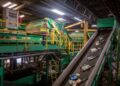
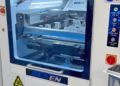
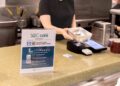
Adding to the challenge, most of the approximately 800 million containers processed through Maine’s bottle bill are collected and sorted by hand (i.e., not bar-code scanned). This was the best that could be expected in the 1970s, but it’s painfully antiquated now. The collection “system” is an assortment of 300 redemption centers randomly scattered across the state, nearly all independently owned and operated. (Shortly after the program started, grocery and convenience stores were relieved of their obligation to accept containers, and a cottage industry of redemption centers developed as a result.) The remaining containers are collected through automated systems — either RVMs or a bag drop system colocated at local supermarkets.
The continued expansion of new product categories to Maine’s bottle bill exacerbated its weak points: lack of centralized collection, overreliance on manual sorting and extraordinary cost.
Development of commingling groups
In 2003, Maine introduced a modest reform focused on reducing the number of sorts. The Legislature passed a law encouraging beverage distributors that sold similar products to combine or commingle their empty containers such that redemption centers could save time and space during handling. As an incentive, the Legislature allowed distributors who made this investment to retain any unclaimed deposits (the money from containers that customers recycle through the municipal recycling system or discard). Distributors that didn’t commingle had to remit their unclaimed deposit to the state.
Four commingling groups formed as a result: one each for beer and wine, soda, water, and liquor. This significantly reduced the number of sorts required at redemption centers. The soda commingling group (for which the author serves as legal counsel) redeemed 227 million containers in 2024. Redemption centers could sort all of them into just 11 boxes. Commingling also reduced the truck traffic necessary to collect containers. Where individual distributors formerly sent their own trucks to all 300 redemption centers, now only one truck was necessary.
But not all distributors were able to form or join a commingling group. Typically, these distributors did not sell directly to retailers so they relied on other distributors or wholesalers to ship their products to Maine. They also had to engage a “pick-up agent” to collect their containers. (Two pick-up agents in Maine emerged to fulfill this obligation for these distributors.)
As the beverage industry continued to diversify — with new drinks and sizes introduced constantly — the number of sorts also expanded, despite the improvements that commingling created. Although non-commingled products accounted for fewer than 20% of the deposit-eligible beverage containers sold in Maine, they were responsible for more than 80% of the total sorts. As a result, most redemption centers in Maine had almost 500 different boxes into which beverage containers would have to be sorted and counted prior to pick-up.
A cooperative of commingling groups
In 2023, beverage distributors proposed an alternative. Building on the success of the distributor-run cooperative in Oregon, distributors in Maine introduced the idea of a stewardship organization to assume responsibility for administering the bottle bill. The most important part of this reform would be redesigning the collection process to sort by material type, size and deposit value, and ending the practice of counting and sorting empty beverage containers by brand.
Following discussions with redemption centers, environmental advocates, pick-up agents and other bottle bill stakeholders, the Legislature ratified a proposal requiring every initiator of deposit to join a commingling group. Notably, the law created two “special commingling groups” so that initiators not currently in a group could join one. The two special commingling groups are administered by the two existing third-party pick-up agents in Maine. (In most instances, distributors joined the special commingling group administered by their pick-up agent.) These two new groups along with the four existing ones formed a new nonprofit cooperative.
The law allows each commingling group in the cooperative to use its unclaimed deposits to offset the cost of the $50 million in bottle bill handling fees.The legislation also tacked on $1.6 million in additional annual costs for the cooperative: $500,000 toward a technology fund; $500,000 to promote the use of refillable containers; and a fee up to $600,000 to the Maine Department of Environmental Protection (DEP).
The road ahead
Beverage distributors have incorporated a new entity, the Maine Beverage Recycling Group (MBRG), established a governing board, adopted by-laws, began convening an advisory group and submitted a plan to the DEP. The six commingling groups that comprise the MBRG have begun reimbursing redemption centers for the cost of bags they use. Brand sorting of containers continues for the near term, but the administrators of the special groups have begun commingling the containers of the many distributors in those two groups and, and as a result, the number of sorts at redemption centers already has dropped significantly.
However, difficult issues remain to be resolved. Ultimately, if all brands are sorted together by material and size, some means of allocating costs is necessary, including those for system operation and program administration, and the $1.6 million in add-on fees imposed by the legislation. The non-DSD product initiators face substantial challenges to providing sales data, the basis on which the preexisting commingling group allocated costs. According to the DEP, less than half of all initiators of deposit have accurately reported their to1tal sales in Maine. Thus far, even gathering reasonable sales estimates, much less auditable sales data, has been challenging. (Sales data isn’t the only basis for allocating costs, but a statewide sampling protocol for redeemed containers would be extremely expensive, especially when 75% to 80% of containers are redeemed manually.)
Enforcement is an additional concern. As a private entity, the MBRG has no state authority. It will have to rely upon the DEP to step in if a distributor attempts to flout the deposit laws or refuses to pay its fair share of costs.
Distributors in Maine face a formidable task turning the state’s bottle bill stagecoach into an airplane. If the MBRG can end brand sorting, it may be able to further unify the multiple, disparate stakeholders that make up the current system. The next 12 months will be a good indicator of its potential for future success.
Newell Augur is a partner at Pierce Atwood, LLP in Augusta, Maine (naugur@pierceatwood.com) and has more than 25 years of experience in the fields of government relations and administrative law representing clients before the Maine Legislature and state regulatory agencies. He has been actively engaged in the development of waste management policy regarding landfill operations, biosolids disposal, PFAS regulation, the bottle bill and extended producer responsibility. He serves as the executive director of the Maine Beverage Association, the trade group of non-alcoholic beverage distributors.