Resource Recycling
  • The Latest
  • Analysis
    • All
    • Certification Scorecard
    • Industry Announcements
    • Opinion
    Apple store

    Apple leads on inputs, faces questions on ITAD

    Unlocking the power of source reduction in US EPR

    Unlocking the power of source reduction in US EPR

    Following petition, Microsoft extends Windows 10 support

    Windows AI Recall is pushing data destruction upstream

    Certification Scorecard — Week of April 27, 2026

    Five trends shaping PCR packaging to 2031

    Intel sign on company building with blue sky and trees.

    Intel boosts margins by selling what it used to scrap

  • Conferences
    • Resource Recycling Conference
    • Plastics Recycling Conference
    • E-Scrap: The Longevity Conference
    • Textiles Recovery Summit
  • Publications
    • E-Scrap News
    • Plastics Recycling Update
    • Policy Now
    • Resource Recycling
    • Other Topics
      • Brand Owners
      • Critical Minerals
      • Glass
      • Grant Watch
      • Markets
      • Organics
      • Packaging
      • Research
      • Technology
      • Textiles
      • All Topics
Subscribe
No Result
View All Result
Resource Recycling
  • The Latest
  • Analysis
    • All
    • Certification Scorecard
    • Industry Announcements
    • Opinion
    Apple store

    Apple leads on inputs, faces questions on ITAD

    Unlocking the power of source reduction in US EPR

    Unlocking the power of source reduction in US EPR

    Following petition, Microsoft extends Windows 10 support

    Windows AI Recall is pushing data destruction upstream

    Certification Scorecard — Week of April 27, 2026

    Five trends shaping PCR packaging to 2031

    Intel sign on company building with blue sky and trees.

    Intel boosts margins by selling what it used to scrap

  • Conferences
    • Resource Recycling Conference
    • Plastics Recycling Conference
    • E-Scrap: The Longevity Conference
    • Textiles Recovery Summit
  • Publications
    • E-Scrap News
    • Plastics Recycling Update
    • Policy Now
    • Resource Recycling
    • Other Topics
      • Brand Owners
      • Critical Minerals
      • Glass
      • Grant Watch
      • Markets
      • Organics
      • Packaging
      • Research
      • Technology
      • Textiles
      • All Topics
Subscribe
No Result
View All Result
Resource Recycling
No Result
View All Result
Home Resource Recycling Magazine

First Person Perspective: EPR legislation must prioritize source reduction and interstate consistency

byScott Cassel
February 28, 2023
in Resource Recycling Magazine

This article appeared in the December 2022 issue of Resource Recycling. Subscribe today for access to all print content.


 

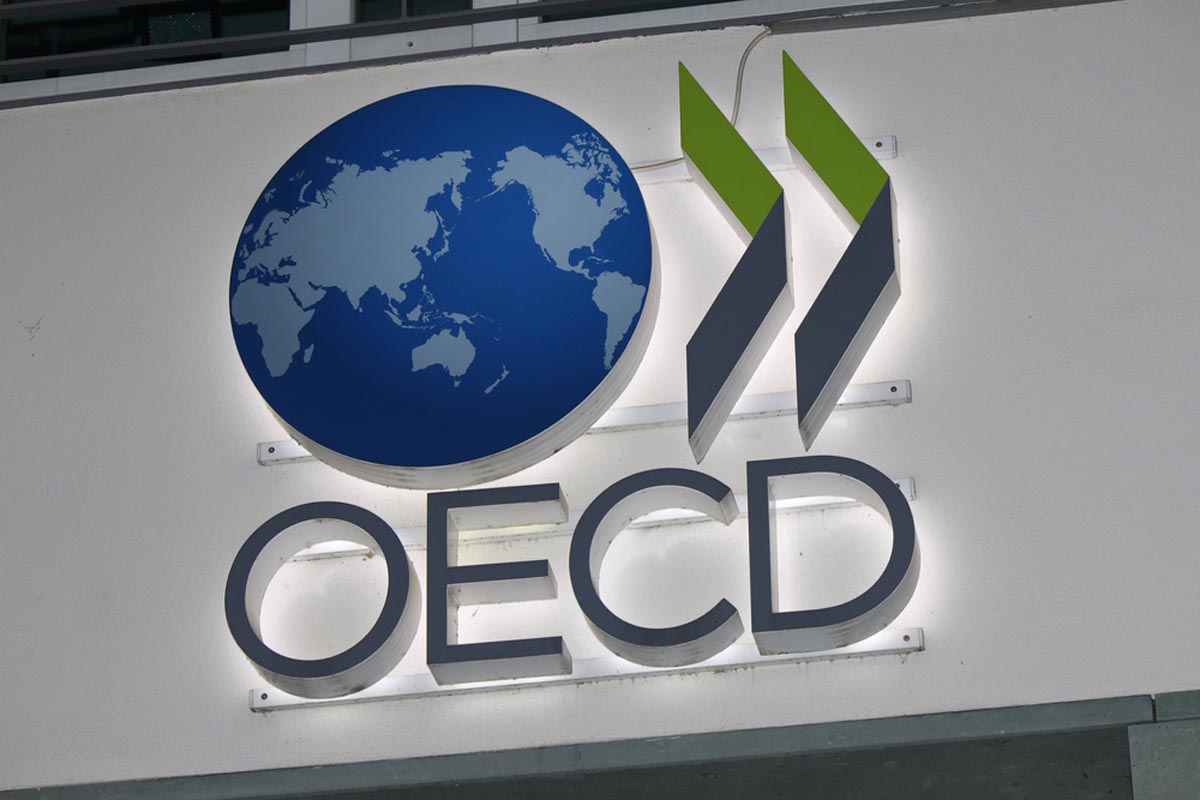
In September, I was invited to join a stakeholder consultation meeting organized by the Organization for Economic Cooperation and Development (OECD) in Washington D.C. The objective was to assess the performance of the U.S. EPA in addressing the environmental – and, especially environmental justice – impacts of plastic, which pollutes our coasts and oceans worldwide. Participants were also asked to recommend initiatives that the EPA could take to further reduce impacts.

I found myself in a unique position. On the one hand, I wanted to make sure that extended producer responsibility (EPR), being a critical approach to solving the problem, was included. On the other, I wanted to support additional source-reducing strategies such as the single-use plastic bans that were championed by others in the room, including national nonprofits Surfrider and Ocean Conservancy.

With 38 member countries, the OECD works to establish international standards to help solve social, environmental and economic problems. The Product Stewardship Institute (PSI) has worked extensively with the organization. For example, I had previously contributed to OECD EPR guidance documents and presented on U.S EPR activity at an OECD event in Tokyo in 2011. This year, we were recommended by OECD and invited to participate in the consultation meeting at the request of EPA.

At the September meeting, I presented on how state packaging EPR laws will reduce plastic pollution, especially when considered with other legislative measures, such as post-consumer recycled content mandates and enhanced deposit return systems. Over the past two years, packaging EPR laws influenced by PSI’s model EPR legislation were enacted in Maine, Oregon, Colorado and California. In 2023, at least nine state bills are expected to be introduced or re-introduced.

I also pointed out that the nation’s fragmented recycling infrastructure and policies, lack of a consistent materials management policy and limited technical capabilities challenge the implementation of statewide packaging EPR policies. Although waste management is delegated to the states, there is a critical need for greater state harmonization and/or a national solution that could be found in a federal bill, such as the Break Free From Plastic Act, which may be re- introduced in 2023 (PSI’s model also informed that bill’s EPR component).

While it is unclear what authority the EPA has to promote policy that is not directly enacted by Congress, I emphasized that the agency does have the ability to provide guidance and technical support on issues such as packaging labeling; a standard definition of recycling; and goals for source reduction, reuse, recycling and post-consumer recycled content. I also suggested that EPA could support national efforts driven by state and local governments.

This is a real, potentially game-changing possibility and my own experience bears this out. Beginning in 2003, PSI worked with EPA to facilitate a multi-stakeholder dialogue – which included industry, government, recycled paint manufacturers, retailers and painting contractors – and develop a state legislative model for paint EPR.

In 2009, Oregon used that model to enact the country’s first EPR law for that material.
Since then, PSI has helped enact paint EPR laws built on the same model in 10 states and Washington, D.C. Paint EPR programs have collected more than 51 million gallons of paint, recycled over 72% of all latex paint collected, saved governments and taxpayers nearly $300 million and established more than 2,000 collection sites, over 70% of which are at voluntary retail locations.

I strongly believe that with EPA’s help we can replicate the model established for paint, bringing it to the packaging realm. This would help solve the plastic pollution problem. All stakeholders could work together to create a national packaging EPR strategy that also emphasizes source-reduction strategies such as reuse, which are widely promoted by environmental nonprofits, including those that attended the meeting.

We at PSI look forward to reading the OECD report generated from the meeting, which will be discussed at a joint meeting of the OECD Working Party on Environmental Performance (WPEP) in 2023.


Scott Cassel has over 35 years of experience tackling waste management issues in the public, private and nonprofit sectors. In 2000, he founded the Product Stewardship Institute, a policy advocate and consulting nonprofit that pioneered product stewardship in the United States and has helped enact 130 extended producer responsibility (EPR) laws across 16 product categories in 33 states.

The views and opinions expressed are those of the author and do not imply endorsement by Resource Recycling, Inc. If you have a subject you wish to cover in an op-ed, please send a short proposal to [email protected] for consideration.

This article appeared in the December 2022 issue of Resource Recycling. Subscribe today for access to all print content.

Tags: EPR
TweetShare
Scott Cassel

Scott Cassel

Related Posts

New version of California EPR regulations released

CalRecycle approves SB 54 regulations

byStefanie Valentic
May 2, 2026

CalRecycle approved permanent regulations under SB 54, the state's landmark packaging EPR law. The rules took effect immediately upon filing...

Recycling analysis pinpoints gaps in New York data

New York packaging EPR bill gets nearly 150 amendments

byStefanie Valentic
May 1, 2026

State lawmakers backing New York's Packaging Reduction and Recycling Infrastructure Act introduced nearly 150 amendments, aligning the bill's definitions and...

Unlocking the power of source reduction in US EPR

Unlocking the power of source reduction in US EPR

byMichael Wassermanand1 others
May 1, 2026

EPR is evolving to include mechanisms to encourage reuse and promote design changes to enable recycling and reduce the amount...

What is EPR and why it matters

What is EPR and why it matters

byScott Snowden
April 22, 2026

Extended producer responsibility is reshaping recycling by shifting costs to manufacturers and driving changes in product design, repairability and end-of-life...

EPR fees are a market signal. Here’s what they’re telling you.

Oregon DEQ flags 250 producers for RMA noncompliance

byStefanie Valentic
April 21, 2026

Oregon DEQ released its first quarterly producer status list under the Recycling Modernization Act on April 9, flagging 250 companies...

Oregon’s battery EPR bill officially charged for implementation

byStefanie Valentic
April 10, 2026

Oregon Governor Tina Kotek signed HB 4144 into law on April 7, setting into motion the mechanics for an extended...

Load More
Next Post

Cutting down disposal

More Posts

What Netflix’s ‘Plastic Detox’ gets wrong – and right

April 23, 2026
EPR fees are a market signal. Here’s what they’re telling you.

Oregon DEQ flags 250 producers for RMA noncompliance

April 21, 2026
Intel sign on company building with blue sky and trees.

Intel boosts margins by selling what it used to scrap

April 29, 2026
Birch Plastics gets FDA green-light for post-industrial PP

LyondellBasell upgrade to PreZero assets on hold

April 23, 2026

PCA keeping focus on virgin fiber products

April 27, 2026
Intel sign outside of company building.

What Intel’s blockbuster quarter means for ITAD

April 27, 2026
Plastic Ingenuity to use PureCycle PP for coffee lids

Plastic Ingenuity to use PureCycle PP for coffee lids

April 30, 2026
Float-sink technology at the Quantum Lifecycle Partners facility in Toronto, Canada enables the processing of e-plastics.

E-plastics recovery line opens in Canada

April 28, 2026
Our top stories from April 2022

Peters-Michaud named CEO, Houghton chair of Sage Sustainable Electronics

April 28, 2026
Dow touts US PE advantage amid Iran war

Dow touts US PE advantage amid Iran war

April 24, 2026
Load More

About & Publications

About Us

Staff

Archive

Magazine

Work With Us

Advertise
Jobs
Contact
Terms and Privacy

Newsletter

Get the latest recycling news and analysis delivered to your inbox every week. Stay ahead on industry trends, policy updates, and insights from programs, processors, and innovators.

Subscribe

Welcome Back!

Login to your account below

Forgotten Password?

Retrieve your password

Please enter your username or email address to reset your password.

Log In

Add New Playlist

No Result
View All Result
  • The Latest
  • Analysis
  • Recycling
  • E-Scrap
  • Plastics
  • Policy Now
  • Conferences
    • E-Scrap Conference
    • Plastics Recycling Conference
    • Resource Recycling Conference
    • Textiles Recovery Summit
  • Magazine
  • About Us
  • Advertise
  • Archive
  • Jobs
  • Staff
Subscribe
This website uses cookies. By continuing to use this website you are giving consent to cookies being used. Visit our Privacy and Cookie Policy.