

With the new year now underway, government leaders are refocusing on issues that may have been put on the back-burner toward the end of 2019.
And perhaps more than in any year in recent memory, recycling in 2020 is primed to be part of lawmaker dialogue – most notably at the state and national levels.
What’s driving the policy push? And how might it all shake out? To answer those questions, let’s dig into some of the legislation at play.
A hot federal talking point
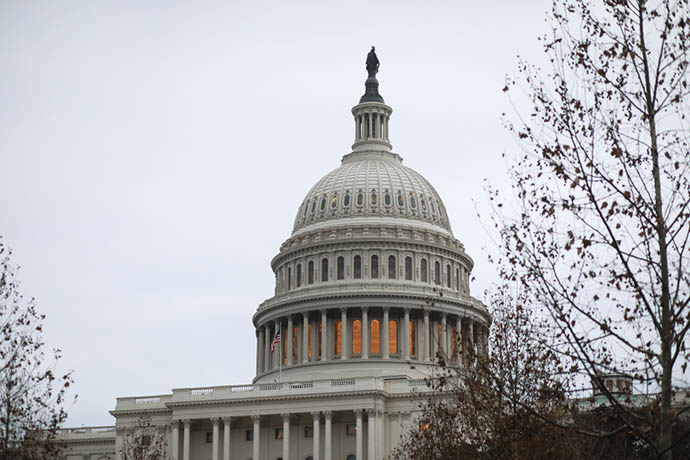
The U.S. Capitol is a good place to start. In November 2019, two complementary bills were introduced to Congress aiming to bring additional funding to materials recovery initiatives.
The Realizing the Economic Opportunities and Value of Expanding Recycling (RECOVER) Act, in the U.S. House of Representatives, would provide up to $500 million in matching grants to state and local governments to support recycling.
In the Senate, meanwhile, the Recycling Enhancements to Collection and Yield through Consumer Learning and Education (RECYCLE) Act would authorize $15 million in grants and also direct the U.S. EPA to develop a model recycling toolkit for states, local governments and others.
Those bills have the support of a long list of industry entities, including the American Chemistry Council, the National Waste & Recycling Association and The Recycling Partnership.
And it is perhaps little coincidence the legislation made its appearance in the wake of another other possible federal policy that aims to go far beyond just providing grant funding.
In July of last year, Sen. Tom Udall, D-N.M., and U.S. Rep. Alan Lowenthal, D-Calif., unveiled an outline of legislation they said they plan to introduce. If enacted, it would create national extended producer responsibility (EPR) for plastic packaging while mandating recycled-content minimums for certain materials, a nationwide container deposit and more.
Whether the Udall-Lowenthal proposal gains traction remains to be seen, but the fact that two members of Congress are floating such an aggressive play underscores the conversation around waste across society today.
International focus on marine debris and other plastic management problems has coincided with a cratering of recycling markets. When residents see images of plastic pollution harming animals and habitat and then learn of problems with a local recycling system they previously trusted, confusion and aggravation is a natural response.
In many ways, the policies being discussed at the Congressional level are reactions to those feelings on the part of individual residents. Legislation is an elected official’s way of showing they are trying to address a problem that has caught the attention of constituents. And the same is true for industries – if they put their name behind a certain bill, it can help show they are taking action to alleviate a concern they are connected to.
One way of reading the policy conversation at the federal level is this: Consumer outcries led Udall and Lowenthal to put forth a bold proposal that voters in their Democratic constituencies would get behind. And the RECOVER and RECYCLE Acts are responses that show elected officials are listening, but they are designed in a way to be far less disruptive to industry.
None of the policies noted above may actually go anywhere this year (especially as Washington, D.C. becomes more and more focused on the November election). But the action nonetheless indicates a growing desire among Americans for improvements around material management.
To the statehouses
Recycling-related activity is also set to be in play at the state level this year. And it’s here that we’re more likely to see impactful legislation adopted – or at least reach stages of significant debate.
The state of Maine, for instance, last year passed a bill that called for officials to create a framework to leverage packaging stewardship policy – it was essentially step one toward EPR, with the expectation that details would be hammered out in 2020. There is a strong likelihood that by the end of this year, Maine will be the first state to have some version of packaging EPR on the books.
Notable developments are also taking place in Oregon. There, a steering committee brought together by the state’s Department of Environmental Quality has been working to identify and outline a suite of policies and tools to help modernize Oregon’s recycling system. This multi-stakeholder process could result in a framework that brings producer funding into the system in an innovative format.
Then there is California. In 2019, Assembly Bill 1080 and its companion, Senate Bill 54, brought national industry attention (and plenty of lobbying dollars) to Sacramento. The legislation, which sought to reduce waste from single-use packaging by 75%, died on the final day of the legislative session. But its traction made clear the political will exists in the Golden State to push forward significant changes.
Meanwhile, Assembly Bill 792, which established recycled-content minimums for containers in the state’s redemption system, passed both legislative chambers before getting vetoed by Gov. Gavin Newsom. The governor’s qualm was that the bill didn’t do enough to force action on the part of manufacturers.
Backers of those pieces of California legislation have vowed to put forward their proposals again this year, and a ballot initiative taking aim at single-use plastics could also be in front of state voters this November.
In short, the momentum around materials management is alive and well in America’s largest state. The wider repercussions of that fact could be pronounced.
Tied to image crisis
Those who have been around the waste and recycling sectors for some time know that policy is always part of the equation. Bottle bill debates have been happening at the state level for decades, companies and trade groups have long needed to understand how regulatory structures would impact their operations, and decisions at city halls nationwide have determined the specifics of local programs for as long as those programs have existed.
But at the outset of 2020, the industry finds itself entwined with policy in a bigger, more visible way. That’s because recycling is tied to the life cycle of packaging, and packaging is in the midst of an image crisis.
The calls for EPR and other systemic shifts in materials recovery at both the state and federal levels have their root in the public’s recent determination that current end-of-life options for plastic and other packaging materials just aren’t working.
It might be true that criticisms from the masses (and mainstream media) fail to take into account important nances of material use and management, but it’s also important for recycling stakeholders to understand that this environment is the new normal – and that they’re going to have to navigate these waters whether they want to or not.
A year from now, at least in some regions, the frameworks underlying materials recovery may be undergoing significant shifts due to the decisions of lawmakers. For some stakeholders, this will be a very good thing. For others, it will result in costs and frustrations.
But no one should be saying they didn’t see policy transformations coming.
Dan Leif is the managing editor of Resource Recycling and can be contacted at dan@resource-recycling.com.
This article appeared in the January 2020 issue of Resource Recycling. Subscribe today for access to all print content.