This article originally appeared in the July 2017 issue of Resource Recycling. Subscribe today for access to all print content.
As North America’s largest hauler and processor of recyclables, Waste Management is constantly influencing the wider world of materials recovery.
The publicly traded company has pushed forward the ongoing transition to single-stream collection, a strategy that has boosted collected volumes and increased on-route efficiencies but also driven up contamination and complicated glass diversion.
Waste Management has also been a central player in the recent trend of overhauling contracts as municipalities and their materials recovery facility (MRF) partners have tried to adjust to prolonged periods of low commodity prices. And the firm, which currently operates around 100 facilities in North America, has been at the forefront of testing and implementing technologies such as plastics-to-fuel that could expand industry capabilities in the years to come.

To better understand the company’s thinking as it continues to navigate – and shape – the industry landscape, Resource Recycling sat down with two of the firm’s top materials recovery executives.
Brent Bell, who has roughly 20 years of experience at Waste Management, has been in charge of the company’s recycling division for the past three years as vice president of recycling operations.
Tom Carpenter, meanwhile, has been a member of the Waste Management sustainability services group since 2000 and has been its director for the last year-and-a-half (the division helps corporate clients more effectively manage their waste streams).
The following is an edited version of Resource Recycling’s conversation with the two company leaders.
When it comes to diverting material from the landfill, how is Waste Management evolving?
Brent Bell: We had a goal established in 2007 of managing about 20 million tons of recyclables a year. Recently it’s been around the 14- or 15-million ton mark on an annual basis. Like any other goal, we’ve seen some shifts. You refine your goals over a period of time. I think now we’re looking, as the U.S. EPA has as well, more in terms of sustainable materials management and looking at making sure we’re recycling the right kind of volumes.
In a broad sense, sustainable materials management thinking takes a product’s entire life cycle into account when assessing the impact it has on the environment. It looks at a lot more than disposal. Why did Waste Management decide to start using that terminology?
Tom Carpenter: If you look at the changing materials stream, many companies including ourselves have made waste-based goals. But as you’re seeing lightweighting of packaging and other things, weight might not be the most in-line goal with science and making the most positive impact from a greenhouse gas emissions basis. That’s why you see us speaking quite a bit on sustainable materials management and moving the dialogue that way. We’re also looking at goals that align with that.
Bell: When commodity prices started their decline shortly after 2011 and then during the last five or so years, we’ve had to start having the conversation with customers about how we can improve their economics for recycling.
We switched our model over to charge for processing costs. There was a period of time when processing cost us more than the value of the material was worth, so a lot of our customers had to pay to recycle. And during that time period we went and really analyzed their streams and said, “Hey, there’s certain commodities that if they removed or if they cleaned up their streams, then it would help out their economic situations.” That helped evolve the whole concept, and we moved to evaluate the best impact for the environment and the best economic impact to meet our customers’ needs.
What were those conversations with customers like? We always hear that once something is accepted in the stream, it’s very difficult to turn around and take it out.
Bell: It’s definitely a challenge, but from our viewpoint it’s almost purely an economic decision. We discuss the markets that may be out there for a certain kind of material. If the markets aren’t there and it’s a higher cost to process, the customer ultimately has to make that decision on what they want to include or not include in their recycling stream and then we try to provide them with some education on what benefits that will have from an environmental point of view as well. We really try to put those decisions back in the customer’s hands. We’re essentially saying, “We’re a processing company and can process those materials and have knowledge about those materials that we’ll share and educate our customer base with.” But ultimately we like to have them make that decision.
What trends are you seeing with your large corporate clients? How much does the changing materials stream influence decisions in the commercial sphere?
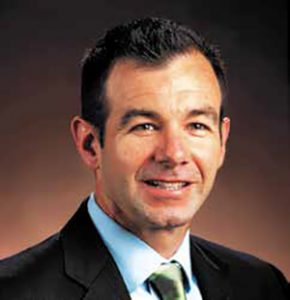
Carpenter: Some are adopting zero waste or zero landfill goals. And we’re having that same dialogue around how they’re measuring the value of materials and how they’re measuring and aligning their sustainability goals that may include zero waste. The question is: Does that all align with their carbon reduction or their GHG reduction goals? Along with that, we’ve seen many manufacturers and other companies look at their supply chain with the intent of being able to capture those materials with value at end of use. When we first started, it was more end of pipe. Companies were saying “It’s in a container, do something with it, help me recycle it.” Now we’re going upstream into different processes, and all the way back to the design phase. That’s necessary if you really want to make a change.
What is the scope of Waste Management’s corporate sustainability services operation?
Carpenter: We’re on-site at roughly 170 different locations, with roughly 400 employees scattered throughout North America. The majority of those are on-site full time managing a total waste program. So that’s everything from their recyclables to their hazardous waste to solid waste and so on. In some cases, we’re managing on-site recycling centers for customers.
Contamination has become such a critical concern for everyone in recycling. How are your efforts progressing to create cleaner streams?
Bell: Contamination is a safety issue – recently we’ve seen propane-type tanks that cause some small explosions and fires within the MRFs – as well as a pure economic issue for damaging the other materials. We have the “Recycle Often Recycle Right” campaign and website, and that’s really been the platform for our educational efforts so that the resident knows what goes inside the curbside recycling bin. We’ve also gone to many municipalities with different education programs. We’ve gone through social media, tagging of carts and even, in one [area], have gone door to door in an effort to further the solid waste education.
Are you seeing measurably better material?
Bell: Overall, we’ve seen a slight improvement on residue rates. [Editor’s note: A Waste Management spokesperson told Resource Recycling in a follow-up that Waste Management’s companywide residue rate is now 16 percent.] It’s definitely a slow ship to turn. We’re headed in the right direction. I’m not sure if we’ve found one item or one piece that necessarily does a great job on our educational efforts other than using our “Recycle Often Recycle Right” platform. Each municipality is going to have to be catered to, based on how their residents recycle and what kind of prior educational levels they’ve had.
How does glass play in? In some cases, people in the industry frame glass as a contaminant because it can break in the cart and be hard to separate. In other instances, people say recovered glass loads themselves are not clean when single-stream collection is used.
Bell: The way I’d address glass is that just as any other material in the stream, we’re usually transparent with our customers on the processing cost and the local markets that may be there and the overall economic impact of having that material in the stream. We do put that decision back on the customers in regards to whether they want to include or not include those certain commodities. But I think what’s important is that whether it’s glass or any other commodity, we really have to make sure there is an outbound market. That’s where it really starts. If we can’t sell the material and if it doesn’t have a positive economic impact after you’ve collected it at curbside, sorted and processed it, then that’s going to be a problem in the future. So we really focus our efforts on increasing the demand for recycled products.
How do you do that?
Bell: When companies come to us and say, “Can you recycle this?” then the first question we ask them back is, “Can you use recycled content to make that product to begin with?” We really as an industry have to push the demand for these recycled products in new products and make sure consumers are asking for it when they do their purchasing as well.
Let’s talk about technology. Are there any emerging ideas in waste conversion or other areas that are capturing your attention?
Carpenter: Several years ago we were making several investments, investigating many different technologies, and what we saw is that there are many things that are promising and many things that quite frankly don’t work. What we found in most cases is that those technologies were only economically viable if you had high-cost oil. And in looking at those technologies as well, you need to understand what the impact will be when you pull just a portion of that material stream out of the current waste stream. How does that impact other markets or other things? Do you need to set up individual collection routes? Those economics all come into play when looking at that. Our company is still keeping a lookout for the technologies that are out there. We are making some investments in some technologies when we look at a bit of organics and so on, but most of our efforts are really in making our own operations more efficient and more sustainable.
Last November, the company saw a leadership transition when Jim Fish took over the CEO role and David Steiner left the company. What has that meant for the materials recovery side of things?
Bell: I think Jim and David Steiner worked well together and had the same kind of thoughts. From our perspective, our strategy has remained the same, and we’re looking forward to continuing to execute on that.
Carpenter: My team reported up through Jim, so he was very close with many of the things we were doing for our customers. He’s continuing to support that and continuing to look at it from a technology perspective: What is it that makes us more efficient when it comes to our trucks, our recycling and other areas? All of those things were things we were already doing, but he has kind of a renewed focus and has been speaking quite a bit internally and externally about that.
What are your top goals over the next three to five years? What are the initiatives you’re most focused on?
Bell: We have a few goals, but one of them that I would say is to make sure recycling is sustainable from an economic and environmental viewpoint. And I think the other goal is to continue to decrease contamination so that hopefully when we’re talking a few years from now that we can tell you our contamination efforts have paid off.
Carpenter: I would echo that. If you look at everything we’re doing from making our operations efficient and striving to be a leader and driving markets and the way we look at recycling, the conversation is about making the recycling industry sustainable. The phases that the recycling industry went through and the way markets were priced, it was not sustainable. We got to the brink and we heard David Steiner speak many times about the system being broken. You’re seeing the building blocks being put together. In the future, even though markets are up and down, you’re going to see that the recycling programs are sustainable for customers and for us – for the entire industry.
Dan Leif is the managing editor of Resource Recycling. He can be contacted at dan@resource-recycling.com.