





Resource Recycling
  • The Latest
  • Podcast
  • Analysis
    • All
    • Certification Scorecard
    • Industry Announcements
    • Opinion
    Adam Gendell

    PET producers ride ‘local for local’ wave

    May pricing bullish for most bales

    HDPE resists seasonal, economic forces

    IT asset disposition and electronics recycling: Now and then

    Data center moratoriums cast development shadow

    Recycling tracking data is already on your truck

    Recycling tracking data is already on your truck

    A five star ranking with one under a microscope

    Certification scorecard — week of Nov. 9

    Data centers and AI combine to create ITAD ‘growth engine’

    Component shortages drive demand for data center hardware

  • Conferences
    • Resource Recycling Conference
    • Plastics Recycling Conference
    • E-Scrap: The Longevity Conference
    • Textiles Recovery Summit
  • Publications
    • E-Scrap News
    • Plastics Recycling Update
    • Policy Now
    • Resource Recycling
    • Other Topics
      • All Topics
      • Brand Owners
      • Critical Minerals
      • Glass
      • Grant Watch / RFPs
      • Markets
      • Organics
      • Packaging
      • Research
      • Technology
      • Textiles
Subscribe
No Result
View All Result
Resource Recycling
No Result
View All Result
Home Recycling

Buyers, usable feedstock key to textile recycling

byKeith Loria
October 27, 2026
in Recycling
Buyers, usable feedstock key to textile recycling

Sarah Needham, chief engagement and partnerships officer of Textile Exchange, and Noel Kinder, SVP of sustainability at Lululemon, discuss impact in the executive agenda in a plenary session at the Textile Exchange Conference in Vancouver. | Threshold Studios / Textile Exchange.

Securing buyers for recycled fibers and improving the supply of usable textile waste emerged as priorities for expanding textile-to-textile recycling at the 2026 Textile Exchange Conference.

“One of the key takeaways from throughout the week is that the fashion, textile and apparel industry is moving beyond proving the technical feasibility of textile-to-textile recycling towards building the systems and infrastructure needed to scale it commercially,” said Daren Abney, senior director of materials engagement and partnerships at Textile Exchange, which hosted the event.

Held Oct. 13-15 at the Vancouver Convention Centre, the event brought together more than 1,300 participants from across the textile supply chain. Its theme, “The Implementation Era,” focused discussions on putting industry plans into practice.

Matching feedstock to capacity

In its recent report, Textile Exchange estimated that recyclable textile feedstocks could reach about 15 million metric tons globally in 2030, compared with an estimated 10 million in 2025. After accounting for processing and capacity constraints, the model indicates potential output of 3 million to 5 million metric tons of fiber suitable for spinning into yarn by 2030.

“This estimate should be viewed as an initial modeled indication of potential spinnable fiber output and not as a forecast of material that will automatically become available,” Abney said.

The analysis covers post-industrial and post-consumer textiles, including cotton, polyester, nylon, wool, manmade cellulosic fibers and blends. Plastic bottles and other non-textile feedstocks are excluded from its textile-to-textile supply estimates.

The estimate depends heavily on expansion plans from a small number of polyester recyclers. Facilities must come online and operate at anticipated utilization rates, while blend separation and processing losses also affect output, Abney said.

Collectors and sorters have a role in improving the supply of material recyclers can use.

“Approaches to textile collection, sorting and recovery vary across countries and regions, offering valuable lessons for strengthening textile-to-textile feedstock supply globally,” Abney said. “Building on these learnings to develop more efficient and accurate collection and sorting systems will be important to improving feedstock recovery and increasing the supply of suitable material for textile-to-textile recycling.”

Financing the system

Producers at the conference identified purchasing commitments from brands, including purchase orders for existing fiber supply, as the strongest immediate way to help recyclers secure financial support.

A conference session on systemic bankability from the nonprofit Accelerating Circularity examined why technically viable projects struggle to attract commercial financing. Its framework identifies as barriers weak purchasing commitments, costs above virgin alternatives, performance risks at first commercial plants and coordination gaps between processing steps.

The financing challenge starts before a facility has an operating history. Lenders need confidence in feedstock, plant performance and sales revenues, but risks at first commercial plants can remain with parties unable to absorb them, according to the framework.

Sorters need recyclers committed to buying their output, while recyclers need secured feedstock before financing plants. The report recommends pooling brand demand into binding, multiyear purchase contracts and establishing common feedstock grades with enforceable quality requirements.

Accelerating Circularity is seeking brands, recyclers, investors, lenders, insurers and policymakers for a coalition to establish shared priorities and joint initiatives addressing these barriers to commercial scale.

“Textile Exchange is in the process of building a clearer understanding of the costs borne by producers as they transition to preferred production systems, including textile-to-textile recycling,” Abney said. “For polyester, which accounts for the largest volumes, scaling textile-to-textile recycling presents cost challenges linked to infrastructure, collection and sorting logistics, highlighting the importance of investment and approaches to demand aggregation. Future phases of this work will seek to identify which of the cost drivers may reduce with scale and which will remain, giving a view of relative costs at maturity.”

Keeping reuse first

Textile Exchange noted recycling should handle only textiles no longer suitable for reuse, making quality assessments an important part of collection and recycling systems.

“Reuse, repair and resale should be prioritized to extend the life of textiles and retain the value of garments for as long as possible,” Abney said.

The organization linked that priority to the Ellen MacArthur Foundation’s circularity principles, which call for eliminating waste and pollution and keeping products and materials in circulation. Effective quality assessments should help route collected textiles to their most appropriate end use.

Textile Exchange is encouraging brands to establish sourcing targets through its preferred production system pathways. Over the next year, the organization will look for purchasing commitments, more verified recycled fiber incorporated into products, greater utilization of recycling capacity and improved data on collection, sorting and material flows.

“By strengthening demand signals, brands can help scale these systems alongside investment in supply-chain infrastructure,” Abney said.


Tags: Textiles
TweetShare
Keith Loria

Keith Loria

Keith Loria has been a freelance writer for Resource Recycling, Inc., since 2024.

Related Stories

Goodwill eyes EPR revenue, starting with waste audit

byStefanie Valentic
November 12, 2026

Goodwill sustainability leaders say the nonprofit’s donation network could serve packaging and textile EPR programs, but they first need hard...

Textile EPR needs end markets, not just collection

Textile EPR needs end markets, not just collection

byStefanie Valentic
November 10, 2026

Reju CEO Patrik Frisk said textile EPR programs will fall short unless they also create demand for recycled material.

Inside the Circle: Will we lose our shirts over CA textile EPR?

Inside the Circle: Will we lose our shirts over CA textile EPR?

byBill Shireman
November 9, 2026

Some advocates have worked to block chemical recycling under the packaging law, but their strategy is going to backfire.

Partnership targets mixed nylon waste

Partnership targets mixed nylon waste

byKeith Loria
November 4, 2026

NylaNova is partnering with producer Nylene to supply recycled intermediate chemical caprolactam, creating a potential outlet for mixed nylon waste.

Sorted: Making Halloween costumes more sustainable

byBrian Clark Howard
October 19, 2026

Americans throw away an estimated 35 million Halloween costumes each year, and four out of 10 costumes are only worn...

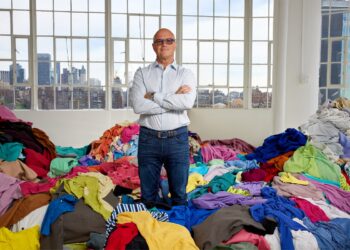
Reju CEO Patrik Frisk stands among textile waste

Reju’s Patrik Frisk on the promise of textile-to-textile recycling

byBrian Clark Howard
October 1, 2026

The CEO talks about his company’s plans on chemical recycling, in New York, Pennsylvania and Europe.

Load More
Next Post

EPA’s battery EPR framework pends, states diverge

2026 Buyers’ Guide

Equipment, services and technology suppliers serving the recycling industry.

Browse the Guide

More Posts

PureCycle sees easing headwinds to R-PP adoption

PureCycle shifts focus, secures feedstock

November 5, 2026
PET bottles for recycling

PET imports reshape US markets as demand grows

November 11, 2026
Closeup of PP with a chasing arrows recycling symbol.

PureCycle, WM sign rare 3-year bales contract

November 16, 2026
Artificial intelligence is altering the marketplace for ITAD providers in numerous ways. | Shutterstock

AI alters ITAD economics

November 3, 2026
NexPoint Materials to shutter Alabama plastics plant

NexPoint Materials to shutter Alabama plastics plant

November 4, 2026
Modern Mining raises $40 million in IPO

Modern Mining raises $40 million in IPO

November 12, 2026
The missing link in e-plastic recycling

The missing link in e-plastic recycling

October 28, 2026
Textile EPR needs end markets, not just collection

Textile EPR needs end markets, not just collection

November 10, 2026

Goodwill eyes EPR revenue, starting with waste audit

November 12, 2026
IT asset disposition and electronics recycling: Now and then

Data center moratoriums cast development shadow

November 12, 2026
Load More

About & Publications

About Us

Staff
Job Listings

Archive

Magazines

Work With Us

Advertise
Contact
Terms and Privacy

Newsletters

Get the latest recycling news and analysis delivered to your inbox every week. Stay ahead on industry trends, policy updates, and insights from programs, processors, and innovators.

Subscribe

Welcome Back!

Login to your account below

Forgotten Password?

Retrieve your password

Please enter your username or email address to reset your password.

Log In

Add New Playlist

No Result
View All Result
  • The Latest
  • Podcast
  • Analysis
  • Recycling
  • E-Scrap
  • Plastics
  • Policy Now
  • Conferences
    • E-Scrap Conference
    • Plastics Recycling Conference
    • Resource Recycling Conference
    • Textiles Recovery Summit
  • Magazines – Old
  • About Us
  • Advertise
  • Archive
  • Job Listings
  • Staff
Subscribe
This website uses cookies. By continuing to use this website you are giving consent to cookies being used. Visit our Privacy and Cookie Policy.