




Editor’s note: Electronics recycling will be featured in sessions at the 2026 E-Scrap: The Longevity Conference Oct. 26-28 in New Orleans.
As Linca prepares to open a demonstration facility for its battery mineral recovery technology next year, company leadership felt the timing was right for the company to become an independent entity as that process nears the home stretch.
Leadership announced earlier this month that New Zealand-based Linca would spin off of Mint Innovation, which recovers minerals from printed circuit boards.
Ollie Crush, who helped found Mint a decade ago, went with Linca to serve as its CEO. He said discussions on the split got serious last year, when Linca was working to scale its operations.
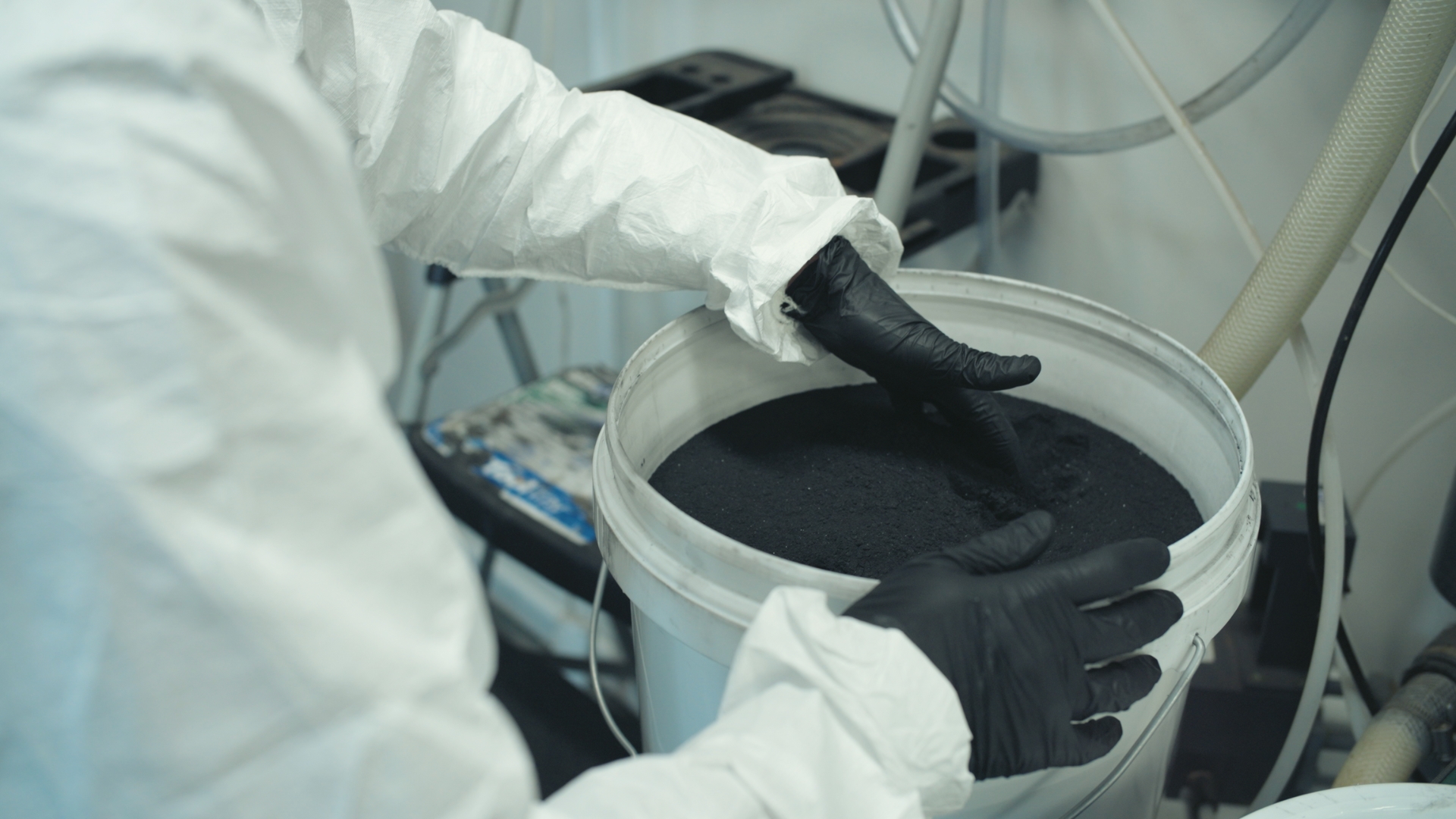
Linca’s hydrometallurgical process removes cobalt, nickel and other minerals from the black mass generated during the processing of end-of-life EV batteries. The company’s process does away with solvent-based extraction, lowering the cost and complexity of extraction.
“There was a bit of a fork in the road. We are a bit of a different business, at a different age and stage,” he said. “It was a better strategy to branch off to independently pursue commercialization.”
Linca’s focus is to enable black mass refining in urban areas at a reasonable cost while ensuring the facilities remain active and near the sources of battery recycling. The technology would be scalable in conjunction with the growth of battery waste in a market, Crush said. This would make black mass more accessible, reducing the need for mining and smelting, while lowering transportation costs and environmental impact.
A demo facility in the United Kingdom is intended to prove that’s possible, Crush said, putting to the test a closed-loop domestic process that’s been in the works for several years.
Proving this process works can decrease the need to import black mass, Crush said. More than 85% of the world’s black mass refining is done in China, a trend he wants to reverse. Doing so is significant, he said, because critical battery mineral demand is expected to double over the next decade.
“This can enable critical mineral sovereignty. It enables smaller scale domestic refineries,” he said. “This can keep minerals on shore.”
Linca plans to build up the demo facility in the next year or so, Crush said. Provided that goes well, a more wide-scale commercialization of the process would follow a year or two behind that.
“Battery demand is going through the roof. We’ve got this huge demand for these minerals … but there’s a supply chain risk because you’re sometimes digging the minerals out and shipping them through bad areas that don’t share your interests,” he said. “It’ll be exciting to get this out to market.”
Mint’s team will still be part of the process, Crush said. Those team members who didn’t come to Linca will be available to collaborate with when needed. New Zealand-based employees of both companies will work in the same complex.
“We’re sharing the same coffee machine,” he said. “Our company’s got a great big brother looking over it.”
Linca has secured $5 million New Zealand ($2.92 million US) in seed funding to fund the UK project, as well as an £8.1 million pound ($10.88 million US) grant from the UK government as well as Jaguar Land Rover and the University of Warwick’s Warwick Manufacturing Group.