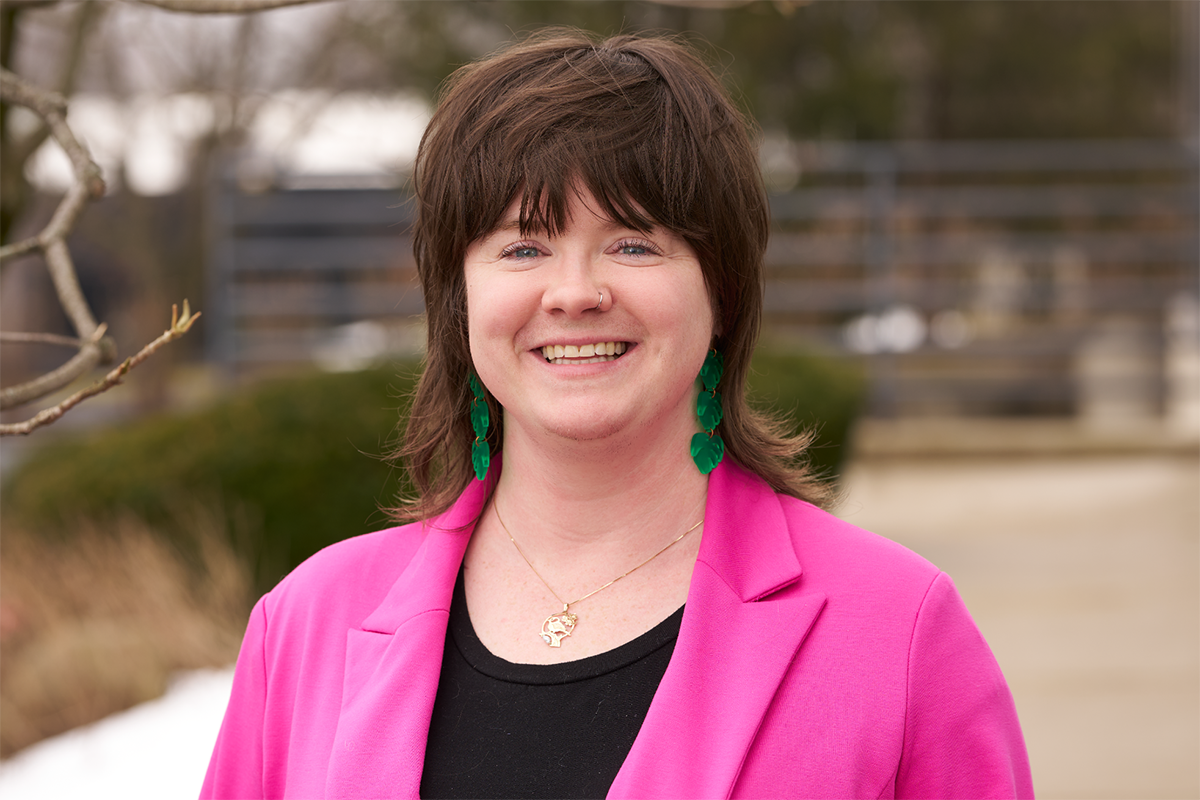
A warm welcome back to “Women in Circularity”, where we shine a light on women moving us toward a circular economy. This month, I was pleased to connect with an results-focused sustainability advisor: Danni Schaust. Danni is an Environmental Planner III at GT Environmental, a woman‑owned consulting firm dedicated to advancing sustainable materials management and circular economy solutions. With more than a decade of experience in environmental planning, zero waste strategy and stakeholder engagement, Danni brings a systems-thinking approach grounded in practical implementation—helping communities and organizations transition toward more circular, resilient models.
What initially drew you to the environmental field and how has your career evolved to where you are today?
I’ve been passionate about sustainability since my teenage years and even started the first paper recycling program at my high school, but it wasn’t until my sophomore year of college at Indiana University Bloomington before I realized that it could make a career out of it. In the Midwest at that time, sustainability was still such an emerging conversation and not a straightforward career path.
Since then, I have worked in several different sectors in my career so far, but I always find myself drawn back to sustainable materials management. I find working on the circular economy to be one of the most straightforward ways I can make a positive impact on the planet and the people around me.
What do you believe is the most important mindset in the circularity space—and how did you cultivate yours?
Personally, I think the most important mindsets to cultivate within our space is an abundance mindset and open-mindedness. It’s easy to get bogged down by the obstacles and barriers and to think that any one solution is the “silver bullet” to this problem. But there are so many smart people working on this issue from a lot of different angles, whether that’s policy, packaging redesign or reuse and recycling solutions.
We need to slow down enough so we’ll be able to recognize that there is no one-size-fits-all solution to this problem. If we actually take the time to listen to different perspectives, we can realize much more quickly that new ideas are needed and only help move us toward the future we want and need.
Is there a recent project at GT Environmental that was particularly eye-opening?
We recently conducted policy research in the United States and Canada on the impact of their Bottle Bills and unclaimed deposits. Our work explored how these systems could be redesigned to better meet the current needs and demands of modern recycling systems. When the first Bottle Bills were passed in the 1970s, the focus was on litter reduction, not resource conservation or recycling. Many of these policies have not been significantly updated in decades and don’t consider the current infrastructure and industry players impacted by removing beverage containers from the recycling stream.
Examining existing policies, like the Bottle Bill, not just passing new ones, is going to continue to be important as we continue shifting towards a global circular economy. If we don’t go back and ensure that policy still meets our needs, we may be missing out on unexpected opportunities or unintentional barriers to progress.
What emerging trend in sustainable materials management are you most excited about right now—and why?
I see a lot of conversations happening right now about increasing the diversion of surplus food and food scraps, which is a big shift to me. We’ve known these materials have been an increasingly important issue for a while, but the conversation is finally trickling down to the local level in program development, which is really exciting. People are starting to recognize on a much larger scale the positive impact that managing food streams can have and potential connections between their work and those critical agencies that provide hunger relief, gleaning and food rescue to people in need.
I get fired up when I learn about new zero waste efforts and I’m excited to see the conversation start to shift from “just recycle more” to “what other materials are we not managing appropriately yet?” As the climate crisis ramps up and we continue to slowly shift towards a global circular economy, we need to continue bringing in new voices to the conversation. If we’re going to achieve a truly circular economy, we need to start talking to folks outside of the traditional circles and continuing to expand our consideration of other materials that are generated and how they’re managed.
Sustainability professionals often give their all to the cause and burnout can be common—what practices keep you resilient?
I love this question. Burnout is all too real, and not yet addressed widely in the industry. As Octavia Raheem says, “Rest is resistance.” In order to create and usher in a new world, we have to rest often and consistently. Consistent rest practices are especially important for neurodivergent, ambitious women like me. I cultivate a regular mindfulness practice that keeps me sane: practicing and teaching yoga, meditating, journaling, going to therapy, coaching burnout recovery clients through my side business, Dharma with Danni, and exercising regularly.