Resource Recycling
  • The Latest
  • Analysis
    • All
    • Certification Scorecard
    • Industry Announcements
    • Opinion
    Our top stories from April 2022

    Peters-Michaud named CEO, Houghton chair of Sage Sustainable Electronics

    Closeup of a printed circuitboard

    Can modular metals recovery challenge the smelter model?

    Intel sign outside of company building.

    What Intel’s blockbuster quarter means for ITAD

    Feds to develop repairable computer donation program

    The whitebox blind spot in PC recycling

    Analysis: circular design still elusive in laptops

    PC shipments grew in Q1, but questions remain

    The independent ITAD at a crossroads

    The independent ITAD at a crossroads

    Certification Scorecard — Week of April 20, 2026

    Apple Watch on product box.

    Wearables are coming and ITAD isn’t ready

    Certification Scorecard — Week of April 13, 2026

  • Conferences
  • Publications

    Other Topics

    Textiles
    Organics
    Packaging
    Glass
    Brand Owners

    Metals
    Technology
    Research
    Markets
    Grant Watch

    All Topics

Subscribe
No Result
View All Result
Resource Recycling
  • The Latest
  • Analysis
    • All
    • Certification Scorecard
    • Industry Announcements
    • Opinion
    Our top stories from April 2022

    Peters-Michaud named CEO, Houghton chair of Sage Sustainable Electronics

    Closeup of a printed circuitboard

    Can modular metals recovery challenge the smelter model?

    Intel sign outside of company building.

    What Intel’s blockbuster quarter means for ITAD

    Feds to develop repairable computer donation program

    The whitebox blind spot in PC recycling

    Analysis: circular design still elusive in laptops

    PC shipments grew in Q1, but questions remain

    The independent ITAD at a crossroads

    The independent ITAD at a crossroads

    Certification Scorecard — Week of April 20, 2026

    Apple Watch on product box.

    Wearables are coming and ITAD isn’t ready

    Certification Scorecard — Week of April 13, 2026

  • Conferences
  • Publications

    Other Topics

    Textiles
    Organics
    Packaging
    Glass
    Brand Owners

    Metals
    Technology
    Research
    Markets
    Grant Watch

    All Topics

Subscribe
No Result
View All Result
Resource Recycling
No Result
View All Result
Home Recycling

Women in Circularity: Lisa Puckett

byMaryEllen Etienne
March 30, 2026
in Recycling
Women in Circularity: Lisa Puckett

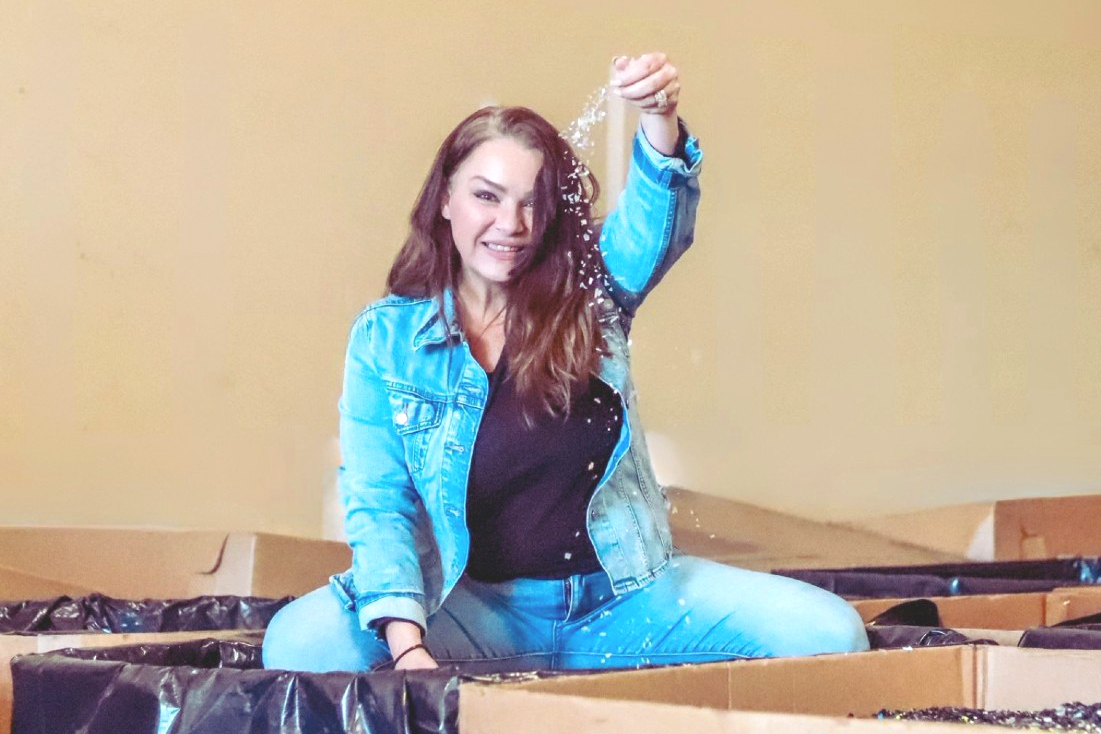
Courtesy Lisa Puckett

A warm welcome back to “Women in Circularity”, where we shine a light on women moving us toward a circular economy. This month, I was pleased to connect with a compliance-driven sustainability leader: Lisa Puckett. Lisa is the founder and CEO of BayArea Compliance, a firm specializing in regulated waste management, environmental compliance and sustainable materials solutions that help organizations reduce risk while advancing circular outcomes. With over two decades of experience navigating complex regulatory environments across healthcare, laboratory and industrial sectors, Lisa transforms compliance from a cost center into a catalyst for measurable environmental impact. 

How did your work in regulated waste and compliance evolve into circular economy leadership?

I began in regulated waste because I saw firsthand how fragile sustainability claims become when they are not built on compliance. In healthcare, laboratory, and industrial environments, waste is not theoretical. It is governed by OSHA, DOT, EPA guidance, FDA protocols and state environmental laws. You cannot simply “recycle more” without managing biological risk, chain-of-custody, transport controls and liability exposure. That tension, between environmental ambition and regulatory reality, is what ultimately led me into circular systems design.

The NETZERO360 initiative was built from that insight. Instead of layering sustainability on top of hauling, we embedded circularity inside a compliance engine. We start with risk reduction, then engineer closed-loop recovery pathways that are audit-defensible and operationally scalable. Whether it is contaminated lab plastics, medical materials, or high-risk items like lithium battery-containing vape devices, the model converts regulatory obligation into measurable environmental performance. Circularity becomes durable when it can withstand scrutiny.

What skill do you think is most critical for building credible and scalable circular systems?

Systems thinking, anchored in regulatory literacy. Circular economy leadership requires understanding how materials move through real facilities, not just how they appear in sustainability reports. Every stream intersects with permitting, worker safety, hazardous materials transport, insurance, and disclosure requirements. If you do not design for those constraints from the start, the system will eventually fail under enforcement pressure or operational friction.

Equally critical is defensible data architecture. Circular systems must produce verifiable metrics, diversion rates, recovery volumes, CO₂ reduction estimates, and fire risk mitigation statistics that align with ESG frameworks and evolving disclosure laws such as California SB 253 and SB 261. When sustainability metrics are traceable and compliant, they stop being marketing claims and start functioning as governance tools.

What is one recent initiative you are especially proud of, and why?

I am particularly proud of the NETZERO360 Vape Recycling Program. Disposable nicotine and THC devices have become one of the fastest-growing fire and compliance risks in modern waste systems because they combine lithium-ion batteries, mixed plastics, residual oils, and electronic components. Improper disposal contributes to landfill and MRF fires, toxic leachate, insurance claims, and enforcement exposure.

We designed a compliance-first, closed-loop operating model: secure battery-safe collection, DOT-regulated transport, controlled battery extraction and neutralization, material separation, verified downstream recovery, and ESG impact reporting. The objective is straightforward: reduce fire risk, stabilize compliance exposure, and convert a growing waste liability into measurable ESG leadership. It reflects our broader philosophy: risk mitigation first, material recovery second, and transparency always.

What emerging trend in regulated materials management will most influence circularity in the next few years?

The convergence of Extended Producer Responsibility, battery regulation, and climate disclosure requirements will reshape circular systems. Materials once treated as minor waste streams, lithium batteries, hybrid plastics, and regulated lab debris, are now triggering fire risk protocols, hazardous materials rules, and board-level ESG scrutiny. Circularity is moving from a voluntary initiative to regulated infrastructure.

We are also seeing increasing pressure for defensible reporting. Investors, regulators, and insurers are asking harder questions about traceability, downstream verification, and exposure controls. Systems that cannot demonstrate chain-of-custody integrity and measurable outcomes will struggle. The future belongs to models that integrate compliance, risk mitigation and transparent reporting into one operating platform.

What book do you recommend to inspire deeper engagement in circularity?

I highly recommend Doughnut Economics by Kate Raworth. It reframes economic growth within ecological and social boundaries in a way that challenges linear assumptions without abandoning practicality. What resonates most is the emphasis on redesigning systems rather than optimizing extraction. 

In my work, this translates into redesigning waste management itself. Circularity is not a branding layer. It is infrastructure. When we rebuild material systems to operate within regulatory, environmental, and governance limits, we create resilience that holds up under scrutiny. That is where real circular progress begins.

Tags: Industry GroupsWomen in Circularity
TweetShare
MaryEllen Etienne

MaryEllen Etienne

MaryEllen Etienne is the creator of Women in Circularity. Etienne is a director of market development for the U.S. Green Building Council, a board member for the National Recycling Coalition, a co-founder of Donify USA and a co-developer of TRUE. She has over 20 years of experience in sustainability and is a champion of the circular economy. View all of the Women in Circularity profiles at womenincircularity.com.

Related Posts

Women in Circularity: Connie Lilley

Women in Circularity: Connie Lilley

byMaryEllen Etienne
April 28, 2026

In this series, we spotlight women moving us toward a circular economy. Today, we meet Connie Lilley of We ReUse.

EPR fees are a market signal. Here’s what they’re telling you.

Oregon DEQ flags 250 producers for RMA noncompliance

byStefanie Valentic
April 21, 2026

Oregon DEQ released its first quarterly producer status list under the Recycling Modernization Act on April 9, flagging 250 companies...

Recycling Partnership CEO stepping down

byStefanie Valentic
April 15, 2026

Outgoing CEO Keefe Harrison will remain until August with the organization she built from the ground up.

NERC launches hub to promote PCR demand 

byAntoinette Smith
April 15, 2026

The Northeast Recycling Council's PCR Material Demand Hub offers resources for government procurement, material- and product-specific resources, and certification and...

Reverse Logistics Network launches to support industry

byPaul Lane
April 14, 2026

The reverse logistics community has a new organization to give companies in that sector a place to connect.

Colorado regulators suggest mid-range EPR scenario

Why collaboration on plastic waste still matters

byCrystal Bayliss
April 13, 2026

Six years ago, the U.S. Plastics Pact launched at a moment of rising concern about plastic waste and growing momentum...

Load More
Next Post

UNIQLO expands textile recycling effort to LA, Dallas

More Posts

Birch Plastics gets FDA green-light for post-industrial PP

LyondellBasell upgrade to PreZero assets on hold

April 23, 2026
EPR fees are a market signal. Here’s what they’re telling you.

Oregon DEQ flags 250 producers for RMA noncompliance

April 21, 2026
The independent ITAD at a crossroads

The independent ITAD at a crossroads

April 22, 2026

What Netflix’s ‘Plastic Detox’ gets wrong – and right

April 23, 2026

Google pilots reuse kits to extend device life

April 21, 2026
What is EPR and why it matters

What is EPR and why it matters

April 22, 2026
Earth Day

Happy Earth Day. Here’s how to celebrate

April 22, 2026
EPR fees are a market signal. Here’s what they’re telling you.

EPR fees are a market signal. Here’s what they’re telling you.

April 10, 2026
Growth challenges drive M&A for packaging

Growth challenges drive M&A for packaging

April 20, 2026
Prescription drug bottles

National Prescription Drug Take Back Day is Saturday

April 24, 2026
Load More

About & Publications

About Us

Staff

Archive

Magazine

Work With Us

Advertise
Jobs
Contact
Terms and Privacy

Newsletter

Get the latest recycling news and analysis delivered to your inbox every week. Stay ahead on industry trends, policy updates, and insights from programs, processors, and innovators.

Subscribe

Welcome Back!

Login to your account below

Forgotten Password?

Retrieve your password

Please enter your username or email address to reset your password.

Log In

Add New Playlist

No Result
View All Result
  • The Latest
  • Analysis
  • Recycling
  • E-Scrap
  • Plastics
  • Policy Now
  • Conferences
    • E-Scrap Conference
    • Plastics Recycling Conference
    • Resource Recycling Conference
    • Textiles Recovery Summit
  • Magazine
  • About Us
  • Advertise
  • Archive
  • Jobs
  • Staff
Subscribe
This website uses cookies. By continuing to use this website you are giving consent to cookies being used. Visit our Privacy and Cookie Policy.