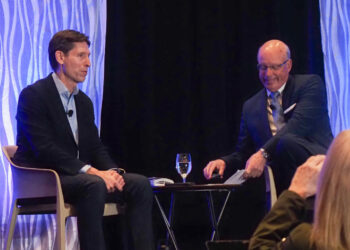
Leaders at hauling giant WM discussed expansions in the company’s recycling infrastructure and automation at a recent investor day, expressing optimism for WM’s future as landfill closures increase demand for collection and recycling.
CEO Jim Fish spoke on WM’s advantaged position as landfill capacity shrinks across the country while solid waste streams remain steady. According to WM’s figures, this trend is expected to continue over the next decade.
“There are threats in the industry…, whether it’s labor and a shrinking labor pool, or, in this case, landfills coming offline,” Fish said in his presentation during the investor day. “But we look at those threats and say: How can we turn it into an opportunity?”
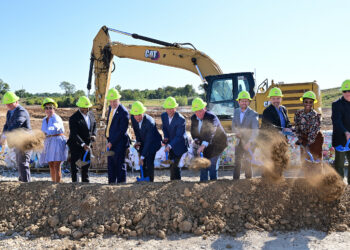
Fish assured investors that WM would meet that challenge by expanding transfer station capacity, relying on its strong disposal network and investing in recycling to reduce the waste going to landfills. According to Fish, WM has invested $1.4 billion into recycling infrastructure since 2022.
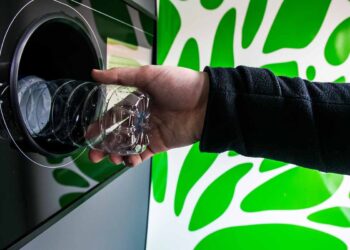
WM’s investments in recycling are aimed at automating recycling systems and expanding into new markets. According to WM’s presentation, automation is expected to cause a decrease of up to 35% in labor required per ton. WM estimates its annual recycling capacity will increase by 1.8 million tons by 2027.
Chief Sustainability Officer Tara Hemmer said WM’s recycling investments are designed to meet the increased demand created by extended producer responsibility (EPR) laws for packaging, which have passed in several U.S. states and in Canada. According to Hemmer, over half of WM’s recycling investments are in states or provinces with EPR laws.
Hemmer said demand for recycling is growing from customers looking for a fully circular waste management system. “They want materials to go out their back door and end up on their front shelf,” she said, adding, “Our WM recycling facilities are the front door for circularity solutions.”
According to Hemmer, WM is investing in recycling more material types, such as plastic film, textiles and C&D. As one example, WM-owned Natura PCR recently upgraded its film recycling facility near Houston.
Hemmer also announced WM is expanding into organics recycling as some states and provinces pass legislation to require more food waste collection. California began requiring food waste collection in 2022. Similar legislation in Quebec will be implemented in 2027.
President and Chief Operating Officer John Morris also explored ways WM is bringing automation to its collection services. In a video presentation, Morris showed AI-powered cameras in collection trucks to monitor driving safety and detect materials loaded. According to Morris, these upgrades are also expected to reduce labor dependence.