




Resource Recycling
  • The Latest
  • Podcast
  • Analysis
    • All
    • Certification Scorecard
    • Industry Announcements
    • Opinion
    IT asset disposition and electronics recycling: Now and then

    Data center moratoriums cast development shadow

    Recycling tracking data is already on your truck

    Recycling tracking data is already on your truck

    A five star ranking with one under a microscope

    Certification scorecard — week of Nov. 9

    Data centers and AI combine to create ITAD ‘growth engine’

    Component shortages drive demand for data center hardware

    Ingram Micro again files to take company public

    Ingram Micro sees lifecycle services rise 35%

    Inside the Circle: Will we lose our shirts over CA textile EPR?

    Inside the Circle: Will we lose our shirts over CA textile EPR?

  • Conferences
    • Resource Recycling Conference
    • Plastics Recycling Conference
    • E-Scrap: The Longevity Conference
    • Textiles Recovery Summit
  • Publications
    • E-Scrap News
    • Plastics Recycling Update
    • Policy Now
    • Resource Recycling
    • Other Topics
      • All Topics
      • Brand Owners
      • Critical Minerals
      • Glass
      • Grant Watch / RFPs
      • Markets
      • Organics
      • Packaging
      • Research
      • Technology
      • Textiles
Subscribe
No Result
View All Result
Resource Recycling
No Result
View All Result
Home Recycling

Late summer legislative sessions send bills forward

Marissa HeffernanbyMarissa Heffernan
September 6, 2024
in Recycling
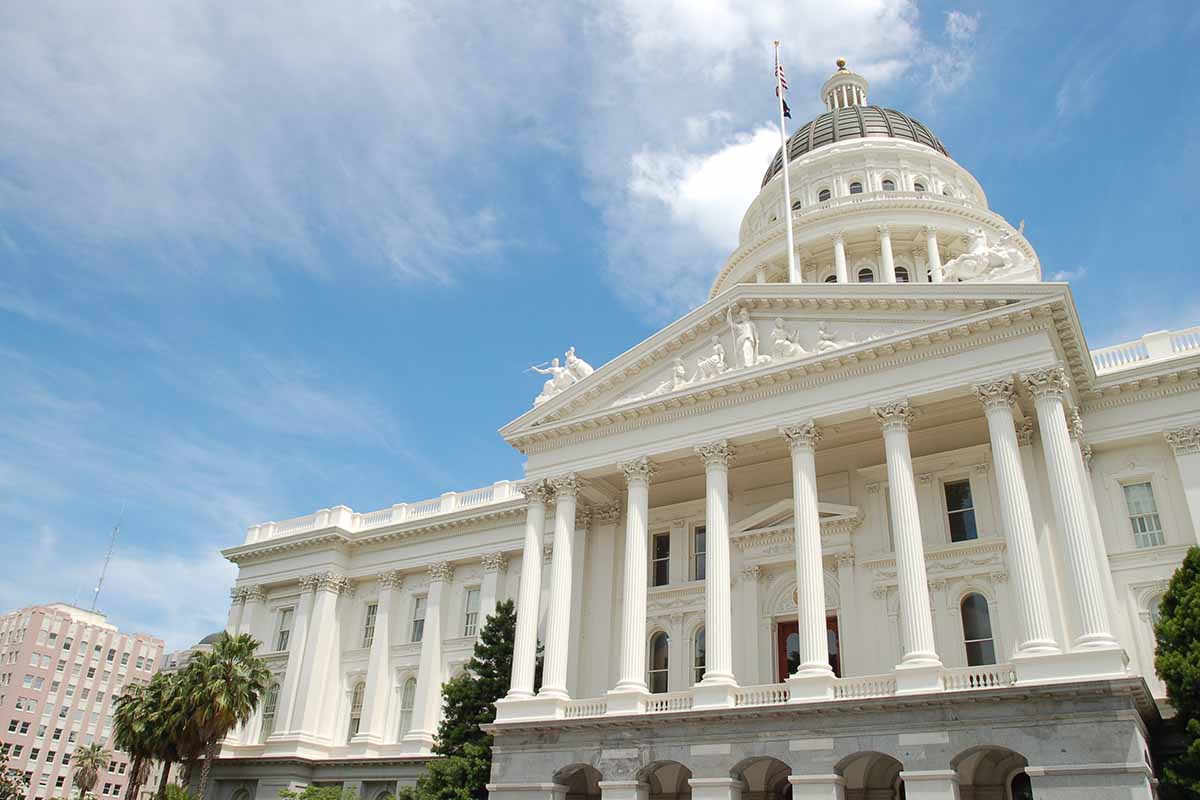
California sent a handful of bills to the governor’s desk, including bills on food waste, plastic film, and the deposit return system. | Jonathan-Lenz/Shutterstock

Several states have late summer ends to their legislative sessions, including New Hampshire, Massachusetts and California, and in the final days several recycling related bills passed. 

Significant movement in California

In California, a two-year legislative cycle ended on the last day of August, meaning any bills that did not end up on Gov. Gavin Newsom’s desk are now dead and cannot be rolled over. 

Ahead of that deadline, legislators passed several bills tweaking the state’s deposit return system. AB 457 reduces the redemption payment and refund value for wine or distilled spirit beverage containers of less than 24 fluid ounces from 25 cents to 10 cents, beginning Jan. 1, and also allows certain distributors and beverage manufacturers to make one annual payment of fees to the state. 

SB 551 will allow beverage manufacturers to submit a combined report on post-consumer recycled resin usage instead of individual reports, as long as they share rights to the same brands or the products. 

Susan Collins, president of the Container Recycling Institute, said SB 551 is “about making the paperwork that’s required work with what happens in the real world.” 

AB 2511 extends the market development payment program for reclaimers for empty plastic beverage containers to 2027, when it would otherwise have expired on July 1.

CRI wrote a letter of support for SB 2511, as Collins said it is an important payment program that needs to be extended every few years. She added that making the program permanent, and perhaps just with language that makes payments contingent on the funding being available, would be more efficient and cause less stress in the industry. 

Newsom signed SB 1113 on Aug. 19. The bill extended the sunset date of recycling pilot projects authorized under the California Beverage Container Recycling and Litter Reduction Act from 2027 to 2034. 

CRI submitted a letter on SB 1113 that the organization was “opposed unless amended.” Collins said there were a number of reasons for that. First, CalRecycle has not reported on the results or data of the pilot programs. CRI asked that the bill be amended to require CalRecycle to submit a report to the legislature, with summaries of each of the pilot programs, the total funding for each program from CalRecycle, the number of containers collected and the overall cost per container recycled in the pilot program. 

In addition, the pilot program is part of a larger issue Collins has been bringing attention to for several years: The Beverage Container Recycling Fund technically has allocated more money to various grant programs over the next 5 years than it has to spend. 

“If they actually spend all of the money that is authorized, they would hit a zero balance in about two years,” Collins said. “That is our current challenge, to amplify this issue enough so that the legislature can make some adjustment in the spending levels so that the program doesn’t have a financial crisis.” 

Nick Lapis, director of advocacy for Californians Against Waste, said his focus has been on AB 2236 and SB 1053, which seek to “close the loophole” on an existing plastic bag ban by extending it to cover thicker plastic film bags that are currently classed as reusable. Recycling firms have opposed the bills, saying it will remove a huge end market for PCR. 

Lapis said he was “not expecting any difficulties” once the bills make it to the governor’s desk, and various groups have been working on the bag ban amendment since 2014. 

Mark Murray, executive director of Californians Against Waste, said in a statement that “with the passage of this legislation, an estimated 250 million pounds of plastic film bags will no longer be generated and disposed.”

“In 2016, California voters said no to Plastic Grocery Bags (Prop 67). But a loophole in the law allowed stores to sell ‘thicker plastic bags’ as a ‘reusable bag,'” Murray said. “Today the experience and data are clear: those plastic bags are not being regularly reused – they are not even getting recycled. The experiment failed. It’s time to end it.” 

Recycling firms have opposed the bills, saying it will remove a huge end market for PCR. The Responsible Recycling Alliance, which was formed recently by EFS Plastics, Merlin Plastics and PreZero US to oppose the bills, said it had “deep disappointment” that the “anti-environment” bills passed.

Lapis has also been focused on getting AB 660 to the finish line, which would standardize expiration dates to reduce food waste and textile EPR bill SB 707.

“The average American buys $1,300 worth of food they never eat each year, and a lot of this food waste is easily avoidable,” Lapis said. “In fact, studies have found that 20% of all avoidable consumer food waste comes from confusion over expiration dates. Getting rid of sell-by dates and standardizing the terminology used to indicate quality and safety is a very common-sense fix that will reduce a lot of this unnecessary waste.”

AB 863, which would alter the state’s carpet EPR program to incentivize using recycled carpet fiber instead of recycled PET bottles, also went to Newsom’s desk. 

Looking forward, Lapis said “we have a lot of unfinished business from this year.”

“I still believe there is a lot more work to be done on dine in and reuse,” he said, and there has also been talk about streamlining permitting for composting and dealing with disposable vapes. 

Several bills stalled out in California, including SB 560, which would have created a stewardship program for gas cylinders; AB 2916, which would have banned marine EPS; AB 2761, which would have banned all plastic packaging with PFAS or PVC; SB 1231, which would have altered SB 54 to allow producers to petition to have material considered recyclable instead of having the state unilaterally determine recyclability; and AB 2762, which would have extended the target dates dates for existing reuse requirements. 

Legislative activity elsewhere in the nation

Looking briefly at other states that are wrapping up, in Massachusetts, bills on the right to repair, recycling access, EPR and several single use plastic bans all failed. 

In New Hampshire, Gov. Chris Sununu signed HB 1386, which prohibits the disposal of lithium-ion batteries in landfills, composting facilities or incinerators. It also bans the disposal of wireless telephones, printers, copiers, fax machines and computer accessories in landfills or incinerators. The law will go into effect next July.

A bill in North Carolina, S 725, that would have defined chemical recycling as recycling, died in committee.

Other states still have several months left in their legislative sessions, including Michigan, New Jersey, Ohio and Pennsylvania. 
Tags: Legislation & EnforcementPolicy Now
TweetShare
Marissa Heffernan

Marissa Heffernan

Marissa Heffernan worked at Resource Recycling from January 2022 through June 2025, first as staff reporter and then as associate editor. Marissa Heffernan started working for Resource Recycling in January 2022 after spending several years as a reporter at a daily newspaper in Southwest Washington. After developing a special focus on recycling policy, they were also the editor of the monthly newsletter Policy Now.

Related Stories

Goodwill eyes EPR revenue, starting with waste audit

byStefanie Valentic
November 12, 2026

Goodwill sustainability leaders say the nonprofit’s donation network could serve packaging and textile EPR programs, but they first need hard...

IT asset disposition and electronics recycling: Now and then

Data center moratoriums cast development shadow

byDavid Daoud
November 12, 2026

Developers and decommissioning firms face uncertainty amid communities’ concerns over the impact centers create.

Produce packers face narrow exits under SB 54

byStefanie Valentic
November 11, 2026

Fiber, compostables, PCR and monomaterial films all come with tradeoffs for fresh produce, and no single swap will work across...

Textile EPR needs end markets, not just collection

Textile EPR needs end markets, not just collection

byStefanie Valentic
November 10, 2026

Reju CEO Patrik Frisk said textile EPR programs will fall short unless they also create demand for recycled material.

Rhode Island bill would make brands pay for recycling

Midterms put e-scrap legislation in focus

byDavid Daoud
November 6, 2026

New legislative majorities in Pennsylvania and Wisconsin could affect state electronics recycling programs, while federal initiatives face a divided government.

Europe’s recyclers miss most of the critical materials

Researchers look for participants in e-scrap study

byPaul Lane
November 6, 2026

Federal researchers are looking at how to bolster e-recycling rates in states without collection laws.

Load More
Next Post

In My Opinion: The Case for National Data Reporting

2026 Buyers’ Guide

Equipment, services and technology suppliers serving the recycling industry.

Browse the Guide

More Posts

PureCycle sees easing headwinds to R-PP adoption

PureCycle shifts focus, secures feedstock

November 5, 2026
NexPoint Materials to shutter Alabama plastics plant

NexPoint Materials to shutter Alabama plastics plant

November 4, 2026
Inside the Circle: Will we lose our shirts over CA textile EPR?

Inside the Circle: Will we lose our shirts over CA textile EPR?

November 9, 2026
Artificial intelligence is altering the marketplace for ITAD providers in numerous ways. | Shutterstock

AI alters ITAD economics

November 3, 2026
PET bottles for recycling

PET imports reshape US markets as demand grows

November 11, 2026
Textile EPR needs end markets, not just collection

Textile EPR needs end markets, not just collection

November 10, 2026
The missing link in e-plastic recycling

The missing link in e-plastic recycling

October 28, 2026
Modern Mining raises $40 million in IPO

Modern Mining raises $40 million in IPO

November 12, 2026
UC Riverside expands reusable takeout program

UC Riverside expands reusable takeout program

November 6, 2026
IT asset disposition and electronics recycling: Now and then

Data center moratoriums cast development shadow

November 12, 2026
Load More

About & Publications

About Us

Staff
Job Listings

Archive

Magazines

Work With Us

Advertise
Contact
Terms and Privacy

Newsletters

Get the latest recycling news and analysis delivered to your inbox every week. Stay ahead on industry trends, policy updates, and insights from programs, processors, and innovators.

Subscribe

Welcome Back!

Login to your account below

Forgotten Password?

Retrieve your password

Please enter your username or email address to reset your password.

Log In

Add New Playlist

No Result
View All Result
  • The Latest
  • Podcast
  • Analysis
  • Recycling
  • E-Scrap
  • Plastics
  • Policy Now
  • Conferences
    • E-Scrap Conference
    • Plastics Recycling Conference
    • Resource Recycling Conference
    • Textiles Recovery Summit
  • Magazines – Old
  • About Us
  • Advertise
  • Archive
  • Job Listings
  • Staff
Subscribe
This website uses cookies. By continuing to use this website you are giving consent to cookies being used. Visit our Privacy and Cookie Policy.