






Resource Recycling
  • The Latest
  • Analysis
    • All
    • Certification Scorecard
    • Industry Announcements
    • Opinion

    Closed Loop Partners acquires Sutter Metals, connecting electronics disposition to metals recovery

    Certification Scorecard — Week of March 30, 2026

    Certification scorecard – Week of March 23, 2026

    Certification Scorecard – Week of March 16, 2026

    Groups identify recovered plastics users in the Northeast

    Bale pricing for recycled plastics diverges

    Why global ITAD is stranded in the Gulf

    Why global ITAD is stranded in the Gulf

    Certification scorecard for the week of March 9, 2026

    Diversion Dynamics: Secondhand exports slow down fast fashion

    Certification scorecard for the week of March 2, 2026

  • Conferences
  • Publications

    Other Topics

    Textiles
    Organics
    Packaging
    Glass
    Brand Owners

    Metals
    Technology
    Research
    Markets
    Grant Watch

    All Topics

Subscribe
No Result
View All Result
Resource Recycling
  • The Latest
  • Analysis
    • All
    • Certification Scorecard
    • Industry Announcements
    • Opinion

    Closed Loop Partners acquires Sutter Metals, connecting electronics disposition to metals recovery

    Certification Scorecard — Week of March 30, 2026

    Certification scorecard – Week of March 23, 2026

    Certification Scorecard – Week of March 16, 2026

    Groups identify recovered plastics users in the Northeast

    Bale pricing for recycled plastics diverges

    Why global ITAD is stranded in the Gulf

    Why global ITAD is stranded in the Gulf

    Certification scorecard for the week of March 9, 2026

    Diversion Dynamics: Secondhand exports slow down fast fashion

    Certification scorecard for the week of March 2, 2026

  • Conferences
  • Publications

    Other Topics

    Textiles
    Organics
    Packaging
    Glass
    Brand Owners

    Metals
    Technology
    Research
    Markets
    Grant Watch

    All Topics

Subscribe
No Result
View All Result
Resource Recycling
No Result
View All Result
Home Recycling

What’s the right role for chemical recycling?

Marissa HeffernanbyMarissa Heffernan
November 28, 2022
in Recycling
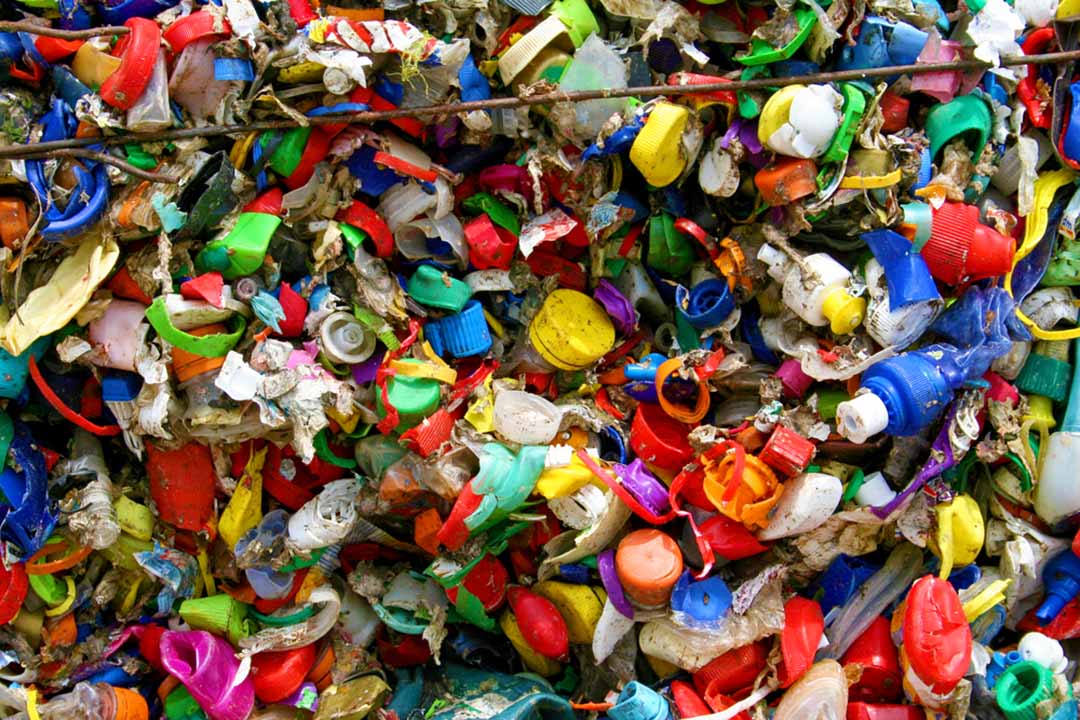
As of 2021 there were more than 40 companies working to develop or manage chemical recycling projects in the United States. | paul prescott/Shutterstock

Mechanical recycling should take priority over chemical recycling, but there will need to be several technical solutions to the world’s plastic problem, argued panelists on a recent Product Stewardship Institute webinar. 

Other takeaways from the Nov. 17 “EPR Master Class on Chemical Recycling” were that the recycling discussion needs to extend beyond packaging and that life cycle analysis should be used to prioritize disposal options. 

Chemical recycling is an umbrella term that generally refers to a wide array of processes that use heat, pressure and solvents to break down the molecular chains of polymers into liquids or gasses that can then be processed into fuels, oils, waxes, new plastics or other chemical products.

During the webinar, it was also referred to as advanced recycling, non-mechanical recycling and molecular recycling. 

Scott Cassel, Product Stewardship Institute (PSI) CEO and founder, said the technologies have “become a lightning rod,” with some hailing them as the new standard of recycling and others calling them greenwashing. 

He said as of 2021 there were more than 40 companies working to develop or manage chemical recycling projects in the United States, and 20 states have enacted laws that allow chemical recycling facilities to be licensed as manufacturing facilities instead of waste management facilities. Overall, he pointed to a knowledge gap around what exactly each technology is and what its impacts are.

PSI released a report, “Making Sense of Chemical Recycling,” to answer some of the questions, Cassel noted. 

Mechanical versus chemical

Panelists overwhelmingly said studies prove that mechanical recycling has a smaller environmental footprint and is more advantageous than chemical recycling. 

David Allaway, a senior policy analyst with the Oregon Department of Environmental Quality, noted that the “overarching goal should be to achieve a system where resource use and pollution are within levels that can be sustained in perpetuity,” but circular systems are not inherently sustainable and realistically, some packaging will be generated and will need to be managed. 

When it comes to mechanical versus chemical recycling, both require energy and result in emissions, and both can displace virgin feedstock, he said. 

“All these can impact the environment in both positive and negative ways, so it is not a picture in black and white, as some would propose, but shades of gray,” he added. 

Oregon’s stated policy is that mechanical recycling is preferred to both landfill and chemical recycling, Allaway said, “but sometimes mechanical recycling is not an option, so how does chemical compare?” 

Paula Luu, a senior project director with Closed Loop Partners, said in all instances she studied, mechanical recycling has a smaller environmental footprint, but “the diversity of plastics today requires a diversity of solutions.” 

“Molecular recycling is just one slice of that pie,” Luu said, adding that it’s important for the industry and world to first define what waste-free success looks like.

Plastic-to-plastic only

Panelists also largely said they supported only plastic-to-plastic chemical recycling, not plastic-to-fuel. 

Cheryl Coleman, senior vice president of sustainability at the Institute of Scrap Recycling Industries (ISRI), said ISRI supports processes that convert used plastic into resins and monomers, but does not support turning it into petrochemical products for energy use or fuel. 

Luu added that “plastics-to-plastics is what is recycling, and we support those technologies.” 

Allaway noted that Oregon’s extended producer responsibility law states that all material has to be responsibly managed by a facility that is transparent and environmentally sound. 

That means the law “allows for chemical recycling pathways to compete with others as a viable option, but requires disclosure and evidence that the pathway is aligned with Oregon’s policy objectives: responsible production and use and management of materials in a way that protects the environment, conserves resources and enhances well-being,” he said. 

Moving forward

As the discussion around chemical recycling continues, ISRI’s Coleman encouraged participants to “take the time you need to make sure there are not unintended consequences” of laws or of looking at chemical recycling technology as a short-term, interim solution. 

“If we think that folks are going to invest millions and millions of dollars into creating scalable processes for managing material and then they’re going to stop because we’ve come up with a better method, they’re not,” she said. “There needs to be an exit strategy.”

Luu said she suggests regulating facilities based on the feedstock they accept and the outputs they produce, “because these technologies are so flexible.” 

Veena Singla, a senior scientist with the Natural Resources Defense Council, pointed out that “we are missing a critical voice on the panel today, the people who live with a chemical recycling facility in their backyards.” 

Singla said she’s often asked by concerned parents about the levels and types of air pollutants, but “I can’t really answer that question because of the lack of transparency” around what exactly happens in chemical recycling facilities. 

“Caution really is warranted” when it comes to moving forward with chemical recycling technologies, she added, and her best-case scenario is drastically reducing the need for chemical recycling by reducing plastic use, especially of the kinds of plastics that cannot be recycled mechanically. 

Her worst-case scenario is if the current deregulation push by chemical recyclers “continues to be successful and the safeguards we have in place now to protect our air and water are stripped  away.”  

“We need to be making sure any recycling technology that’s employed meets human health and environmental standards,” she said. 
 

Tags: EPRIndustry GroupsPlastics
TweetShare
Marissa Heffernan

Marissa Heffernan

Marissa Heffernan worked at Resource Recycling from January 2022 through June 2025, first as staff reporter and then as associate editor. Marissa Heffernan started working for Resource Recycling in January 2022 after spending several years as a reporter at a daily newspaper in Southwest Washington. After developing a special focus on recycling policy, they were also the editor of the monthly newsletter Policy Now.

Related Posts

WM rolling out curbside acceptance of PP cups 

APR releases first semiannual Design Guide update

byBrian Clark Howard
April 3, 2026

The Association of Plastic Recyclers (APR) has published the first semiannual APR Design Guide for Plastics Recyclability. Now in its...

Apparel retailer organization challenges SB 707 textile PRO selection

byStefanie Valentic
April 2, 2026

With the July 1 deadline looming, the American Apparel & Footwear Association has filed a petition questioning CalRecycle's selection of...

With RPET in crisis, focus turns to solutions

With RPET in crisis, focus turns to solutions

byAntoinette Smith
April 2, 2026

Stakeholders from across the RPET value chain share concrete solutions for the short term to help prevent further loss of...

Waste Connection recycling cart in The Dalles, Oregon

First Oregon community expands curbside recycling with EPR funding

byBrian Clark Howard
April 1, 2026

The City of The Dalles in northern Oregon is now rolling out nearly 5,000 new 90-gallon recycling carts to customers...

Women in Circularity: Lisa Puckett

Women in Circularity: Lisa Puckett

byMaryEllen Etienne
March 30, 2026

In this series, we spotlight women moving us toward a circular economy. Today, we meet Lisa Puckett of BayArea Compliance.

Quebec PRO reflects on first year of packaging EPR

byAntoinette Smith
March 30, 2026

The province's all-packaging collection approach has simplified messaging while providing lessons for the PRO as well as for industry.

Load More
Next Post

Paper producers reflect on OCC prices, upcoming plants

More Posts

Quebec PRO reflects on first year of packaging EPR

March 30, 2026

ReElement, Mitsubishi partner on rare earth supply chains

March 31, 2026
Belgian and Flemish flags fly against a backdrop of an ocean beach

PureCycle receives €40m EU grant for new plant

March 26, 2026
#ESC2025 Speaker Spotlight: Matthew Young

From bootstrap to boom: EVR poised for growth after capital injection

March 26, 2026

Report pegs fire losses at $2.5b in US and Canada recycling industry

March 27, 2026
URT builds alliance to remake electronics plastics at scale

Less premium smartphone inventory is reaching recyclers

March 30, 2026
Groups identify recovered plastics users in the Northeast

Bale pricing for recycled plastics diverges

March 17, 2026
Waste Connection recycling cart in The Dalles, Oregon

First Oregon community expands curbside recycling with EPR funding

April 1, 2026
Unilever shifting focus to flexibles targets

Unilever shifting focus to flexibles targets

March 23, 2026
With RPET in crisis, focus turns to solutions

With RPET in crisis, focus turns to solutions

April 2, 2026
Load More

About & Publications

About Us

Staff

Archive

Magazine

Work With Us

Advertise
Jobs
Contact
Terms and Privacy

Newsletter

Get the latest recycling news and analysis delivered to your inbox every week. Stay ahead on industry trends, policy updates, and insights from programs, processors, and innovators.

Subscribe

Welcome Back!

Login to your account below

Forgotten Password?

Retrieve your password

Please enter your username or email address to reset your password.

Log In

Add New Playlist

No Result
View All Result
  • The Latest
  • Analysis
  • Recycling
  • E-Scrap
  • Plastics
  • Policy Now
  • Conferences
    • E-Scrap Conference
    • Plastics Recycling Conference
    • Resource Recycling Conference
    • Textiles Recovery Summit
  • Magazine
  • About Us
  • Advertise
  • Archive
  • Jobs
  • Staff
Subscribe
This website uses cookies. By continuing to use this website you are giving consent to cookies being used. Visit our Privacy and Cookie Policy.