






Resource Recycling
  • The Latest
  • Analysis
    • All
    • Certification Scorecard
    • Industry Announcements
    • Opinion
    Data quantifies progress on plastic recycling

    Inside the Circle: Don’t break the sustainable accounting system

    Assurant releases Q2 trade-in and upgrade data

    iPhone changes could flip script on secondhand market

    From claims to custody: PCR procurement grows up

    From claims to custody: PCR procurement grows up

    What the NAND flash crunch means for remarketing, refurbishment and residual values

    Telamon acquires ITAD consultancy Retire-IT

    Certification Scorecard — Week of July 6, 2026

    Tech giant pens detailed ‘plastic-free packaging’ guide

    What Google’s latest report means for ITAD

  • Conferences
    • Resource Recycling Conference
    • Plastics Recycling Conference
    • E-Scrap: The Longevity Conference
    • Textiles Recovery Summit
  • Publications
    • E-Scrap News
    • Plastics Recycling Update
    • Policy Now
    • Resource Recycling
    • Other Topics
      • All Topics
      • Brand Owners
      • Critical Minerals
      • Glass
      • Grant Watch / RFPs
      • Markets
      • Organics
      • Packaging
      • Research
      • Technology
      • Textiles
Subscribe
No Result
View All Result
Resource Recycling
  • The Latest
  • Analysis
    • All
    • Certification Scorecard
    • Industry Announcements
    • Opinion
    Data quantifies progress on plastic recycling

    Inside the Circle: Don’t break the sustainable accounting system

    Assurant releases Q2 trade-in and upgrade data

    iPhone changes could flip script on secondhand market

    From claims to custody: PCR procurement grows up

    From claims to custody: PCR procurement grows up

    What the NAND flash crunch means for remarketing, refurbishment and residual values

    Telamon acquires ITAD consultancy Retire-IT

    Certification Scorecard — Week of July 6, 2026

    Tech giant pens detailed ‘plastic-free packaging’ guide

    What Google’s latest report means for ITAD

  • Conferences
    • Resource Recycling Conference
    • Plastics Recycling Conference
    • E-Scrap: The Longevity Conference
    • Textiles Recovery Summit
  • Publications
    • E-Scrap News
    • Plastics Recycling Update
    • Policy Now
    • Resource Recycling
    • Other Topics
      • All Topics
      • Brand Owners
      • Critical Minerals
      • Glass
      • Grant Watch / RFPs
      • Markets
      • Organics
      • Packaging
      • Research
      • Technology
      • Textiles
Subscribe
No Result
View All Result
Resource Recycling
No Result
View All Result
Home Recycling

California recycling overhaul is now law

Marissa HeffernanbyMarissa Heffernan
June 30, 2022
in Recycling
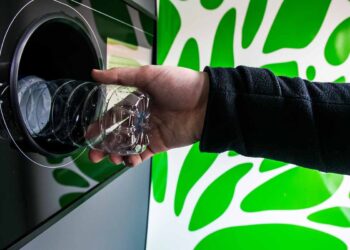
Legislators have approved EPR for printed paper and packaging in California. | Kit Leong/Shutterstock

This story has been updated.

California’s printed paper and packaging extended producer responsibility bill passed the state Senate unanimously June 30 and was signed into law, just before the deadline to pull a plastic-tax measure from November’s state ballot.

Senate Bill 54 was signed by Gov. Gavin Newsom, and ballot measure backers withdrew their ballot effort.

California compromise

SB 54, which has appeared in different iterations over the past three years, will create a producer responsibility organization (PRO) to run a collection and recycling program with state oversight, establishing a form of extended producer responsibility (EPR) for printed paper and packaging.

Meanwhile, the California Recycling and Plastic Pollution Reduction Act ballot measure, originally submitted in November 2019, aimed to build up both recycling infrastructure and composting infrastructure, along with other areas, all funded by a plastic tax paid by manufacturers. The plastics industry opposed the ballot measure and was grudgingly supportive of SB 54 as an alternative to it.

California legislators, environmentalists and industry representatives had been working to finalize language in SB 54, in hopes that a comprehensive bill would persuade ballot measure backers to withdraw their proposal.

To remove the measure from the ballot, the three petitioners behind it needed to agree to do so 130 days before the Nov. 8 election. That deadline meant that, effectively, SB 54 would have needed to pass out of both the Assembly and Senate by the end of June to provide enough time for them to withdraw the measure as part of a compromise.

After days of final-hour work, the amended bill passed the Assembly on June 29 on a vote of 67-2 and the Senate on June 30 on a vote of 29-0.

Gov. Newsom acted quickly to sign the bill on the evening of June 30, and ballot backers subsequently pulled their initiative.

Recent activity on SB 54

SB 54, the Plastic Pollution Producer Responsibility Act, mandates a 25% reduction of single-use plastic packaging and foodservice products by 2032. It also shifts a portion of packaging to reuse or refill systems and calls for a needs assessment, paid for by the PRO but overseen by the California Department of Resources Recycling and Recovery (CalRecycle).The bill also includes eco-modulated fees charged to producers, which is designed to incentivize them to use sustainable, recyclable or reusable materials.

In the days leading up to the deadline, the bill was amended multiple times to strengthen environmental protection and government oversight and enforcement.

The changes include more clarification that CalRecycle will revoke approval of the PRO if it fails to meet the requirements of the bill.

The amendments also clarified that the definition of recycling does not include combustion, incineration, energy generation or fuel production except for anaerobic digestion.

On the enforcement side, the bill now states that CalRecycle may adopt regulations to verify that materials shipped out of state meet processing and contamination standards, prevents EPR fees from being listed as a separate item on a receipt or invoice, and establishes fees to incentivize producers to shift away from materials with heavy metals, pathogens or additives.
Learn more in person
Recycling policy insiders who have engaged on the California bill and other state proposals will take to the stage for an EPR Town Hall discussion at the 2022 Resource Recycling Conference, Aug. 15-17 in Austin, Texas. Register today for exclusive insight on how the policy trend could continue to reshape U.S. municipal recycling in the years to come.One previous area of contention had been over a full ban of expanded polystyrene, which ballot measure supporters wanted, versus setting a high recycling rate that would create a de facto ban. SB 54 originally called for a 20% recycling rate for polystyrene by 2025, but the amended version sets a 65% rate by 2032, with interim steps of 25% by 2025, 30% by 2028 and 50% by 2030.

The bill also sets up a California Plastic Pollution Mitigation Fund to pay to address existing environmental damage and health impacts. The PRO would fund the account via an environmental mitigation surcharge, which would start at $500 million per year from 2027 through 2037, with 60% focused on low-income, disadvantaged and rural communities.

Fiber industry tension

Last week, 11 Assembly Democrats sent a letter asking the bill’s sponsor, Sen. Ben Allen, and Senate Majority Leader Bob Hertzberg to “amend SB 54 to remove paper products entirely from the bill.”

That didn’t happen.

The June 26 amendments provided an “off-ramp” for certain types of materials, with an eye on “tertiary packaging” (packaging materials used to transport products, for instance, and that do not generally end up in the residential waste stream).

The amended bill specifies that the producer-funded framework would not include a material type that has demonstrated a recycling rate of 65% for three consecutive years prior to January 1, 2027, and on and after that date demonstrates a recycling rate at or over 70% annually, as demonstrated to state officials every two years.

The amended text also notes that to qualify for the off-ramp, the material must also meet the following criteria: It is not collected through a residential recycling collection service, it does not undergo separation from other materials at a commingled recycling facility, and it is recycled via a responsible end market.

The Association of Home Appliance Manufacturers (AHAM) opposed SB 54 and instead supported the ballot initiative, saying that the bill is “20-30 times more expensive and much less effective than the ballot initiative” and that the initiative is “a creative, groundbreaking solution.”

The Association of California Recycling Industries (ACRI) also preferred the ballot measure and said “while we appreciate the Legislature’s stated goal to target problematic single-use consumer packaging waste and plastic single-use food service ware, several of the amendments published in the last couple of days will have a devastating impact on recycling in California.”

The American Chemistry Council called for the ballot measure to be withdrawn in favor of the bill.

This story was updated to reflect that Gov. Newsom signed SB 54 on June 30.

Resource Recycling Conference

Tags: CaliforniaEPRLegislation & Enforcement
TweetShare
Marissa Heffernan

Marissa Heffernan

Marissa Heffernan worked at Resource Recycling from January 2022 through June 2025, first as staff reporter and then as associate editor. Marissa Heffernan started working for Resource Recycling in January 2022 after spending several years as a reporter at a daily newspaper in Southwest Washington. After developing a special focus on recycling policy, they were also the editor of the monthly newsletter Policy Now.

Related Posts

Data quantifies progress on plastic recycling

Inside the Circle: Don’t break the sustainable accounting system

byBill Shireman
July 13, 2026

Why California should not restrict the use of “mass balance accounting.”

From claims to custody: PCR procurement grows up

From claims to custody: PCR procurement grows up

byPuneet Thadani
July 10, 2026

In this guest column, the founder of Ecolar Global says the growing use of recycled content without standardized documentation presents...

SB 54 draft rules generate debate on rates, review

California increases PET market payments

byAntoinette Smith
July 7, 2026

While the state extended the incentive program, the status of a separate bill with similar goals is uncertain.

Two recycled-content bills gain approval in California

California agriculture seeks SB 54 repeal

byStefanie Valentic
July 7, 2026

A coalition of state agriculture stakeholders says the packaging law could add nearly $1,400 a year to household grocery costs...

In Our Opinion: Coalitions: The EPR Differentiator

Inside NAW’s constitutional case against packaging EPR

byStefanie Valentic
July 6, 2026

The National Association of Wholesaler-Distributors is fighting EPR in Oregon, and now in California too.

EPR fees are a market signal. Here’s what they’re telling you.

Building the infrastructure behind EPR

byStefanie Valentic
July 6, 2026

CAA's Jeff Fielkow breaks down the organization's role in US packaging EPR and why being the only multi-state PRO in...

Load More
Next Post

California recycling overhaul is now law

More Posts

Tech giant pens detailed ‘plastic-free packaging’ guide

What Google’s latest report means for ITAD

July 8, 2026
Unpacking the Starbucks cup data

Unpacking the Starbucks cup data

July 8, 2026

Plastics ease as paper, cans steady

July 13, 2026
Data quantifies progress on plastic recycling

Inside the Circle: Don’t break the sustainable accounting system

July 13, 2026
Two recycled-content bills gain approval in California

California agriculture seeks SB 54 repeal

July 7, 2026
MP Materials breaks ground on rare earth magnet campus in North Texas

ERI confirms ITAD shift toward minerals

July 3, 2026
SB 54 draft rules generate debate on rates, review

California increases PET market payments

July 7, 2026
What the NAND flash crunch means for remarketing, refurbishment and residual values

Telamon acquires ITAD consultancy Retire-IT

July 9, 2026

Digital product passports offer gateway into secondary market

July 7, 2026
Canada EV battery reuse pilot to start

Canada EV battery reuse pilot to start

July 8, 2026
Load More

About & Publications

About Us

Staff

Archive

Magazine

Work With Us

Advertise
Jobs
Contact
Terms and Privacy

Newsletter

Get the latest recycling news and analysis delivered to your inbox every week. Stay ahead on industry trends, policy updates, and insights from programs, processors, and innovators.

Subscribe

Welcome Back!

Login to your account below

Forgotten Password?

Retrieve your password

Please enter your username or email address to reset your password.

Log In

Add New Playlist

No Result
View All Result
  • The Latest
  • Analysis
  • Recycling
  • E-Scrap
  • Plastics
  • Policy Now
  • Conferences
    • E-Scrap Conference
    • Plastics Recycling Conference
    • Resource Recycling Conference
    • Textiles Recovery Summit
  • Magazine
  • About Us
  • Advertise
  • Archive
  • Jobs
  • Staff
Subscribe
This website uses cookies. By continuing to use this website you are giving consent to cookies being used. Visit our Privacy and Cookie Policy.