





Resource Recycling
  • The Latest
  • Analysis
    • All
    • Certification Scorecard
    • Industry Announcements
    • Opinion

    Certification scorecard for the week of March 2, 2026

    Industry announcements for January 2026

    Industry Announcements for March 2026

    HP receives ocean plastics certification

    HP Inc. earnings point to memory inflation challenge

    Certification scorecard for the week of Feb. 23, 2026

    Umicore highlights strength in recycling, catalysis

    Apto, Tusaar partner on rare earths recovery

    Apto, Tusaar partner on rare earths recovery

    Certification scorecard for the week of Feb. 16, 2026

    Sims Lifecycle leverages hyperscale decommissioning

    Sims Lifecycle leverages hyperscale decommissioning

    The electronics recycling industry is undergoing a transformation from labor-intensive manual operations to highly automated, AI-driven facilities that use advanced robotics, cleaner chemistry and digital tracking systems to extract critical materials.

    The cyber-physical MRF: AI and robotics reshape e-waste recovery

  • Conferences
  • Publications

    Other Topics

    Textiles
    Organics
    Packaging
    Glass
    Brand Owners

    Metals
    Technology
    Research
    Markets
    Grant Watch

    All Topics

Subscribe
No Result
View All Result
Resource Recycling
  • The Latest
  • Analysis
    • All
    • Certification Scorecard
    • Industry Announcements
    • Opinion

    Certification scorecard for the week of March 2, 2026

    Industry announcements for January 2026

    Industry Announcements for March 2026

    HP receives ocean plastics certification

    HP Inc. earnings point to memory inflation challenge

    Certification scorecard for the week of Feb. 23, 2026

    Umicore highlights strength in recycling, catalysis

    Apto, Tusaar partner on rare earths recovery

    Apto, Tusaar partner on rare earths recovery

    Certification scorecard for the week of Feb. 16, 2026

    Sims Lifecycle leverages hyperscale decommissioning

    Sims Lifecycle leverages hyperscale decommissioning

    The electronics recycling industry is undergoing a transformation from labor-intensive manual operations to highly automated, AI-driven facilities that use advanced robotics, cleaner chemistry and digital tracking systems to extract critical materials.

    The cyber-physical MRF: AI and robotics reshape e-waste recovery

  • Conferences
  • Publications

    Other Topics

    Textiles
    Organics
    Packaging
    Glass
    Brand Owners

    Metals
    Technology
    Research
    Markets
    Grant Watch

    All Topics

Subscribe
No Result
View All Result
Resource Recycling
No Result
View All Result
Home Recycling

Single-use packaging proposal on pause in California

Colin StaubbyColin Staub
September 17, 2019
in Recycling
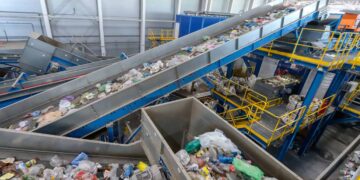
A pair of much-watched California bills looked to require a 75% reduction of waste from single-use packaging.| Eziutka /Shutterstock

Sweeping legislation in California that would have set aggressive recycling mandates on a range of items failed to advance last week.

Assembly Bill 1080 and its companion bill, Senate Bill 54, were not voted on by the end of the day Friday, the deadline to approve legislation. That means the bills, which would have set substantial recycling and source-reduction requirements on single-use packaging, are dead for now.

The legislation requires the California Department of Resources Recycling and Recovery (CalRecycle) to, by 2024, develop and adopt regulations that will require all single-use packaging and “priority single-use products” sold in California to be recyclable or compostable by 2030. It also requires producers source reduce their single-use products “to the maximum extent feasible.”

Additionally, the bills mandate that the state “achieve and maintain” a 75% reduction of the waste generated from these single-use products. This can be met through source reduction, recycling or composting.

Besides single-use packaging, the bill identifies “priority single-use products” as foodservice ware such as plates, bowls, cups, utensils, stirrers and straws.

How these goals would carried through is largely up to CalRecycle, which would be required “to conduct extensive outreach to stakeholders and local agencies.” CalRecycle would look into certain “specified regulator measures” that reduce single-use materials. One such measure that’s laid out in the bill is extended producer responsibility (EPR). The legislation “authorizes CalRecycle to allow producers to implement extended producer responsibility programs if the program meets certain criteria and is approved by CalRecycle,” according to a bill analysis from the Senate Environmental Committee.

Other specific regulator measures outlined in the bill text include recyclability labeling requirements, deposit systems, rolling out reusable and refillable delivery systems, advanced disposal fees, incentive programs and more.

The legislation went through numerous iterations during the session, up to and including several key revisions in the past week. In one significant change, the legislation moved from covering specifically single-use plastic materials to being written as a “material neutral” bill: The legislation was rewritten to cover single-use products made from any material, including paper and metals.

In an analysis laying out the impetus for the legislation, sponsors described the recycling challenges that California, alongside communities around the country, have faced in the past two years. The sponsors pointed to market fallout from China’s import restrictions, global plastic pollution problems, recycling infrastructure shortfalls and a lack of Californian end markets.

Industry positions

The bill was largely opposed by trade associations, with one key exception.

As of last week, groups in opposition included the American Forest & Paper Association (AF&PA), American Institute for Packaging and the Environment, the California Waste Recycling Association, the California Refuse Recycling Council, the EPS Industry Alliance, the Flexible Packaging Association, the Foodservice Packaging Institute and more.

The American Chemistry Council (ACC), however, changed its position from “opposed” to “neutral” last week, after several changes to the legislation reduced the group’s concerns. A key change for ACC and Dow, which ended up supporting the bill, was making the legislation apply to other materials and not just plastic, Plastics News reported earlier this month. These changes, however, spurred additional industry groups to oppose the bill, as more manufacturing sectors would be subject to the law.

In a statement following the bill’s failure to advance, ACC said it urges lawmakers “to continue working on this issue and address key issues such as the need for funding to expand and improve the state’s recycling infrastructure and updating the state’s solid waste laws to ensure that innovative chemical recycling technologies are part of the solution.”

AF&PA, meanwhile, said it was “pleased” that the bills did not advance last week.

“While we agreed with the goals of the legislation to support recycling and reduce waste, it is not ready to become law,” the association wrote. “These bills would have created an unrealistic regulatory framework for an implementing agency already facing challenges fixing troubled recycling programs.”

The legislation was supported by numerous environmental organizations and recycling advocacy groups, including As You Sow, the California Resource Recovery Association, the California Product Stewardship Council, Californians Against Waste, Zero Waste USA and more. Numerous cities also signed on with their support, as did MRF operators including the Ecology Center in Berkeley, Recology, Republic Services, ReThink Waste and others.

Nick Lapis, director of advocacy for Californians Against Waste, said he thinks the bills are likely to see movement when lawmakers reconvene in January.

“This plastic pollution crisis is too pressing to put off for another year, so it’s really disappointing that the opposition’s disingenuous hyperbole was able to sway the legislature,” Lapis said. “That said, I think the public response to these bills has made it pretty clear that Californians want their legislators to take decisive action.”
 

Tags: CaliforniaLegislation
TweetShare
Colin Staub

Colin Staub

Colin Staub was a reporter and associate editor at Resource Recycling until August 2025.

Related Posts

State policy is redefining plastics recycling in the US

Policy Now March 2026: CalRecycle selects textile EPR PRO

byStefanie Valentic
March 2, 2026

Legislators are working to sharpen the rules governing how products can be marketed as compostable, recyclable or reusable and avoid...

Minnesota publishes prelim EPR assessment

Minnesota publishes prelim EPR assessment

byAntoinette Smith
February 20, 2026

The report will inform recommendations featured in the next report to develop the state's EPR program for packaging.

Vermont’s battery stewardship law targets fire risk

byStefanie Valentic
February 20, 2026

The state's new law gives residents more options to safely dispose of everything from single-use alkaline batteries to medium-format e-bike...

Textile clothing bins

Report details how to make CA textile recycling work

byPaul Lane
February 16, 2026

A new report confirms the sentiment that led to a new textile recovery law in California, detailing just how much...

Bipartisan reps introduce bill on recycling claims

Bipartisan reps introduce bill on recycling claims

byAntoinette Smith
February 12, 2026

Legislators introduced the Recycled Materials Attribution Act in the US House, drawing support from a new industry group and scrutiny...

Oregon’s Recycling Modernization Act faces injunction

Court partially blocks Oregon EPR law, dismisses bulk of lawsuit

byStefanie Valentic
February 10, 2026

An Oregon federal court issued a limited injunction halting the state's EPR law for members of NAW, but rejected the...

Load More
Next Post
Tool helps ‘sell the benefits’ of recycling and reuse

Tool helps 'sell the benefits' of recycling and reuse

More Posts

Rising containerboard demand comes as OCC prices taper

November 5, 2024
PET bales stacked for recycling.

Evergreen closing RPET plants in Ohio, New York

February 24, 2026

Paper giants foresee continuing rise in OCC prices

August 28, 2023
Recycled plastic lumber firms report diverging results

Trex CEO to retire after 23-year run

February 25, 2026

North American paper mills discuss demand, OCC pricing

May 15, 2023
Battery fire risk isn’t going away. Insurance is responding

Battery fire risk isn’t going away. Insurance is responding

February 24, 2026
Chinese processing group details goals for US visit

AMP lays out vision of next-generation, AI-driven MRFs

July 24, 2024

California selects Landbell USA as PRO for textile EPR

March 2, 2026
How will 2026 unfold for plastics recycling?

How will 2026 unfold for plastics recycling?

February 19, 2026

Recycling education needs consistency, simplicity 

February 25, 2026
Load More

About & Publications

About Us

Staff

Archive

Magazine

Work With Us

Advertise
Jobs
Contact
Terms and Privacy

Newsletter

Get the latest recycling news and analysis delivered to your inbox every week. Stay ahead on industry trends, policy updates, and insights from programs, processors, and innovators.

Subscribe

Welcome Back!

Login to your account below

Forgotten Password?

Retrieve your password

Please enter your username or email address to reset your password.

Log In

Add New Playlist

No Result
View All Result
  • The Latest
  • Analysis
  • Recycling
  • E-Scrap
  • Plastics
  • Policy Now
  • Conferences
    • E-Scrap Conference
    • Plastics Recycling Conference
    • Resource Recycling Conference
    • Textiles Recovery Summit
  • Magazine
  • About Us
  • Advertise
  • Archive
  • Jobs
  • Staff
Subscribe
This website uses cookies. By continuing to use this website you are giving consent to cookies being used. Visit our Privacy and Cookie Policy.