Resource Recycling
  • The Latest
  • Analysis
    • All
    • Certification Scorecard
    • Industry Announcements
    • Opinion
    Aurubis: Thefts involved scrap sample manipulation

    Metals and electronics recyclers report growth

    Plastic packaging

    Why SB 54 source reduction planning is becoming the industry’s most challenging EPR test

    Recycler cites market pressure in short-term closure

    AI, data anxiety push enterprises to destroy working devices: report

    Before the Bin: America’s textile waste problem starts in your closet

    Colorado communities prepare for recycling access project

    How to get the reverse side of supply chains talking with the front-end 

    Aurubis smelter pipe system and chimney.

    Aurubis sends positive signal for metals recovery markets

  • Conferences
    • Resource Recycling Conference
    • Plastics Recycling Conference
    • E-Scrap: The Longevity Conference
    • Textiles Recovery Summit
  • Publications
    • E-Scrap News
    • Plastics Recycling Update
    • Policy Now
    • Resource Recycling
    • Other Topics
      • Brand Owners
      • Critical Minerals
      • Glass
      • Grant Watch
      • Markets
      • Organics
      • Packaging
      • Research
      • Technology
      • Textiles
      • All Topics
Subscribe
No Result
View All Result
Resource Recycling
  • The Latest
  • Analysis
    • All
    • Certification Scorecard
    • Industry Announcements
    • Opinion
    Aurubis: Thefts involved scrap sample manipulation

    Metals and electronics recyclers report growth

    Plastic packaging

    Why SB 54 source reduction planning is becoming the industry’s most challenging EPR test

    Recycler cites market pressure in short-term closure

    AI, data anxiety push enterprises to destroy working devices: report

    Before the Bin: America’s textile waste problem starts in your closet

    Colorado communities prepare for recycling access project

    How to get the reverse side of supply chains talking with the front-end 

    Aurubis smelter pipe system and chimney.

    Aurubis sends positive signal for metals recovery markets

  • Conferences
    • Resource Recycling Conference
    • Plastics Recycling Conference
    • E-Scrap: The Longevity Conference
    • Textiles Recovery Summit
  • Publications
    • E-Scrap News
    • Plastics Recycling Update
    • Policy Now
    • Resource Recycling
    • Other Topics
      • Brand Owners
      • Critical Minerals
      • Glass
      • Grant Watch
      • Markets
      • Organics
      • Packaging
      • Research
      • Technology
      • Textiles
      • All Topics
Subscribe
No Result
View All Result
Resource Recycling
No Result
View All Result
Home Recycling

China faces ‘staggering’ shortfall in recovered fiber supply

Colin StaubbyColin Staub
May 30, 2018
in Recycling

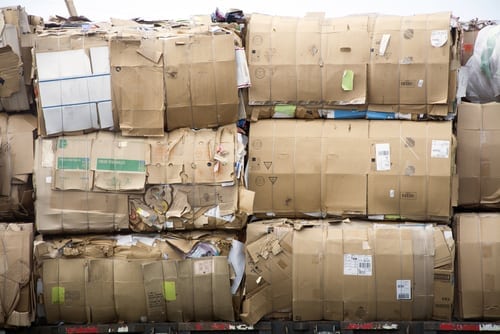
A market expert recently discussed some of the effects China’s National Sword policy has had on that country’s massive paper-products industry.

China has been dependent upon imports of recovered paper. Overall, recovered material makes up 67 percent of the fiber used to make pulp, paper, tissue and packaging. Some 41 percent of that recovered fiber has come from imports.

But that supply chain has been disrupted by China’s decision to severely limit imports of recovered material.

“A prolonged disruption in the supply of this very valuable and important commodity would be very damaging to China’s paper industry,” said Tedd Powers, senior consultant on strategy at Fisher International, a market research firm, in a presentation last week.

It could also place a large strain on global virgin pulp supply, he noted.

In 2016, Powers said, Chinese producers imported roughly 28.5 million metric tons of recovered fiber, and about 12 million tons of that material was “bleached recovered paper,” which he described as mixed paper, newsprint or sorted office papers.

“To replace that 12 million tons of bleached fiber would require 20 percent of all of the world’s global production of [virgin] bleached market pulp,” Powers said. “Staggering.”

He acknowledged it isn’t a one-to-one comparison, because the yield of usable pulp from recovered fiber varies, so the producers were obtaining less than 12 million tons of usable pulp from that imported material. But even with a more conservative yield estimate of 50 percent, which would mean producers were generating 6 million tons of pulp from that material, replacing that volume would still require 10 percent of the world’s total supply of bleached market pulp.

“That is a game changer,” Powers said.

Producer profits soar

China’s major paper producers are particularly dependent on recovered paper. The five biggest companies, led by Nine Dragons, consume nearly a third of the total recovered fiber supply, which includes material generated in China and imported, according to Fisher International.

“It’s a big deal to these companies,” he said. “These are very powerful, very large, very influential companies that are reliant upon the free flow of recovered fibers to keep their paper machines running.”

So how are these companies faring during the massive market disruption? The major players have received a large portion of the import permits issued this year; for example, during the first round of permits issued this year, Nine Dragons received nearly half the volume approved for import.

Still, there has been a substantial drop in imports of recovered fiber. Resource Recycling previously reported that during the first two months of 2018, China imported 2.51 million tons of recovered paper, compared with 4.67 million tons during the same period a year earlier.

The drop in volume is having an impact. For instance, Lee & Man, one of China’s largest paper companies, announced last week that four of its recycled paper machines will take downtime next month. The company cited a shortage of recovered paper in its decision, fiber research firm RISI reported. And Nine Dragons this week announced it will acquire two U.S. virgin fiber mills, the company’s first investment in the U.S. fiber mill industry.

In some cases, Chinese producers have taken to buying more finished pulp to offset the loss, but Powers noted that there has “not been enough of an increase in the import of market pulp to offset the decline of the import of market paper.”

The result has been decreased Chinese production, mills closing or companies burning through stockpiled feedstock.

But the drop in demand and production is not necessarily bad news for producers, Powers said. He referenced earnings statements from the four largest publicly traded paper companies in China (Nine Dragons, Lee & Man, Shanying International and Long Chen Paper), all of whom have posted near-record revenues.

“At least for now, these big firms are doing quite well, thank you very much,” Powers said. “Even in the face of all of these import restrictions, things are going pretty well.”

He attributed the rising revenues to those companies’ ability to bring in recovered fiber, as well as the rising prices for the products they make, a result of less competition.

Domestic drivers

It wasn’t only the contamination in imports that led the Chinese government to take action, Powers noted. He pointed to a World Bank estimate showing China will surpass the U.S. by 2025 as the world’s largest producer of municipal solid waste (MSW).

China currently produces 190 million metric tons of MSW per year, the World Bank estimates. But by 2025, China will more than double its waste generation, producing 510 million metric tons per year, according to the estimate. That puts it far above the U.S., which at 256 million metric tons in 2025 is expected to be the second largest waste generator.

“This is creating a big problem that China has to address,” Powers said.

Photo credit: Pure Radiance Photo/Shutterstock

 

Tags: AsiaMarketsPaper Fiber
TweetShare
Colin Staub

Colin Staub

Colin Staub was a reporter and associate editor at Resource Recycling until August 2025.

Related Posts

Aurubis smelter pipe system and chimney.

Aurubis sends positive signal for metals recovery markets

byDavid Daoud
May 18, 2026

The company’s performance is often seen as a bellwether for downstream appetite for complex electronic scrap and industrial recycling feedstock.

Wisconsin prepares for E-Cycle rulemaking

Reading Asia’s e-scrap recycling market through YDDL

byDavid Daoud
May 15, 2026

One Asian recycler’s latest financials offer a rare, detailed look at how downstream metals recovery from e-scrap is developing in...

Bottle bill backers see opportunity for action

PET collapse exposes gaps in US recycling infrastructure

byStefanie Valentic
May 15, 2026

Joaquin Mariel, Circular Services president, broke down why recycling infrastructure is so hard to scale and used PET's rapid market...

PP bales rise, paper grades edge higher

byRecyclingMarkets.net Staff
May 11, 2026

The national average price of post-consumer PET beverage bottles and jars rose marginally in May, now averaging 2.24 cents per...

Canadian city walks back fee on paper coffee cups

Recycling access for paper cups hits 20% of US

byPaul Lane
May 11, 2026

This figure represents a quadrupling in the past decade, spurred by significant investment and action.

May pricing bullish for most bales

May pricing bullish for most bales

byAntoinette Smith
May 11, 2026

Parts of the struggling recycling sector are seeing upside in war-related surges in commodity pricing.

Load More
Next Post

Why Vietnam is shutting out some materials

More Posts

Bottle bill backers see opportunity for action

PET collapse exposes gaps in US recycling infrastructure

May 15, 2026
Niagara acquires rPlanet Earth assets in California

Niagara acquires rPlanet Earth assets in California

May 15, 2026
Extruder pushes out natural HDPE pellets at KW Plastics in Troy, Alabama.

Rare look inside the world’s largest plastics recycler

May 13, 2026
NJ e-scrap legislation

NJ qualifies PureCycle PP for minimum PCR law

May 14, 2026

American Battery Technology confirms second site

May 13, 2026
Back-to-school 2026/27: Apple vs. Google

Back-to-school 2026/27: Apple vs. Google

May 13, 2026
Retail aisle with paper and plastic packaging.

Loblaw’s recyclability push could reshape packaging design across North America

May 14, 2026
Plastic packaging

Why SB 54 source reduction planning is becoming the industry’s most challenging EPR test

May 19, 2026
Surveys examine gaps in consumer recycling education

Study finds lack of proper battery disposal

May 13, 2026

Before the Bin: America’s textile waste problem starts in your closet

May 19, 2026
Load More

About & Publications

About Us

Staff

Archive

Magazine

Work With Us

Advertise
Jobs
Contact
Terms and Privacy

Newsletter

Get the latest recycling news and analysis delivered to your inbox every week. Stay ahead on industry trends, policy updates, and insights from programs, processors, and innovators.

Subscribe

Welcome Back!

Login to your account below

Forgotten Password?

Retrieve your password

Please enter your username or email address to reset your password.

Log In

Add New Playlist

No Result
View All Result
  • The Latest
  • Analysis
  • Recycling
  • E-Scrap
  • Plastics
  • Policy Now
  • Conferences
    • E-Scrap Conference
    • Plastics Recycling Conference
    • Resource Recycling Conference
    • Textiles Recovery Summit
  • Magazine
  • About Us
  • Advertise
  • Archive
  • Jobs
  • Staff
Subscribe
This website uses cookies. By continuing to use this website you are giving consent to cookies being used. Visit our Privacy and Cookie Policy.