





Resource Recycling
  • The Latest
  • Analysis
    • All
    • Certification Scorecard
    • Industry Announcements
    • Opinion

    Certification Scorecard — Week of July 6, 2026

    Tech giant pens detailed ‘plastic-free packaging’ guide

    What Google’s latest report means for ITAD

    Unpacking the Starbucks cup data

    Unpacking the Starbucks cup data

    Amazon cutting out more flexible packaging

    Amazon’s AWS hardware reuse is measured

    MP Materials breaks ground on rare earth magnet campus in North Texas

    ERI confirms ITAD shift toward minerals

    Industry announcements for January 2026

    Industry announcements for July 2026

  • Conferences
    • Resource Recycling Conference
    • Plastics Recycling Conference
    • E-Scrap: The Longevity Conference
    • Textiles Recovery Summit
  • Publications
    • E-Scrap News
    • Plastics Recycling Update
    • Policy Now
    • Resource Recycling
    • Other Topics
      • All Topics
      • Brand Owners
      • Critical Minerals
      • Glass
      • Grant Watch / RFPs
      • Markets
      • Organics
      • Packaging
      • Research
      • Technology
      • Textiles
Subscribe
No Result
View All Result
Resource Recycling
  • The Latest
  • Analysis
    • All
    • Certification Scorecard
    • Industry Announcements
    • Opinion

    Certification Scorecard — Week of July 6, 2026

    Tech giant pens detailed ‘plastic-free packaging’ guide

    What Google’s latest report means for ITAD

    Unpacking the Starbucks cup data

    Unpacking the Starbucks cup data

    Amazon cutting out more flexible packaging

    Amazon’s AWS hardware reuse is measured

    MP Materials breaks ground on rare earth magnet campus in North Texas

    ERI confirms ITAD shift toward minerals

    Industry announcements for January 2026

    Industry announcements for July 2026

  • Conferences
    • Resource Recycling Conference
    • Plastics Recycling Conference
    • E-Scrap: The Longevity Conference
    • Textiles Recovery Summit
  • Publications
    • E-Scrap News
    • Plastics Recycling Update
    • Policy Now
    • Resource Recycling
    • Other Topics
      • All Topics
      • Brand Owners
      • Critical Minerals
      • Glass
      • Grant Watch / RFPs
      • Markets
      • Organics
      • Packaging
      • Research
      • Technology
      • Textiles
Subscribe
No Result
View All Result
Resource Recycling
No Result
View All Result
Home Plastics

Emerging state EPR shows trend toward harmonization

Antoinette SmithbyAntoinette Smith
January 29, 2026
in Plastics, Recycling
Emerging state EPR shows trend toward harmonization

The success of Maryland's EPR bill for packaging "came up quick" in 2025, a year of accelerating activity for recycling in the legislative sphere. | Deb Schell / Shutterstock

Editor’s Note: EPR and policy will be featured in sessions at the co-located 2026 Plastics Recycling Conference, Textile Recovery Summit and Resource Recycling Conference, Feb. 23-25 in San Diego, California. Register now!

Policy experts explored the growing list of state EPR bills for packaging, and the implications for the recycling industry moving forward, during a webinar presented by the Association of Plastic Recyclers.

In 2025, the US experienced “both more activity, and more consistent activity than I think I might have predicted a year ago,” said Resa Dimino, co-CEO at consultancy RRS and managing partner at its subsidiary Signalfire Group, during the webinar. APR owns Resource Recycling, Inc., publisher of Plastics Recycling Update. 

While passage of EPR law in Washington state was expected, Maryland’s bill “came up quick,” Dimino said. 

In addition, the two bills passed in 2025 have strong similarities to the Minnesota law, passed in 2024, she said. “And so it was really remarkable to see some consistency, what some might call the beginning steps towards harmonization of a US approach.”

Kate Bailey, chief policy officer at APR, said packaging EPR law now covers 20% of the US population. “So that really is a huge growth in just the last five years.” 

She added that a major highlight was the July 1 implementation of Oregon’s EPR, which represented the first time producers started paying for recycling programs in a state. Oregon’s implementation is providing a look at how to fix the US recycling system, and improve recycling rates, she said. “So to me, that’s really where the rubber has hit the road.” 

As the states farthest along in implementing EPR law, Oregon and Colorado are the two states to watch, both Dimino and Bailey said.

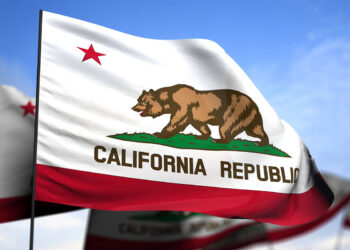
California has hit multiple stumbling blocks as its implementation date of Jan. 1, 2027, approaches for SB 54. Dimino noted that regulatory requirements and stakeholder dynamics are complex, complicating the implementation for the state.

So far seven states have enacted EPR laws for packaging and printed paper, and Dimino and Bailey are monitoring several others – including some unexpected players.

Nebraska, Tennessee and North Carolina have all introduced EPR bills. “We’re starting to see some states that one might not predict as leaders, were on the progressive end of the policy spectrum, so really an indicator that the competition is expanding,” Dimino said. 

New York has tried for several years to advance EPR for packaging, and on the same day as the webinar, stakeholders conducted a fly-in to the capital of Albany, and on Feb. 9  the Ulster County Resource Recovery Agency will hold a rally to support Assembly passage of the state’s Packaging Reduction and Recycling Infrastructure Act.   

Several states including New Jersey, New Hampshire and Wisconsin have already seen bills introduced for 2026, and “I think we’ll see more legislative activity in the other states as well,” Dimino said.

However, with 2026 a midterm election year, short legislative sessions and pressing budget priorities, passing recycling-focused law could prove even more challenging, Bailey said.

More focused legislation gains traction

Rhode Island first introduced a bottle bill and EPR legislation in 2025, a combined approach Dimino called “super interesting and novel,” but ultimately decided to conduct a needs assessment instead. The report is due Dec. 1 of this year.

In both existing and proposed legislation, all DRS cover carbonated beverages and beer, but only a handful cover non-carbonated drinks, Dimino said. In addition, a few states including New York cover water bottles too. “So some of these states have a fairly limited scope in the bottles that are covered under the deposit system,” Dimino said. 

In addition, all states with DRS laws except Iowa considered program revisions or expansion bills in 2025, the speakers noted. 

Bailey added that especially in Europe, bottle deposit schemes continue to progress. 

In addition, five US states – California, Connecticut, Maine, New Jersey and Washington — have laws requiring a minimum level of recycled content. Three more – Colorado, Minnesota and Oregon – have included some type of requirement in their overall EPR bill, Bailey said. Several states including California, Maryland, Massachusetts, New Jersey and Washington have introduced or are expected to propose similar bills this year, she said.  

Recycling law in an election year

“Anytime you have elections, it’s harder to get really any type of bill passed in the legislature,” Bailey said, adding that some legislatures have short sessions this year, limiting the available time to discuss recycling policy. 

In addition, states are struggling with federal funding cuts and are hyperfocused on budgets right now, she said. “So I’m hearing – not just in the recycling and the plastic space, but kind of regardless of what your issue is – 2026 is probably not going to be kind of a banner year in terms of the amount of policy or the big policies that get passed.” Nevertheless, she has high hopes that momentum will rebound in 2027. 

The influx of imported PET resin as well as global oversupply of virgin PE has brought the need for policy guardrails into focus, Bailey said, to help protect domestic infrastructure and businesses. 

Federal initiatives

As far as federal initiatives, APR is most focused on the CIRCLE Act, which provides tax credits for recycling infrastructure, Bailey said, adding that the organization has also been involved in conversations about a federal framework for packaging. 

There are also moves to improve data collection, improve labeling standards, encourage reuse, designing for recyclability, and chemical recycling.

However, Congress has “a lot of things going on, and I think there’s just kind of a general feeling of uncertainty at the federal level about all things,” Bailey said, adding that she isn’t “feeling particularly optimistic.” 

Dimino pointed out that a bright spot even amid federal funding cuts was the retention of SWIFR grants. “From the policy point of view that federal funding is giving the states the resources to do some of that analysis, some of that research, gather some of that data that’s going to lay the ground for good policy action in the future.” 

She added, “It’s been really encouraging that that funding has continued to flow and to see the wide range of projects that the states have utilized those resources to implement.”


Tags: EPRIndustry GroupsLegislation & Enforcement
TweetShare
Antoinette Smith

Antoinette Smith

Antoinette Smith has been at Resource Recycling Inc., since June 2024, after several years of covering commodity plastics and supply chains, with a special focus on economic impacts. She can be contacted at antoinette@resource-recycling.com.

Related Posts

Unpacking the Starbucks cup data

Unpacking the Starbucks cup data

byAntoinette Smith
July 8, 2026

Upon close examination, data casting doubt on the coffee giant's recycling claims raises more questions than it answers.

Two recycled-content bills gain approval in California

California agriculture seeks SB 54 repeal

byStefanie Valentic
July 7, 2026

A coalition of state agriculture stakeholders says the packaging law could add nearly $1,400 a year to household grocery costs...

In Our Opinion: Coalitions: The EPR Differentiator

Inside NAW’s constitutional case against packaging EPR

byStefanie Valentic
July 6, 2026

The National Association of Wholesaler-Distributors is fighting EPR in Oregon, and now in California too.

EPR fees are a market signal. Here’s what they’re telling you.

Building the infrastructure behind EPR

byStefanie Valentic
July 6, 2026

CAA's Jeff Fielkow breaks down the organization's role in US packaging EPR and why being the only multi-state PRO in...

Oregon’s Recycling Modernization Act faces injunction

Oregon’s EPR program posts first-year results

byStefanie Valentic
July 6, 2026

One year into Oregon's producer-funded recycling system, CAA provides an update on new carts, and the progress achieved.

SCS launches chem recycling standard

SCS launches chem recycling standard

byAntoinette Smith
July 1, 2026

SCS Global Services now provides third-party verification of responsible non-mechanical recycling processes, in line with a new global standard.

Load More
Next Post
Dow makes case for PE price hikes amid layoffs

Dow makes case for PE price hikes amid layoffs

More Posts

Oregon’s Recycling Modernization Act faces injunction

Oregon’s EPR program posts first-year results

July 6, 2026
Two recycled-content bills gain approval in California

California agriculture seeks SB 54 repeal

July 7, 2026
In Our Opinion: Coalitions: The EPR Differentiator

Inside NAW’s constitutional case against packaging EPR

July 6, 2026
Groups call for end to e-scrap imports to Philippines

Groups call for end to e-scrap imports to Philippines

June 30, 2026
Unpacking the Starbucks cup data

Unpacking the Starbucks cup data

July 8, 2026
EPR fees are a market signal. Here’s what they’re telling you.

Building the infrastructure behind EPR

July 6, 2026
SCS launches chem recycling standard

SCS launches chem recycling standard

July 1, 2026
Lithium-ion battery recycler to build New York facility

Earthworks acquires metals sorting tech

July 1, 2026
Rod McDaniel

Westward expansion continues for S3 Recycling

July 2, 2026
SB 54 draft rules generate debate on rates, review

California increases PET market payments

July 7, 2026
Load More

About & Publications

About Us

Staff

Archive

Magazine

Work With Us

Advertise
Jobs
Contact
Terms and Privacy

Newsletter

Get the latest recycling news and analysis delivered to your inbox every week. Stay ahead on industry trends, policy updates, and insights from programs, processors, and innovators.

Subscribe

Welcome Back!

Login to your account below

Forgotten Password?

Retrieve your password

Please enter your username or email address to reset your password.

Log In

Add New Playlist

No Result
View All Result
  • The Latest
  • Analysis
  • Recycling
  • E-Scrap
  • Plastics
  • Policy Now
  • Conferences
    • E-Scrap Conference
    • Plastics Recycling Conference
    • Resource Recycling Conference
    • Textiles Recovery Summit
  • Magazine
  • About Us
  • Advertise
  • Archive
  • Jobs
  • Staff
Subscribe
This website uses cookies. By continuing to use this website you are giving consent to cookies being used. Visit our Privacy and Cookie Policy.