





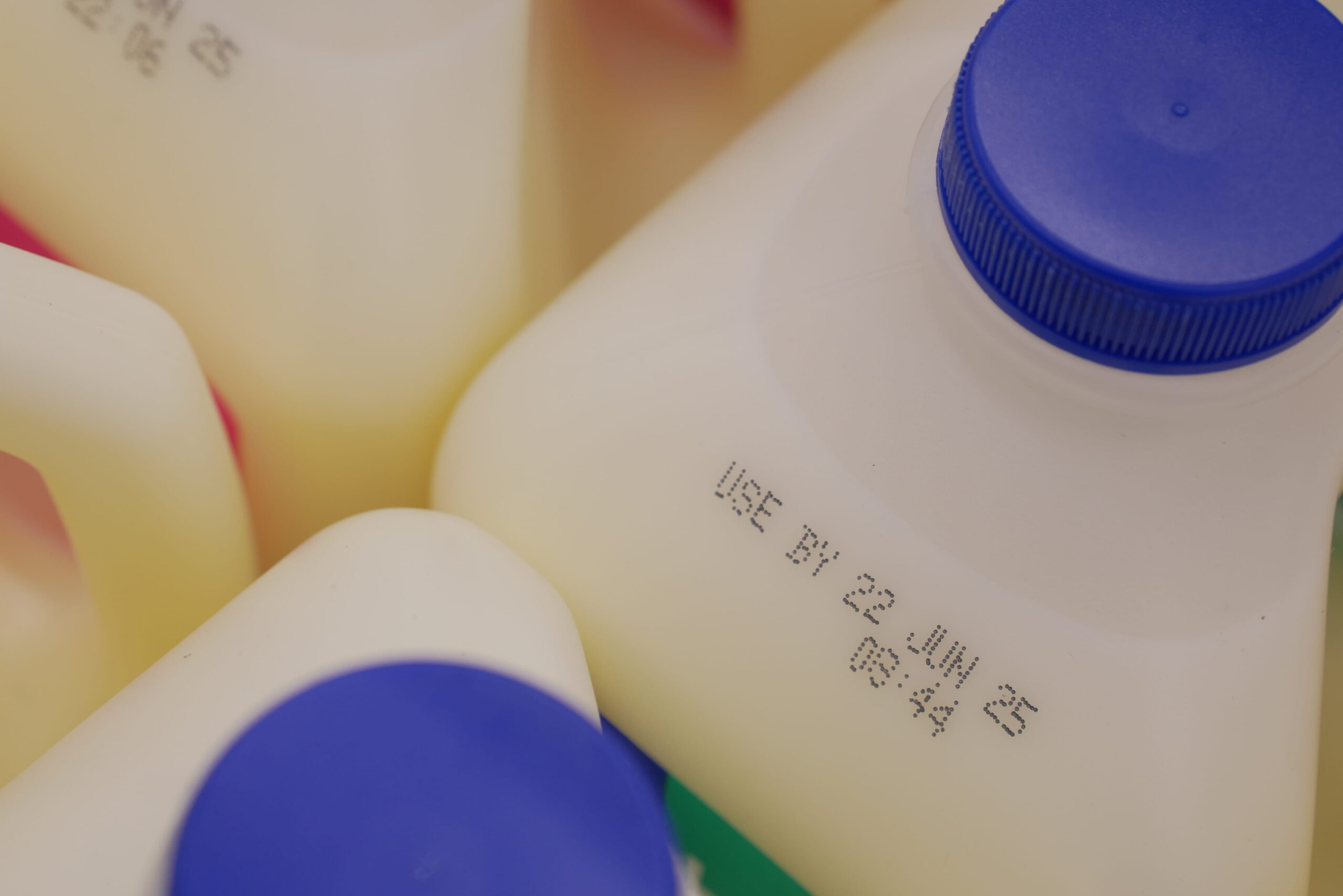
A California law aimed at ending decades of consumer confusion over food date labels takes effect July 1, giving food manufacturers distributing packaged products in the state less than two weeks to comply.
AB 660, which was signed by Gov. Gavin Newsom in September 2024, requires any manufacturer selling food in California to use standardized date labels and bans consumer-facing “sell by” dates entirely.
The July 1 deadline applies to products manufactured on or after that date. Products already on shelves before the cutoff are not subject to immediate removal.
Date label confusion is one of the most preventable drivers of food waste in the country. Americans discard an estimated $19.2 billion worth of edible food every year not because it’s gone bad, but because the labels on the package sent the wrong signal.
A “sell by” date, or a message to the retailer about proper shelf rotation, has long been misread by consumers as an expiration date. The result is perfectly good food poured down the drain or tossed in the trash.
California discards nearly 6 million tons of food each year, and confusion over date labels is a leading cause.
Decomposing food in California’s landfills accounts for 41% of the state’s point-source methane emissions. The average American household spends an estimated $1,300 on food that is never eaten.
AB 660 was authored by Assemblymember Jacqui Irwin (D-Thousand Oaks) and co-sponsored by Californians Against Waste (CAW) and Natural Resources Defense Council (NRDC).
Under the new law, manufacturers that choose to display a date on their packaging must use one of two approved phrases. “BEST if Used By” indicates peak freshness. “Use By” signals a safety threshold.
The “sell by” date, which communicates nothing to consumers about safety but has driven billions of dollars in premature food disposal, is prohibited from consumer-facing labels entirely. Coded sell-by dates for retailers are still allowed.
“Having to wonder whether our food is still good is an issue that we all have struggled with,” Irwin said in a statement. “Today’s signing of AB 660 is a monumental step to keep money in the pockets of consumers while helping the environment and the planet.”
The bill builds on California’s 2017 law, AB 954, which directed the state to promote voluntary adoption of the same two phrases, cementing the labeling verbiage as mandatory. Manufacturers that fail to comply face potential misdemeanor exposure under the California Retail Food Code.
ReFED estimates that standardizing date labels nationally could save consumers at least $1.3 billion annually and help retailers recover $253 million through better inventory management. The organization’s president, Dana Gunders, called AB 660 a watershed moment — not only for California, but also for the country.
“It will be the first law of its kind to end the ridiculous confusion that causes consumers to throw out almost $15 billion of perfectly good food nationwide,” Gunders said in a statement.