





Resource Recycling
  • The Latest
  • Analysis
    • All
    • Certification Scorecard
    • Industry Announcements
    • Opinion
    SK Tes on track to meet 2030 ITAD goal

    SK tes’ sustainability report offers window into ITAD

    Our top stories from February 2023

    ADS flexes new recycling capacity against resin spikes

    SCS launches chem recycling standard

    Certification scorecard — week of Sept. 28

    NJ’s PCR delay risks making its own excuse permanently true

    NJ’s PCR delay risks making its own excuse permanently true

    E-scrap magnet recycling company scales up

    Why only some rare-earth sources are economically viable

    e-Stewards to develop an ITAD-specific standard

    Certification scorecard — week of Sept. 21

  • Conferences
    • Resource Recycling Conference
    • Plastics Recycling Conference
    • E-Scrap: The Longevity Conference
    • Textiles Recovery Summit
  • Publications
    • E-Scrap News
    • Plastics Recycling Update
    • Policy Now
    • Resource Recycling
    • Other Topics
      • All Topics
      • Brand Owners
      • Critical Minerals
      • Glass
      • Grant Watch / RFPs
      • Markets
      • Organics
      • Packaging
      • Research
      • Technology
      • Textiles
Subscribe
No Result
View All Result
Resource Recycling
  • The Latest
  • Analysis
    • All
    • Certification Scorecard
    • Industry Announcements
    • Opinion
    SK Tes on track to meet 2030 ITAD goal

    SK tes’ sustainability report offers window into ITAD

    Our top stories from February 2023

    ADS flexes new recycling capacity against resin spikes

    SCS launches chem recycling standard

    Certification scorecard — week of Sept. 28

    NJ’s PCR delay risks making its own excuse permanently true

    NJ’s PCR delay risks making its own excuse permanently true

    E-scrap magnet recycling company scales up

    Why only some rare-earth sources are economically viable

    e-Stewards to develop an ITAD-specific standard

    Certification scorecard — week of Sept. 21

  • Conferences
    • Resource Recycling Conference
    • Plastics Recycling Conference
    • E-Scrap: The Longevity Conference
    • Textiles Recovery Summit
  • Publications
    • E-Scrap News
    • Plastics Recycling Update
    • Policy Now
    • Resource Recycling
    • Other Topics
      • All Topics
      • Brand Owners
      • Critical Minerals
      • Glass
      • Grant Watch / RFPs
      • Markets
      • Organics
      • Packaging
      • Research
      • Technology
      • Textiles
Subscribe
No Result
View All Result
Resource Recycling
No Result
View All Result
Home Plastics

Study finds most recycling occurs within 30 miles of access

Brian Clark HowardbyBrian Clark Howard
April 8, 2026
in Plastics, Recycling
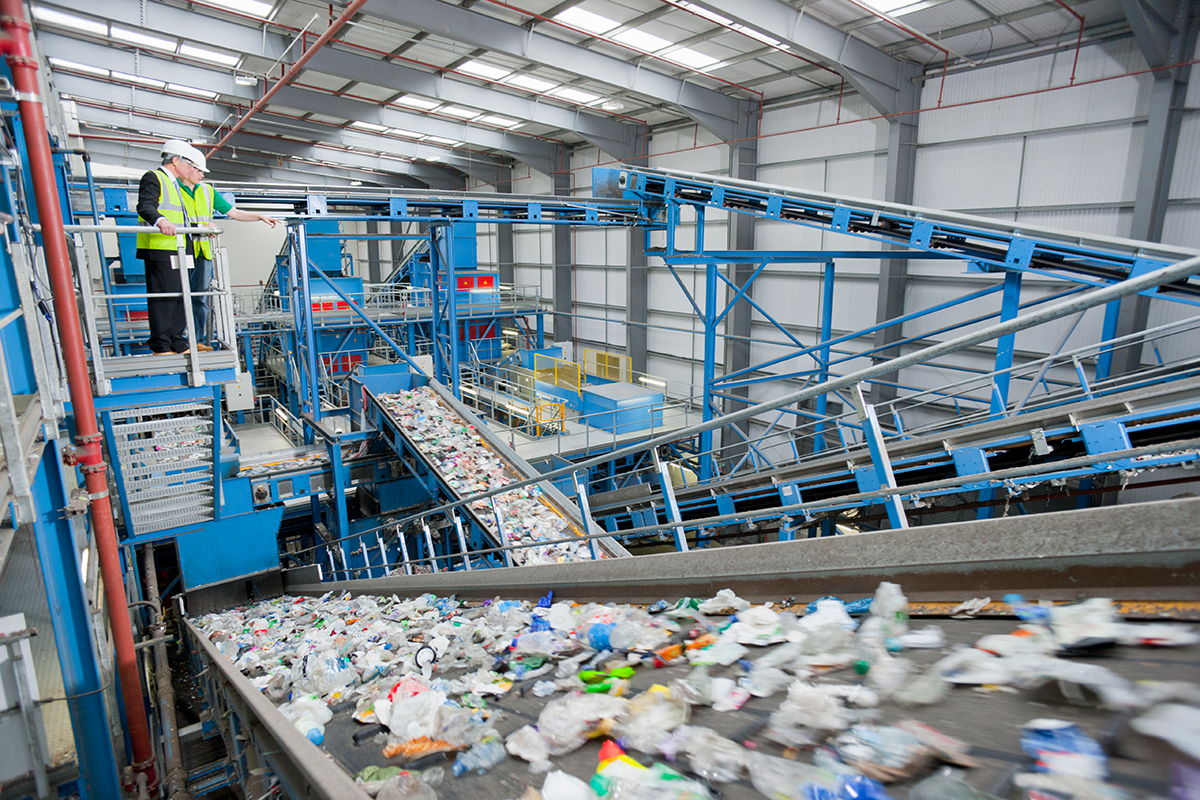
Plastics Recyclers Have the Capacity to Recycle More. Now Let’s Use It.

Juice Flair / Shutterstock

A new study finds that people in the US produce similar amounts of plastic packaging waste regardless of their income, education level or location. At the same time, people in wealthier and more educated communities recycle more plastics, the study from University at Buffalo found.

The study, published today in Nature Communications Sustainability, suggests that uneven access to recycling infrastructure plays a central role. Specifically, researchers found that areas with higher incomes and education levels tend to be closer to large-scale industrial recycling facilities, making recycling more convenient and accessible. On the other hand, communities with lower incomes and less formal education often have fewer – if any – nearby recycling facilities, which makes recycling more difficult and costlier.

A key finding from the study was that “importantly, most people in regions with high rates of plastic recycling live within 30 miles of industrial recycling facilities,” said study co-author John D. Atkinson, the Scott and Coleen Stevens chair in engineering sustainability and an associate professor in the UB Department of civil, structural and environmental engineering.

Atkinson admitted that some of the study’s results “aren’t a surprise. It’s harder for lower income people to recycle,” he noted, adding “But what makes this work unique is we quantify it,” so people can look at specific areas and think about improvements, and maybe even find business opportunities.

“Our analysis suggests that recycling success is less shaped by plastic waste generation and more related to whether communities are given fair and equitable access to recycling systems,” Atkinson added. “Recycling conversations have long been about what can we do to make people want to recycle? I think that conversation needs to expand, to not just who wants to recycle but who gets to recycle.”

For several years the US has been lagging behind Europe in plastic recycling. While Europe recycled 42.1% of its plastic packaging in 2023, according to Eurostat, the US recycled just 14%. According to The Recycling Partnership’s 2024 State of Recycling report, only 21% of all residential recyclable materials—including plastics—are captured and recycled in the US. The US produces the most plastic waste overall and per capita, averaging 287 pounds per person per year.

And recycling rates remain uneven across US states and neighborhoods. By crunching data from maps, the census and other sources the Buffalo researchers were able to see a distinct pattern. It was known that the South lags behind the Northeast, Mid-Atlantic and California in recycling rates. 

The team noted that states with lower recycling rates, such as Texas, Alabama, Mississippi, Georgia, South Carolina, Louisiana, Oklahoma and parts of Arkansas, have fewer recycling facilities and are generally less wealthy and less college-educated compared to regions with higher recycling rates.

The researchers noted that the most sparsely populated states, such as Montana and Wyoming, have very limited recycling infrastructure. Yet California, which is one of the largest states, has higher recycling rates thanks to a denser network of recycling facilities. At the same time, states with bottle bills have plastic packaging recycling rates that are twice the national average.

Atkinson said the next step is to start drilling down on specific recycling facilities, to assess their individual capacities, to count the number of hauling trucks, to map routes and other details that will give an even clearer picture of recycling access. He said he would also like to share his team’s results with industry associations and companies in the sector. 

Additional co-authors on the study include Monica Miles, assistant professor of engineering education; Aditya Vedantam, associate professor of operations management and strategy; and Janet Z. Yang, professor of communication. The paper’s lead author is Elham Mousania, who earned her PhD in civil, structural and environmental engineering at UB and is now a postdoctoral researcher at Imperial College London.


Tags: CollectionMRFs
TweetShare
Brian Clark Howard

Brian Clark Howard

Brian Clark Howard is managing editor of Resource Recycling and an award-winning journalist with 25 years of experience. He is the co-author of several books and previously served as an editor and writer at The Hill, National Geographic, The Daily Green, E/The Environmental Magazine and The Daily Mail. He has covered a wide range of topics, from the environment to politics.

Related Posts

St. Louis drop-off recycling shift cuts contamination

byStefanie Valentic
October 1, 2026

The city of St. Louis has moved from free alley recycling to a new model to combat its recycling contamination...

USFFI signs first film offtake deals

USFFI signs first film offtake deals

byAntoinette Smith
September 29, 2026

The brand-led group has moved more than 3 million pounds of flexible packaging from two California MRFs to reclaimers and...

Diversion Dynamics: Policy needed to reach full charge for vape recycling

Disposable vapes banned in California

byStefanie Valentic
September 28, 2026

California will pull disposable nicotine vapes from store shelves by 2028 under a law signed by Gov. Gavin Newsom, while...

Bipartisan reps introduce bill on recycling claims

House passes bill to ease lithium-ion battery storage rules

byStefanie Valentic
September 24, 2026

The BRACE Act would let lithium-ion battery recyclers store batteries on site under universal waste rules and give EPA 18...

Van filled with rolled carpeting for recycling or disposal.

California carpet recycling rate reaches 37%

byBrian Clark Howard
September 17, 2026

The state’s recycling rate rose for the sixth year in a row, despite challenging market conditions.

CleanLane aims to redefine organics recovery in Oregon

CleanLane aims to redefine organics recovery in Oregon

byKeith Loria
September 10, 2026

CleanLane is an ambitious materials recovery facility that will combine advanced recycling, anaerobic digestion and renewable natural gas production under...

Load More
Next Post

Certification Scorecard — Week of April 6, 2026

2026 Buyers’ Guide

Equipment, services and technology suppliers serving the recycling industry.

Browse the Guide

More Posts

Newsom nixes recycled content claims bill

Newsom nixes recycled content claims bill

September 28, 2026
Domestic e-plastics recovery picks up pace 

Domestic e-plastics recovery picks up pace 

September 30, 2026
Recyclers reeling from NJ PCR extension

Recyclers reeling from NJ PCR extension

September 23, 2026
trash bags

Sorted: Should we use recycled trash bags?

September 28, 2026
USFFI signs first film offtake deals

USFFI signs first film offtake deals

September 29, 2026
Diversion Dynamics: Policy needed to reach full charge for vape recycling

Disposable vapes banned in California

September 28, 2026
Women in Circularity: Sanyukta Saptasagar

Women in Circularity: Sanyukta Saptasagar

September 29, 2026
Analysis: Undersupply of PCR is ‘stifling’ brand goals

US lawmakers urge protection of domestic RPET

September 25, 2026
Cyclic launches commercial test of rare earth recycling tech

ERI investment to help fund Cyclic Materials expansion

September 29, 2026
How to perform chip harvesting

How to perform chip harvesting

October 1, 2026
Load More

About & Publications

About Us

Staff

Archive

Magazines

Work With Us

Advertise
Jobs
Contact
Terms and Privacy

Newsletters

Get the latest recycling news and analysis delivered to your inbox every week. Stay ahead on industry trends, policy updates, and insights from programs, processors, and innovators.

Subscribe

Welcome Back!

Login to your account below

Forgotten Password?

Retrieve your password

Please enter your username or email address to reset your password.

Log In

Add New Playlist

No Result
View All Result
  • The Latest
  • Analysis
  • Recycling
  • E-Scrap
  • Plastics
  • Policy Now
  • Conferences
    • E-Scrap Conference
    • Plastics Recycling Conference
    • Resource Recycling Conference
    • Textiles Recovery Summit
  • Magazines
  • About Us
  • Advertise
  • Archive
  • Jobs
  • Staff
Subscribe
This website uses cookies. By continuing to use this website you are giving consent to cookies being used. Visit our Privacy and Cookie Policy.