












Resource Recycling
  • The Latest
  • Analysis
    • All
    • Certification Scorecard
    • Industry Announcements
    • Opinion

    Closed Loop Partners acquires Sutter Metals, connecting electronics disposition to metals recovery

    Certification Scorecard — Week of March 30, 2026

    Certification scorecard – Week of March 23, 2026

    Certification Scorecard – Week of March 16, 2026

    Groups identify recovered plastics users in the Northeast

    Bale pricing for recycled plastics diverges

    Why global ITAD is stranded in the Gulf

    Why global ITAD is stranded in the Gulf

    Certification scorecard for the week of March 9, 2026

    Diversion Dynamics: Secondhand exports slow down fast fashion

    Certification scorecard for the week of March 2, 2026

  • Conferences
  • Publications

    Other Topics

    Textiles
    Organics
    Packaging
    Glass
    Brand Owners

    Metals
    Technology
    Research
    Markets
    Grant Watch

    All Topics

Subscribe
No Result
View All Result
Resource Recycling
  • The Latest
  • Analysis
    • All
    • Certification Scorecard
    • Industry Announcements
    • Opinion

    Closed Loop Partners acquires Sutter Metals, connecting electronics disposition to metals recovery

    Certification Scorecard — Week of March 30, 2026

    Certification scorecard – Week of March 23, 2026

    Certification Scorecard – Week of March 16, 2026

    Groups identify recovered plastics users in the Northeast

    Bale pricing for recycled plastics diverges

    Why global ITAD is stranded in the Gulf

    Why global ITAD is stranded in the Gulf

    Certification scorecard for the week of March 9, 2026

    Diversion Dynamics: Secondhand exports slow down fast fashion

    Certification scorecard for the week of March 2, 2026

  • Conferences
  • Publications

    Other Topics

    Textiles
    Organics
    Packaging
    Glass
    Brand Owners

    Metals
    Technology
    Research
    Markets
    Grant Watch

    All Topics

Subscribe
No Result
View All Result
Resource Recycling
No Result
View All Result
Home Plastics

Colorado approval signals path forward for PRO choice

Antoinette SmithbyAntoinette Smith
October 8, 2025
in Plastics
The Lubricants Packaging Management Association became the first independent producer responsibility organization to gain approval in a state EPR program. | Air Images / Shutterstock

Although a designated producer responsibility organization (PRO) receives much of the attention for any state’s emerging extended producer responsibility (EPR) plan for packaging, independent PROs quietly address more specialized needs.

As one of the first states to pass EPR legislation for packaging, Colorado is in the spotlight as it approaches implementation in early 2026. In September, the state’s Department of Public Health and Environment approved an individual program plan from the Lubricants Packaging Management Association (LPMA) – the first instance for an independent PRO.  

“We’re very proud to be first,” said David Lawes, CEO of LPMA powered by Interchange 360. 

In 2024, BP Lubricants USA (parent company of Castrol), Chevron USA, ExxonMobil, Pennzoil-Quaker State (which is owned by Shell) and VGP Holdings (parent company of Valvoline) became the founding members of LPMA, which is administered by Interchange 360. The group handles discarded packaging for such products as lubricating oil, oil filters, antifreeze and diesel exhaust fluid.

In an interview with Resource Recycling, Lawes said Colorado’s EPR law wasn’t one-size-fits-all. “What’s really unique about Colorado is – and I think the regulators absolutely got it right here – is they allowed for producers to choose how they want to put this all together to be able to respond to the regulation,” he said. 

The need for LPMA is “a lot like PaintCare, where it makes sense to manage the product separately,” he said, referring to the PRO administering paint stewardship programs in 10 states including Colorado and in Washington, DC.  

The action is “a signal to the industry that independent programs can get approval and can work. It’s also a signal to state regulators about how necessary it is to have an independent pathway,” Lawes said. “Products like ours that don’t fit so well in the curbside program – petroleum containers, motor oil containers with a little bit of residual oil in there – they don’t do well in the curbside program.” 

Nevertheless, the group has encountered resistance from both industry and legislators. “EPR is still pretty new in the US and so the industry is just learning this now. And a single PRO sounds simple until it’s not,” Lawes said. He added that although a single PRO can be very effective at managing curbside collection, materials such as paint and film and flexible packaging present unique challenges.

“I know that it’s simple to ask for one PRO, until it’s not. If you’re the regulator and you’re restricting that choice, it always comes back on the regulator: Why did you restrict that choice?” A regulator for EPR programs for 10 years in Canada, Lawes cited the lawsuit over Oregon’s EPR law as the result of restricting choice. 

“So I can see this evolution happening, where states are removing the restriction of choice, moving away from the single PRO option and allowing industry to produce a plan that demonstrates how they can collect this stuff separately and how it’s efficient to do that through better environmental outcomes.”

The Colorado experience highlighted the importance of engaging with state regulators, Lawes said, a point echoed in the Texas attempt to introduce a bottle deposit return scheme. That engagement helps all parties understand the intent behind each law’s clauses and how producers can incorporate them in practice, he said. 

Looking ahead, Lawes said California, Maine, Maryland and Washington seemed likely to incorporate independent PROs into their new EPR laws. “One of the key tenets of extended producer responsibility, right after results-based, is producer flexibility. Producers have the ability to arrange themselves to comply with the law and meet the targets. And so this is a key tenet that we’re asking all states to adopt in extended producer responsibility where producers can choose and not have the state dictate that it’s a single PRO.”

The key, he said, is to have a choice, whether producers choose to join the primary PRO, or to develop their own program. “As long as everybody’s on a level playing field, everybody’s meeting the same outcome.”

The business case for independent PRO

That small amount of oil is a contaminant in curbside programs, leading to “quite high” fees.  “And if we can have a separate collection system for petroleum containers, we can manage costs and likely have better, more circular outcomes,” he said, adding that producers in the petroleum sector have the requisite experience handling such containers.

“The good news is there’s a business case for managing it separately,” Lawes said. “We can manage the cost better for this sector.” In states implementing EPR for packaging, producers sign up with a PRO, such as LPMA or CAA. “Some producers are quick to come to the table, and some come a little later.” 

This is typical for an EPR program, especially the first one in the US, Lawes said, drawing from his years of experience administering and regulating EPR programs in Canada. “So many producers are just still learning EPR. They’re at very different stages of learning as well, so we’re doing a lot of education work with the petroleum producer group.” 

He added that the five oil majors invested both time and money in learning about EPR, but “some of the smaller entities don’t have the resources to do that, and so they’re working through it on their own timeline.”

A version of this story appeared in Resource Recycling News on Oct 7.

Tags: EPRHard-to-Recycle MaterialsIndustry Groups
TweetShare
Antoinette Smith

Antoinette Smith

Antoinette Smith has been at Resource Recycling Inc., since June 2024, after several years of covering commodity plastics and supply chains, with a special focus on economic impacts. She can be contacted at [email protected].

Related Posts

Maryland PaintCare launch press conference in Annapolis

Maryland’s paint recycling program opens

byBrian Clark Howard
April 2, 2026

The state is the latest to launch a stewardship program with PaintCare.

Apparel retailer organization challenges SB 707 textile PRO selection

byStefanie Valentic
April 2, 2026

With the July 1 deadline looming, the American Apparel & Footwear Association has filed a petition questioning CalRecycle's selection of...

With RPET in crisis, focus turns to solutions

With RPET in crisis, focus turns to solutions

byAntoinette Smith
April 2, 2026

Stakeholders from across the RPET value chain share concrete solutions for the short term to help prevent further loss of...

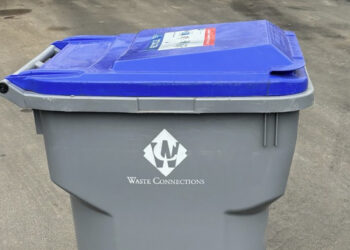
Waste Connection recycling cart in The Dalles, Oregon

First Oregon community expands curbside recycling with EPR funding

byBrian Clark Howard
April 1, 2026

The City of The Dalles in northern Oregon is now rolling out nearly 5,000 new 90-gallon recycling carts to customers...

Women in Circularity: Lisa Puckett

Women in Circularity: Lisa Puckett

byMaryEllen Etienne
March 30, 2026

In this series, we spotlight women moving us toward a circular economy. Today, we meet Lisa Puckett of BayArea Compliance.

Quebec PRO reflects on first year of packaging EPR

byAntoinette Smith
March 30, 2026

The province's all-packaging collection approach has simplified messaging while providing lessons for the PRO as well as for industry.

Load More
Next Post

ADS recycled plastic purchase share sinks to 3-year low

More Posts

Quebec PRO reflects on first year of packaging EPR

March 30, 2026

ReElement, Mitsubishi partner on rare earth supply chains

March 31, 2026
Belgian and Flemish flags fly against a backdrop of an ocean beach

PureCycle receives €40m EU grant for new plant

March 26, 2026

Report pegs fire losses at $2.5b in US and Canada recycling industry

March 27, 2026
#ESC2025 Speaker Spotlight: Matthew Young

From bootstrap to boom: EVR poised for growth after capital injection

March 26, 2026
URT builds alliance to remake electronics plastics at scale

Less premium smartphone inventory is reaching recyclers

March 30, 2026
Unilever shifting focus to flexibles targets

Unilever shifting focus to flexibles targets

March 23, 2026
Groups identify recovered plastics users in the Northeast

Bale pricing for recycled plastics diverges

March 17, 2026
Flexibles players push for collaboration, balance

Flexibles players push for collaboration, balance

March 31, 2026

Ball Corp. US recycled aluminum content drops

March 26, 2026
Load More

About & Publications

About Us

Staff

Archive

Magazine

Work With Us

Advertise
Jobs
Contact
Terms and Privacy

Newsletter

Get the latest recycling news and analysis delivered to your inbox every week. Stay ahead on industry trends, policy updates, and insights from programs, processors, and innovators.

Subscribe

Welcome Back!

Login to your account below

Forgotten Password?

Retrieve your password

Please enter your username or email address to reset your password.

Log In

Add New Playlist

No Result
View All Result
  • The Latest
  • Analysis
  • Recycling
  • E-Scrap
  • Plastics
  • Policy Now
  • Conferences
    • E-Scrap Conference
    • Plastics Recycling Conference
    • Resource Recycling Conference
    • Textiles Recovery Summit
  • Magazine
  • About Us
  • Advertise
  • Archive
  • Jobs
  • Staff
Subscribe
This website uses cookies. By continuing to use this website you are giving consent to cookies being used. Visit our Privacy and Cookie Policy.