





Resource Recycling
  • The Latest
  • Analysis
    • All
    • Certification Scorecard
    • Industry Announcements
    • Opinion

    Certification Scorecard — Week of June 1, 2026

    IT asset disposition and electronics recycling: Now and then

    $60 billion in AI servers will create an ITAD challenge

    The independent ITAD at a crossroads

    DMD acquires ITAD firm Lifespan, outlines acquisition strategy

    Packaging policy is not one-size-fits-all

    Packaging policy is not one-size-fits-all

    Industry announcements for January 2026

    Industry announcements for June 2026

    Europe’s recyclers miss most of the critical materials

    Europe’s recyclers miss most of the critical materials

  • Conferences
    • Resource Recycling Conference
    • Plastics Recycling Conference
    • E-Scrap: The Longevity Conference
    • Textiles Recovery Summit
  • Publications
    • E-Scrap News
    • Plastics Recycling Update
    • Policy Now
    • Resource Recycling
    • Other Topics
      • All Topics
      • Brand Owners
      • Critical Minerals
      • Glass
      • Grant Watch / RFPs
      • Markets
      • Organics
      • Packaging
      • Research
      • Technology
      • Textiles
Subscribe
No Result
View All Result
Resource Recycling
  • The Latest
  • Analysis
    • All
    • Certification Scorecard
    • Industry Announcements
    • Opinion

    Certification Scorecard — Week of June 1, 2026

    IT asset disposition and electronics recycling: Now and then

    $60 billion in AI servers will create an ITAD challenge

    The independent ITAD at a crossroads

    DMD acquires ITAD firm Lifespan, outlines acquisition strategy

    Packaging policy is not one-size-fits-all

    Packaging policy is not one-size-fits-all

    Industry announcements for January 2026

    Industry announcements for June 2026

    Europe’s recyclers miss most of the critical materials

    Europe’s recyclers miss most of the critical materials

  • Conferences
    • Resource Recycling Conference
    • Plastics Recycling Conference
    • E-Scrap: The Longevity Conference
    • Textiles Recovery Summit
  • Publications
    • E-Scrap News
    • Plastics Recycling Update
    • Policy Now
    • Resource Recycling
    • Other Topics
      • All Topics
      • Brand Owners
      • Critical Minerals
      • Glass
      • Grant Watch / RFPs
      • Markets
      • Organics
      • Packaging
      • Research
      • Technology
      • Textiles
Subscribe
No Result
View All Result
Resource Recycling
No Result
View All Result
Home Plastics

Fresh round of plastic treaty talks kick off in Geneva

byScott Snowden
August 6, 2025
in Plastics
Fresh round of plastic treaty talks kick off in Geneva
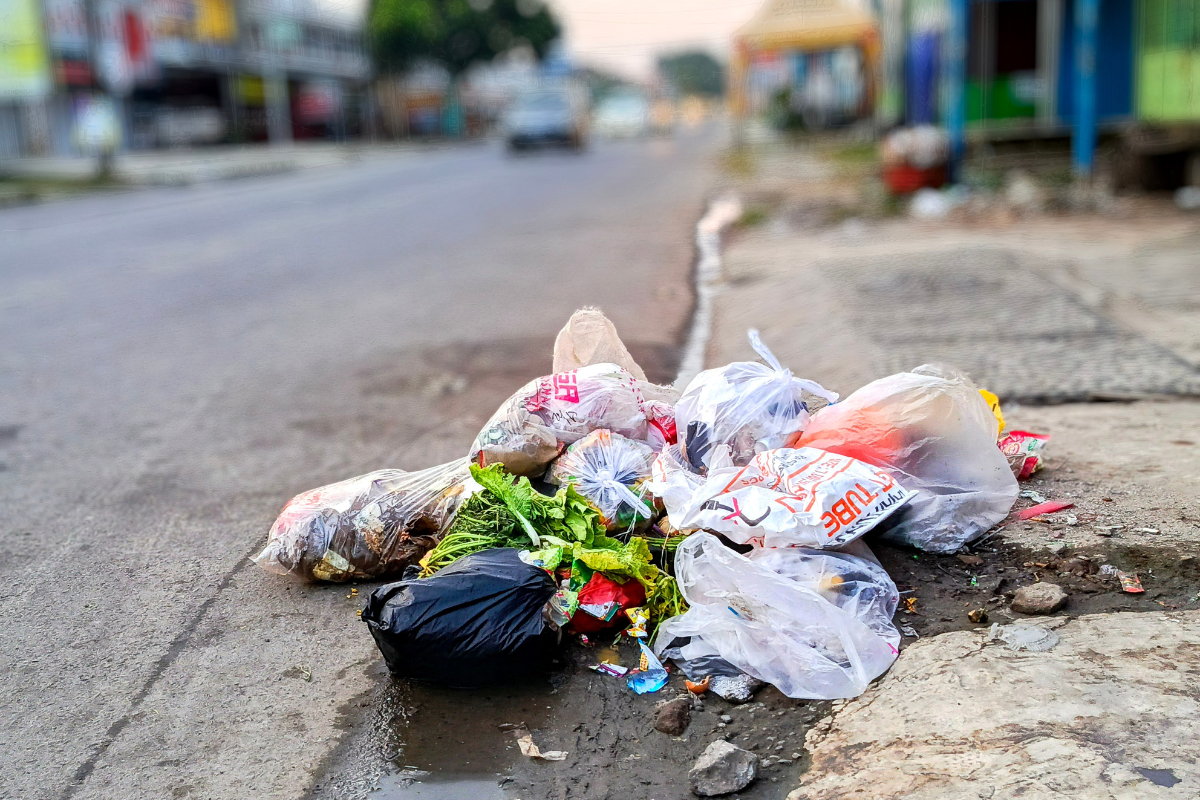
Delegates from around the world will navigate a number of sticking points that remain after five previous rounds of negotiations. | Memori Susandi/Shutterstock

Delegates from more than 170 countries will gather at the United Nations’ Palais des Nations Aug. 5-14 for what may be the final round of negotiations on a landmark international treaty to curb plastic pollution.

Known as INC-5.2, the resumed fifth session of the Intergovernmental Negotiating Committee comes amid rising pressure to deliver a legally binding agreement by year’s end, an ambitious goal that now hinges on whether countries can overcome deep divisions over production caps, financing and decision-making rules.

The treaty process, launched in 2022 with overwhelming support from the United Nations Environment Assembly, has progressed rapidly compared to other international environmental pacts. Yet after five rounds of negotiation, the sticking points remain stubborn. While a broad majority of countries support binding global rules, a small group of fossil fuel-aligned states continues to resist measures seen as essential to curbing the plastic crisis.

“If we fail to achieve this at INC-5.2, we risk locking in a high-pollution future that will be far more difficult and costly to reverse,” World Wildlife Fund said in a statement ahead of the talks. WWF and the Business Coalition for a Global Plastics Treaty have called for strong global product design requirements, bans on harmful chemicals and financial support for low- and middle-income countries.

The latest round follows a tense week in Busan, South Korea last November, where INC-5 ended without agreement on key provisions. While most countries signaled support for global targets to reduce plastic production, mandates on primary plastic polymers were blocked from intersessional work, frustrating environmental groups and waste-picking organizations who argue that upstream action is necessary.

The United States briefly indicated openness to a production cap in August 2024, but later reversed course. “We were told they are not supporting caps,” said Sarah Martik of the Center for Coalfield Justice during a November media briefing. Instead, the U.S. delegation continues to back a model based on national action plans, leaving countries to determine their own targets.

The national action plan framework has drawn criticism from high-ambition countries and civil society groups, who say voluntary measures would weaken the treaty’s impact and allow major plastic producers to avoid binding obligations. A peer-reviewed paper published in June by scientists from nine global universities warned that “voluntary targets do not work” and that production cuts must be made legally binding to meet environmental goals. “History shows that successful international environmental treaties are possible, as long as they have teeth,” said co-author Neil Tangri of the University of California, Berkeley.

The draft treaty text on the table in Geneva contains multiple options on every major issue, from product design and chemical safety to financial support and compliance. While some articles, such as those on extended producer responsibility and labeling standards, are moving forward with broad backing, others remain politically charged. Proposals to ban or phase out certain plastic products and additives, such as PVC, bisphenols and brominated flame retardants, are likely to face resistance from countries with close ties to petrochemical industries.

Observers are also closely watching whether the treaty will retain a dedicated article on just transition, which has been championed by waste picker alliances, Indigenous communities and frontline groups. Their inclusion has become a litmus test for equity and rights-based language in the final agreement. “The treaty must actively promote Indigenous People’s contributions,” said Lisa Bellanger of the Indigenous Peoples Forum on Plastics during the final plenary of INC-5. She added that impacted communities must be treated as “rightsholders, not stakeholders.”

Another major fault line is how decisions will be made if consensus cannot be reached. While most multilateral treaties allow for voting as a last resort, a few countries, including Saudi Arabia and Russia, have repeatedly insisted on consensus only, effectively granting themselves veto power. The debate over Rule 38.1 has dragged on since INC-1 and could come to a head in Geneva if procedural gridlock continues. Non-governmental organizations (NGOs), including GAIA and CIEL, have urged delegates to adopt standard voting rules in order to prevent obstruction.

Finance is also set to dominate the agenda. More than 150 countries have expressed support for a dedicated, equitable financial mechanism to fund implementation in lower-income nations, especially Pacific Island states. Proposals include a polymer fee, elimination of subsidies, and contributions based on production responsibility. Industry-aligned delegations, however, favor private sector-driven finance and have warned against what they call punitive measures.

The Global Partners for Plastics Circularity, which includes the International Council of Chemical Associations and the American Chemistry Council, has continued to oppose production limits. “The agreement must stay focused on addressing the primary cause of plastic pollution – mismanaged waste,” the group said in a July 29 statement, while promoting a circular economy framework and its proprietary tools such as the Plastic Additives Database.

The Business Coalition for a Global Plastics Treaty, co-convened by WWF and the Ellen MacArthur Foundation, argues that strong global rules would not only curb pollution but also increase investment, improve recycling infrastructure and support stable jobs. “Clear global rules can unlock innovation, scale solutions and deliver real economic and social benefits to people and businesses everywhere,” said Rob Opsomer, the coalition’s executive lead on plastics and finance.

The coalition recently released a study projecting that harmonized regulations could lead to a 77% increase in recycled content availability and reduce global mismanaged plastic waste by 23% by 2040. That same timeline is embedded in the treaty’s aspirational goal to eliminate plastic leakage into the environment.

While some advocates hope INC-5.2 will result in a complete treaty ready for ratification, others expect only partial consensus with a roadmap for further negotiation. “We’re going to walk away from a global political process and come back to the real work on the ground,” said Kate Bailey, chief policy officer for the Association of Plastic Recyclers, who attended INC-4. “There is significant momentum to move forward regardless of some of the limitations of the treaty itself.”

Still, environmental leaders stress that the treaty’s strength will depend on its enforceability and ambition. “Not all countries are going to have the courage to finish this deal,” said Erin Simon of WWF, “but that can’t stop us from delivering a treaty that will finally meet the scale of this crisis head on.”


Tags: Legislation & EnforcementPET
TweetShare
Scott Snowden

Scott Snowden

Scott has been a reporter for over 25 years, covering a diverse range of subjects from sub-atomic cold fusion physics to scuba diving off the Great Barrier Reef. He's now deeply invested in the world of recycling, green tech and environmental preservation.

Related Posts

In My Opinion: Comparing the nation’s first packaging EPR laws

What Maine’s vape EPR law means for recyclers

byStefanie Valentic
June 4, 2026

Maine is the first state to require vape manufacturers to fund end-of-life management for their products. Vape recycler Michael Duckworth...

Our top stories from June 2021

Colorado advances EV battery EPR law

byStefanie Valentic
June 3, 2026

Colorado, which passed its Battery Stewardship Act in 2025, is now looking to close the gap on large-format, EV batteries.

War, not demand driving polymer pricing

War, not demand driving polymer pricing

byAntoinette Smith
June 2, 2026

While prices for recycled commodities are tracking rises in virgin markets, few transactions are occurring, said an ICIS analyst.

Packaging policy is not one-size-fits-all

Packaging policy is not one-size-fits-all

byDan Felton, president and CEO, Flexible Packaging Association
June 1, 2026

Flexible Packaging Association head Dan Felton makes the case for smart policy to suit the large, diverse sector.

PureCycle maintains price expectations for its R-PP resin

EPR clarity is driving brand demand, says PureCycle CEO

byStefanie Valentic
June 1, 2026

With SB 54 registered and lawsuits already filed, PureCycle CEO Dustin Olsen says the fight over what counts as recycling...

New York bill would strengthen device repair rules

New York packaging EPR bill faces June 10 deadline

byStefanie Valentic
May 26, 2026

With the legislature set to adjourn June 10, supporters of New York's packaging EPR bill are making a final push.

Load More
Next Post

Recycled commodity pricing hits hauler earnings

More Posts

Machinex

Longview mill tragedy raises broader questions for fiber, recycling sectors

May 29, 2026
Recycling industry addresses Beyond Plastics report

Recycling industry addresses Beyond Plastics report

May 26, 2026
Fire at an EMR recycling facility in Camden, New Jersey May 29, 2026.

EMR faces shutdown calls after numerous fires

June 2, 2026
The independent ITAD at a crossroads

DMD acquires ITAD firm Lifespan, outlines acquisition strategy

June 2, 2026
What a report on Starbucks cups reveals about recycling

What a report on Starbucks cups reveals about recycling

May 26, 2026
War, not demand driving polymer pricing

War, not demand driving polymer pricing

June 2, 2026
Q1 containerboard exports drop by 19%

What SB 54 looks like from the packaging floor

June 1, 2026
California extends compostable labeling law

California bills crack down on false recycling, compostable claims

May 29, 2026
IT asset disposition and electronics recycling: Now and then

$60 billion in AI servers will create an ITAD challenge

June 3, 2026
BASF, Encina expand circular feedstock partnership

BASF, Encina expand circular feedstock partnership

June 3, 2026
Load More

About & Publications

About Us

Staff

Archive

Magazine

Work With Us

Advertise
Jobs
Contact
Terms and Privacy

Newsletter

Get the latest recycling news and analysis delivered to your inbox every week. Stay ahead on industry trends, policy updates, and insights from programs, processors, and innovators.

Subscribe

Welcome Back!

Login to your account below

Forgotten Password?

Retrieve your password

Please enter your username or email address to reset your password.

Log In

Add New Playlist

No Result
View All Result
  • The Latest
  • Analysis
  • Recycling
  • E-Scrap
  • Plastics
  • Policy Now
  • Conferences
    • E-Scrap Conference
    • Plastics Recycling Conference
    • Resource Recycling Conference
    • Textiles Recovery Summit
  • Magazine
  • About Us
  • Advertise
  • Archive
  • Jobs
  • Staff
Subscribe
This website uses cookies. By continuing to use this website you are giving consent to cookies being used. Visit our Privacy and Cookie Policy.