




Resource Recycling
  • The Latest
  • Podcast
  • Analysis
    • All
    • Certification Scorecard
    • Industry Announcements
    • Opinion
    A five star ranking with one under a microscope

    Certification scorecard — week of Nov. 9

    Data centers and AI combine to create ITAD ‘growth engine’

    Component shortages drive demand for data center hardware

    Ingram Micro again files to take company public

    Ingram Micro sees lifecycle services rise 35%

    Inside the Circle: Will we lose our shirts over CA textile EPR?

    Inside the Circle: Will we lose our shirts over CA textile EPR?

    Rhode Island bill would make brands pay for recycling

    Midterms put e-scrap legislation in focus

    Google supports right-to-repair policy in Oregon

    Alphabet’s AI spending, processor sales broaden ITAD outlook

  • Conferences
    • Resource Recycling Conference
    • Plastics Recycling Conference
    • E-Scrap: The Longevity Conference
    • Textiles Recovery Summit
  • Publications
    • E-Scrap News
    • Plastics Recycling Update
    • Policy Now
    • Resource Recycling
    • Other Topics
      • All Topics
      • Brand Owners
      • Critical Minerals
      • Glass
      • Grant Watch / RFPs
      • Markets
      • Organics
      • Packaging
      • Research
      • Technology
      • Textiles
Subscribe
No Result
View All Result
Resource Recycling
No Result
View All Result
Home Plastics

Women in Circularity: Katie Drews

byMaryEllen Etienne
February 26, 2025
in Plastics

Editor’s note: Women in Circularity is a long-running series in Resource Recycling News, sister publication to Plastics Recycling Update. Series author MaryEllen Etienne will host a Women in Circularity session during the 2025 Plastics Recycling Conference next month, and in the run-up to the conference, we’re introducing the series to Plastics Recycling Update readers as well. Katie Drews, featured in this month’s installment, will join MaryEllen during the conference session.

A warm welcome back to “Women in Circularity,” where we shine a light on women moving us toward a circular economy. This month, I was pleased to connect with an expert in the delivery of community based recycling services: Katie Drews. Katie is the co-president and CEO of Eureka Recycling, a nonprofit zero-waste organization and social enterprise recycler based in Minneapolis. Katie has nearly two decades of experience in marketing and business strategy and has a track record of driving change and innovation in corporate, higher education and nonprofit sectors.
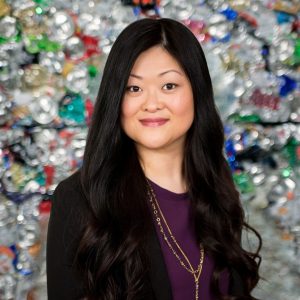
Katie Drews, co-president and CEO of Eureka Recycling

How has a wider understanding of the circular economy affected your career?

A deeper understanding of the circular economy has really shaped how I approach both my work and my personal outlook. As co-president & CEO of Eureka Recycling and national director for the Alliance of Mission-Based Recyclers, I have seen up close how waste management, resource use, supply chains and sustainability efforts are all deeply interconnected. The core principles of reducing, reusing and recycling, which are central to the circular economy, align perfectly with my passion for zero-waste solutions. 

But as a society, we are currently operating at “peak stuff,” so I don’t think we can just keep reusing and recycling at the same rate while continuing to create new materials at such a fast pace. We need to prioritize reduction and finding ways to cut back on material use so we’re not constantly going back to the ground or the well for virgin resources to keep fueling our production. This means designing for durability, repairability and reuse from the very beginning, while also changing consumption patterns across industries. For this, we will need smarter systems, policies, innovations and collaborations that will reduce resource extraction, prioritize human and environmental health and shift us away from our heavy reliance on plastics and continuous production. 

Eureka has offered community-based recycling since 2001. How do you see your role expanding into zero waste? 

At Eureka, we’ve been leaders in not just community-based recycling but also in creating effective zero-waste solutions for over 20 years, always with a focus on community-centered approaches. From the start, our work has prioritized both human and environmental health, while also fostering strong regional economies. This means developing solutions that are built for and with the community, ensuring they are sustainable, equitable and truly impactful. Thanks to Eureka’s leadership in these areas, we have established a solid foundation of resources, expertise and core competencies that uniquely position us to support building reuse solutions. Supporting and building up reuse feels like a logical progression, and I see immense opportunities to scale programs that reduce reliance on single-use products and packaging. 

Is there a recent project you have worked on that you found particularly impactful, and why?

I wouldn’t point to just one project, but rather to the entire year of 2024, which felt like a whirlwind of impactful work. I engaged in the INC Global Plastics Treaty process, Eureka embarked on a large-scale equipment upgrade in our MRF, we participated in a toxics research project, and one of the most significant highlights was Eureka’s work to support Minnesota’s extended producer responsibility bill, which passed into law last year. It was a year of pushing boundaries and driving real change. One of the key takeaways from all of this work and across the various conferences, events and conversations I’ve engaged in, is that we are at a critical juncture — action is no longer optional. We need real intervention and innovation that disconnects us from our current reliance on plastics and the continuous production of new materials. More importantly, we need to prioritize non-toxic solutions. The urgency to move away from harmful materials and embrace safe zero-waste solutions has never been clearer.

In your opinion, what is the next big shift within the circular economy?  

I’m not sure what the next big shift will be, but what I would like to see is a greater focus on non-toxic solutions that prioritize both environmental and human health. Ultimately, I hope the next shift brings innovation upstream. While much of the attention has historically been on downstream solutions like waste management and recycling, I believe real change will come when we redesign products from the start, eliminating problematic materials that waste resources and drive up costs. By prioritizing upstream innovation, we can create products and packaging designed for reusability, repairability and recyclability, reducing our reliance on virgin resources and minimizing waste.

What is a piece of advice you received that fundamentally changed the way you think about your work?

One that has really shaped the way I approach my work is that change won’t happen overnight, but it can’t take forever. This has been a guiding principle for me, especially in the sustainability space. It is easy to get discouraged when progress feels slow, but this advice reminds me that meaningful change takes time — it’s about taking consistent, intentional steps forward. At the same time, we can’t afford to wait indefinitely; the urgency of the issues we are facing requires action. This mindset has kept me focused on making steady progress while also pushing for the systemic changes that will lead to lasting impact.

MaryEllen Etienne is the creator of “Women in Circularity.” Etienne works on the Market Transformation and Development team for the U.S. Green Building Council. She has over 20 years of experience in sustainability and is a champion of the circular economy.


TweetShare
MaryEllen Etienne

MaryEllen Etienne

MaryEllen Etienne is the Founder of Women in Circularity, a platform dedicated to amplifying the voices, leadership and contributions of women advancing the circular economy. With more than 25 years of experience in sustainability, she has championed circular economy solutions across the public, private, municipal and nonprofit sectors. Through her work, she is committed to fostering collaboration, elevating women's leadership and accelerating the transition to a more circular future. Learn more at womenincircularity.com.

Related Posts

A five star ranking with one under a microscope

Certification scorecard — week of Nov. 9

byPaul Lane
November 10, 2026

The following facilities have achieved, renewed or otherwise regained industry certifications.

MP Materials breaks ground on rare earth magnet campus in North Texas

Inclusivity is key to building mineral supply, insiders say

byPaul Lane
November 10, 2026

E-Scrap Conference panelists say domestic critical mineral demand can be met through collaboration among industry players.

Data centers and AI combine to create ITAD ‘growth engine’

Component shortages drive demand for data center hardware

byDavid Daoud
November 10, 2026

Google, Microsoft and Sims Lifecycle Services report longer equipment lifecycles and growing demand for refurbished components, while rising asset values...

Aduro losses nearly double on year

Aduro tests post-consumer plastics in pilot

byKeith Loria
November 10, 2026

The chemical recycling startup is working on transitioning from clean feedstock to test its new technology.

Textile EPR needs end markets, not just collection

Textile EPR needs end markets, not just collection

byStefanie Valentic
November 10, 2026

Reju CEO Patrik Frisk said textile EPR programs will fall short unless they also create demand for recycled material.

Logitech increases use of recycled plastics

Manufacturers look to meet the call of designing for reuse

byPaul Lane
November 9, 2026

Leaders of companies like Google and Panasonic say advancements continue in incorporating second-life functions into new electronics.

Load More
Next Post

RecycleDat! again aims for Mardi Gras sustainability

2026 Buyers’ Guide

Equipment, services and technology suppliers serving the recycling industry.

Browse the Guide

More Posts

NexPoint Materials to shutter Alabama plastics plant

NexPoint Materials to shutter Alabama plastics plant

November 4, 2026
Blancco acquired by tech-focused investors

ITAD investors pursue capacity, services

October 30, 2026
New CAA chief talks markets, industry support

New CAA chief talks markets, industry support

November 4, 2026
The missing link in e-plastic recycling

The missing link in e-plastic recycling

October 28, 2026
Inside the Circle: Will we lose our shirts over CA textile EPR?

Inside the Circle: Will we lose our shirts over CA textile EPR?

November 9, 2026
PureCycle sees easing headwinds to R-PP adoption

PureCycle shifts focus, secures feedstock

November 5, 2026

LYB looks to EU for chem recycling growth

November 2, 2026
Google supports right-to-repair policy in Oregon

Alphabet’s AI spending, processor sales broaden ITAD outlook

November 5, 2026
Partnership targets mixed nylon waste

Partnership targets mixed nylon waste

November 4, 2026
DOE reinstates $375m Eastman recycling grant

DOE reinstates $375m Eastman recycling grant

October 30, 2026
Load More

About & Publications

About Us

Staff
Job Listings

Archive

Magazines

Work With Us

Advertise
Contact
Terms and Privacy

Newsletters

Get the latest recycling news and analysis delivered to your inbox every week. Stay ahead on industry trends, policy updates, and insights from programs, processors, and innovators.

Subscribe

Welcome Back!

Login to your account below

Forgotten Password?

Retrieve your password

Please enter your username or email address to reset your password.

Log In

Add New Playlist

No Result
View All Result
  • The Latest
  • Podcast
  • Analysis
  • Recycling
  • E-Scrap
  • Plastics
  • Policy Now
  • Conferences
    • E-Scrap Conference
    • Plastics Recycling Conference
    • Resource Recycling Conference
    • Textiles Recovery Summit
  • Magazines – Old
  • About Us
  • Advertise
  • Archive
  • Job Listings
  • Staff
Subscribe
This website uses cookies. By continuing to use this website you are giving consent to cookies being used. Visit our Privacy and Cookie Policy.