





Resource Recycling
  • The Latest
  • Analysis
    • All
    • Certification Scorecard
    • Industry Announcements
    • Opinion
    Amazon plastic use flat despite shift to paper

    Amazon plastic use flat despite shift to paper

    Rare earth processor lands $5.1M in Defense funds

    ERI, Cyclic Materials team up on e-scrap

    Cascade Asset Management sees higher sales volumes

    Sorted: Restoring mineral supplies, one junk drawer at a time

    Passing the baton: Sims shakeup marks new ITAD generation

    Ten e-scrap projects receive federal prize funds

    Recycling rates for rare earths could double by 2040

    Certification Scorecard — Week of July 13, 2026

  • Conferences
    • Resource Recycling Conference
    • Plastics Recycling Conference
    • E-Scrap: The Longevity Conference
    • Textiles Recovery Summit
  • Publications
    • E-Scrap News
    • Plastics Recycling Update
    • Policy Now
    • Resource Recycling
    • Other Topics
      • All Topics
      • Brand Owners
      • Critical Minerals
      • Glass
      • Grant Watch / RFPs
      • Markets
      • Organics
      • Packaging
      • Research
      • Technology
      • Textiles
Subscribe
No Result
View All Result
Resource Recycling
  • The Latest
  • Analysis
    • All
    • Certification Scorecard
    • Industry Announcements
    • Opinion
    Amazon plastic use flat despite shift to paper

    Amazon plastic use flat despite shift to paper

    Rare earth processor lands $5.1M in Defense funds

    ERI, Cyclic Materials team up on e-scrap

    Cascade Asset Management sees higher sales volumes

    Sorted: Restoring mineral supplies, one junk drawer at a time

    Passing the baton: Sims shakeup marks new ITAD generation

    Ten e-scrap projects receive federal prize funds

    Recycling rates for rare earths could double by 2040

    Certification Scorecard — Week of July 13, 2026

  • Conferences
    • Resource Recycling Conference
    • Plastics Recycling Conference
    • E-Scrap: The Longevity Conference
    • Textiles Recovery Summit
  • Publications
    • E-Scrap News
    • Plastics Recycling Update
    • Policy Now
    • Resource Recycling
    • Other Topics
      • All Topics
      • Brand Owners
      • Critical Minerals
      • Glass
      • Grant Watch / RFPs
      • Markets
      • Organics
      • Packaging
      • Research
      • Technology
      • Textiles
Subscribe
No Result
View All Result
Resource Recycling
No Result
View All Result
Home Plastics

Packaging EPR bill re-introduced in Tennessee

Marissa HeffernanbyMarissa Heffernan
January 8, 2025
in Plastics
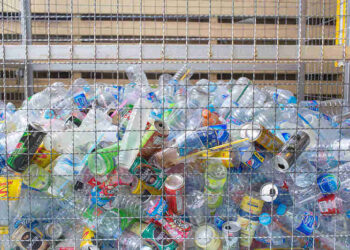
Tennessee State Sen. Heidi Campbell is re-introducing a packaging EPR bill crafted to gain Republican and business support. | RebeccaDLev/Shutterstock

Editor’s note: Learn more about policy trends and many other topics at the 2025 Plastics Recycling Conference on March 24-26 in National Harbor, Maryland. 

A Tennessee lawmaker is reintroducing an extended producer responsibility bill for packaging – with some twists, in an attempt to get it through the Republican-controlled Legislature.   

The Tennessee Waste to Jobs Act, sponsored by State Sen. Heidi Campbell, D-Nashville, would put the producer responsibility organization in the driver’s seat for much of the program design and plan targets, Campbell said, unlike in California and other states. 

“We’re kind of approaching it a little differently,” she said. “We are really framing this as a business-centric bill, a bill that builds jobs, a bill that brings money into the state and gives us the opportunity to be the lead state in material aggregation and distribution.”

For example, Campbell is focusing on how the Tennessee Waste to Jobs Act will create more than 7,700 good-paying jobs, save municipalities money, entice manufacturers to come to town with access to recycled material, bring an estimated $300 million annually into the state for recycling infrastructure and extend the lives of rapidly filling landfills, which are “this anvil overhead right now,” she said. 

Tennessee currently ranks 48th in the nation for recycling, she added, and only 47% of residents have access to recycling services. The TWJA would increase recycling rates by 355% if enacted, Campbell estimated. 

At less than 20 pages, the bill leaves most of the rulemaking for after the passage of the bill. The Tennessee Department of Environment Conservation will be overseeing the PRO, as in other states, and will be the ultimate regulatory authority for the bill, providing checks and balances, she added. 

“We’ll really be relying upon or empowering business to take the helm with this, and that is something that my colleagues appreciate,” Campbell said. 

Due to the PRO-centered approach, brands such as Nestle, Mars, Unilever and Danone are supporting the bill via the Sustainable Food Policy Alliance, she noted, and some companies that want access to more post-consumer material are also early supporters, such as Kaiser Aluminum Corporation. 

Campbell said a tweak to this year’s bill is that counties with a population of more than 200,000 will be automatically included, while any counties smaller than that would have to opt in. 

Campbell has been working on the bill for two years – and while she filed the bill last year, it was not presented in committee. Tennessee’s 114th General Assembly convenes on Jan. 14, and after the latest version is filed and presented, it will be the first time the bill is officially introduced. 

“There is so much preemption in this state that it gives us the opportunity to drive something that has to do with local control,” Campbell said. The opt-in method is also being floated as a compromise on how to expand Medicaid, so Campbell said the modification might help the bill gain more Republican support. 

This year’s version also includes compostable packaging, she said, and is permissive, with plenty of compromise. 

“You can’t let the perfect be the enemy of the good, so we’re willing to do whatever we can to get the ball rolling with this, with the hopes that we can expand upon it and improve it over time without, quite frankly, some of the mistakes that have been made in other states by being overly prescriptive,” she said. “Basically, let’s do this experiment of a red state and see if the free market driving it actually is effective.” 

Campbell said while many people might not look to Tennessee for packaging EPR, “in a lot of ways, this is the perfect scenario.” 

“The government needs to get out of the way and let this actually happen,” she said, adding that the lack of prescriptive language is not just to get the bill over the finish line: “Overly regulatory things aren’t very effective sometimes.” 

“We’re getting a lot of momentum,” she added, and the changes will hopefully get the bill even more bipartisan support: “We had Republican support in the Senate last time, and so we’re really working on the House right now.” 

Last year’s bill, the Waste Reduction and Recycling Act, also got industry support from the Sustainable Food Policy Alliance. It called for the TDEC to maintain a minimum recyclables list. 

It tasked the PRO with performing a needs assessment and developing a five-year plan that included a funding mechanism for dues that is modulated based on the recyclability and reusability of materials and the use of recycled content. 

Under the old bill, the PRO was also in charge of coming up with a strategy for source reduction, reuse and establishing performance goals for each covered material type at five-, 10-, and 15-year rolling intervals. 

Gary Cohen, the volunteer outreach director with Reimagine Packaging Tennessee, told Resource Recycling that much of the work in past years was focused on educating lawmakers about EPR. 

“One of the first questions I ask when I sit down with the legislators is do you know what EPR is. They look at me, and they say no,” Cohen said. “You really have to start at the basics.”

However, he thinks that once lawmakers understand the benefits, there may well be interest in exploring EPR for problem materials such as paint, tires and e-scrap. 

“Once they understand what EPR is, there’s no end in terms of what we can do,” he added. 

A version of this story appeared in Resource Recycling on Jan. 7.

Tags: EPRLegislation & Enforcement
TweetShare
Marissa Heffernan

Marissa Heffernan

Marissa Heffernan worked at Resource Recycling from January 2022 through June 2025, first as staff reporter and then as associate editor. Marissa Heffernan started working for Resource Recycling in January 2022 after spending several years as a reporter at a daily newspaper in Southwest Washington. After developing a special focus on recycling policy, they were also the editor of the monthly newsletter Policy Now.

Related Posts

RecyClass hits 500 EU recyclability evals

RecyClass hits 500 EU recyclability evals

byAntoinette Smith
July 21, 2026

The most recent evaluations include Avery Dennison's RFID tag for PET bottles, ahead of the first PPWR enforcement in mid-August.

Former president of CRT processor sentenced to prison

Groups say injunction doesn’t settle labeling issues

byStefanie Valentic
July 17, 2026

Californians Against Waste and the National Stewardship Action Council say a federal injunction blocking SB 343 pauses enforcement but still...

US recycling rates rise despite drop in bottles

byAntoinette Smith
July 16, 2026

Although rates saw slight gains over two years, the data highlight the need for policy solutions to unlock growth in...

CarbonLite to open $60 million Pennsylvania plant

Federal judge blocks CA ‘Truth in Recycling’ (SB 343) law

byStefanie Valentic
July 15, 2026

A federal judge has blocked California from enforcing SB 343's recyclability labeling restrictions, ruling the "Truth in Recycling" law is...

Data quantifies progress on plastic recycling

Inside the Circle: Don’t break the sustainable accounting system

byBill Shireman
July 13, 2026

Why California should not restrict the use of “mass balance accounting.”

From claims to custody: PCR procurement grows up

From claims to custody: PCR procurement grows up

byPuneet Thadani
July 10, 2026

In this guest column, the founder of Ecolar Global says the growing use of recycled content without standardized documentation presents...

Load More
Next Post

Panelists: Secondary sorting fills vital recycling role

More Posts

CarbonLite to open $60 million Pennsylvania plant

Federal judge blocks CA ‘Truth in Recycling’ (SB 343) law

July 15, 2026
Greg Saxon to lead The Recycling Partnership

Greg Saxon to lead The Recycling Partnership

July 15, 2026
Industry announcements for January 2026

Industry announcements for July 2026

July 1, 2026
Former president of CRT processor sentenced to prison

Groups say injunction doesn’t settle labeling issues

July 17, 2026

US recycling rates rise despite drop in bottles

July 16, 2026
Shredded rubber from Pacific Palisades running track by Ecore

Wildfire-damaged track finds second life ahead of 2028 LA Olympics

July 20, 2026
Cascade Asset Management sees higher sales volumes

Sorted: Restoring mineral supplies, one junk drawer at a time

July 20, 2026
Federal funds boost critical mineral research efforts

Federal funds boost critical mineral research efforts

July 16, 2026

Mint spins off battery recovery biz as it prepares US launch

July 15, 2026
Texas processor preparing to open new facility

Sumitomo bets on AI, data centers with GreenTek deal

July 14, 2026
Load More

About & Publications

About Us

Staff

Archive

Magazine

Work With Us

Advertise
Jobs
Contact
Terms and Privacy

Newsletter

Get the latest recycling news and analysis delivered to your inbox every week. Stay ahead on industry trends, policy updates, and insights from programs, processors, and innovators.

Subscribe

Welcome Back!

Login to your account below

Forgotten Password?

Retrieve your password

Please enter your username or email address to reset your password.

Log In

Add New Playlist

No Result
View All Result
  • The Latest
  • Analysis
  • Recycling
  • E-Scrap
  • Plastics
  • Policy Now
  • Conferences
    • E-Scrap Conference
    • Plastics Recycling Conference
    • Resource Recycling Conference
    • Textiles Recovery Summit
  • Magazine
  • About Us
  • Advertise
  • Archive
  • Jobs
  • Staff
Subscribe
This website uses cookies. By continuing to use this website you are giving consent to cookies being used. Visit our Privacy and Cookie Policy.