





Resource Recycling
  • The Latest
  • Analysis
    • All
    • Certification Scorecard
    • Industry Announcements
    • Opinion
    Data quantifies progress on plastic recycling

    Inside the Circle: Don’t break the sustainable accounting system

    Assurant releases Q2 trade-in and upgrade data

    iPhone changes could flip script on secondhand market

    From claims to custody: PCR procurement grows up

    From claims to custody: PCR procurement grows up

    What the NAND flash crunch means for remarketing, refurbishment and residual values

    Telamon acquires ITAD consultancy Retire-IT

    Certification Scorecard — Week of July 6, 2026

    Tech giant pens detailed ‘plastic-free packaging’ guide

    What Google’s latest report means for ITAD

  • Conferences
    • Resource Recycling Conference
    • Plastics Recycling Conference
    • E-Scrap: The Longevity Conference
    • Textiles Recovery Summit
  • Publications
    • E-Scrap News
    • Plastics Recycling Update
    • Policy Now
    • Resource Recycling
    • Other Topics
      • All Topics
      • Brand Owners
      • Critical Minerals
      • Glass
      • Grant Watch / RFPs
      • Markets
      • Organics
      • Packaging
      • Research
      • Technology
      • Textiles
Subscribe
No Result
View All Result
Resource Recycling
  • The Latest
  • Analysis
    • All
    • Certification Scorecard
    • Industry Announcements
    • Opinion
    Data quantifies progress on plastic recycling

    Inside the Circle: Don’t break the sustainable accounting system

    Assurant releases Q2 trade-in and upgrade data

    iPhone changes could flip script on secondhand market

    From claims to custody: PCR procurement grows up

    From claims to custody: PCR procurement grows up

    What the NAND flash crunch means for remarketing, refurbishment and residual values

    Telamon acquires ITAD consultancy Retire-IT

    Certification Scorecard — Week of July 6, 2026

    Tech giant pens detailed ‘plastic-free packaging’ guide

    What Google’s latest report means for ITAD

  • Conferences
    • Resource Recycling Conference
    • Plastics Recycling Conference
    • E-Scrap: The Longevity Conference
    • Textiles Recovery Summit
  • Publications
    • E-Scrap News
    • Plastics Recycling Update
    • Policy Now
    • Resource Recycling
    • Other Topics
      • All Topics
      • Brand Owners
      • Critical Minerals
      • Glass
      • Grant Watch / RFPs
      • Markets
      • Organics
      • Packaging
      • Research
      • Technology
      • Textiles
Subscribe
No Result
View All Result
Resource Recycling
No Result
View All Result
Home Plastics

Industry views are mixed as tariff threat looms

Antoinette SmithbyAntoinette Smith
December 11, 2024
in Plastics
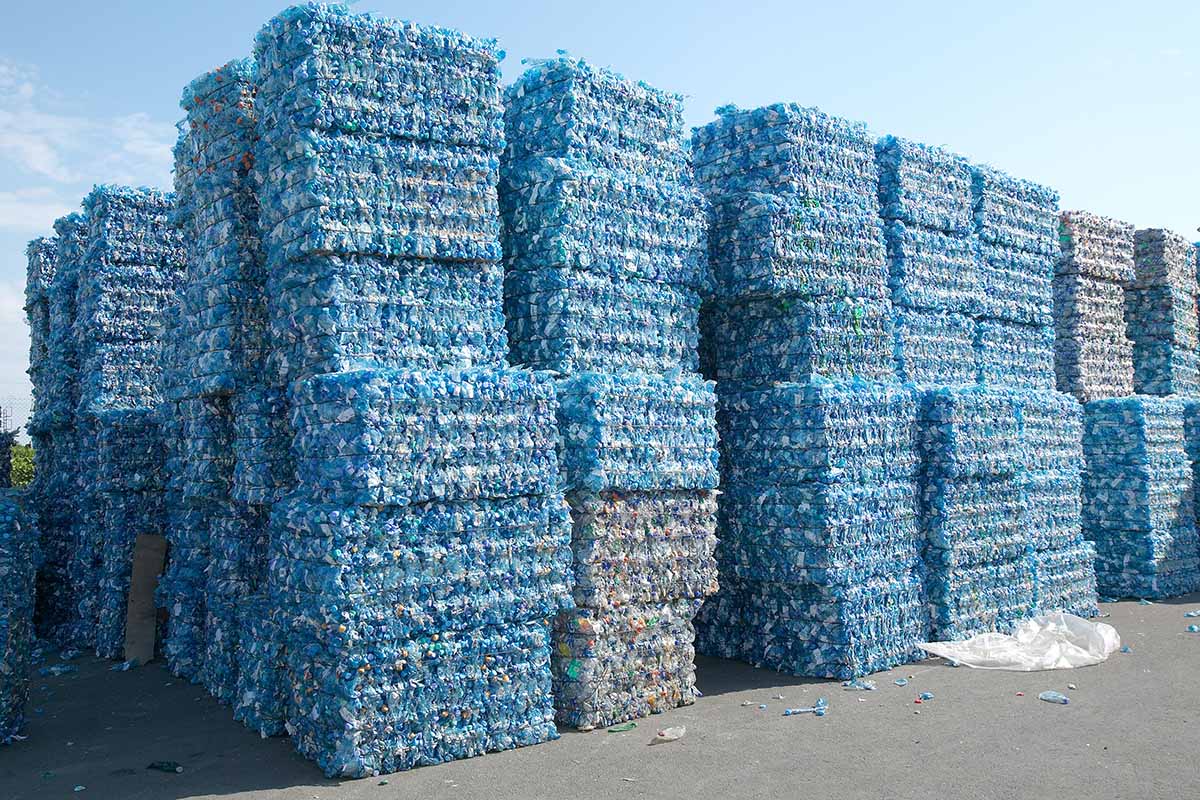
Effects from proposed tariffs against Mexico and Canada could include market consolidation favoring larger firms that can absorb added costs. | Menzl_Guenter/Shutterstock

Editor’s Note: This is the second in a two-part series taking a closer look at the potential effects of threatened tariffs on recycled commodity markets. Read the previous installment here, on what trade flows are most likely to be affected.

As the January inauguration approaches – and with it the prospect of hefty tariffs on Mexico and Canada –  industry views on the potential impacts are mixed. However, market participants largely agree that the implementation of such tariffs remains far from certain.  

On Nov. 25, President-elect Donald Trump threatened hefty tariffs on Canada and Mexico to take effect from Jan. 20, his first day in office.

“We probably can expect that he will put some sort of tariff on PET resin and other plastic resins coming into the country,” said James Derrico, vice president of new business at CellMark, a large brokerage for recycled materials including plastic bales and resins. He added that an increase in prices related to tariffs was more likely than a decrease in traded volumes.

Ahead of the tariffs, CellMark imported extra PET and RPET resin, to help hedge against anticipated higher pricing, he said. “A lot of other industries have the same idea, and the reason we know that is because the ocean freights jumped up pretty dramatically on importing material to the U.S. that looked like it could potentially be hurt with tariffs.” 

As Chris Goger, senior director of recycling at recycled materials broker Blackbridge Investments, put it: “Who knows how it’ll actually take shape? And so it’s kind of hard to make sense of it, but at the same time, you can’t just say, oh, we’ll worry about it if and when it happens.”

Similarly, Derrico said, “It does make it hard to plan for things in these markets where you have no idea the variable of what Trump is actually doing or if he’s saying what is actually true to some degree, but it does seem like he is pretty dead-set on tariffs. We are anticipating that those will come, and obviously we don’t want them to affect us, but our fingers are crossed that they will be very minor affecting the recycling industry as a whole.” 

Joel Morales, vice president of polyolefins at Chemical Market Analytics, was skeptical that the tariffs were more than a bargaining tool to address “issues that had nothing to do with trade” and said a trade war was unlikely.

However, “there’s a lot of stuff going back and forth between the U.S. to Canada, (and) Canada, U.S.,” he said, adding that Canada likely would “hit us right back” in the event of an additional 25% tariff on PE. 

Contract margins, smaller firms could take a hit

Contracted volumes wouldn’t be immediately affected, Derrico said, though profit margins through the remainder of the contract term could decrease. Costs relating to additional red tape required for both importing and exporting, including possibly more staffing, would add to the margin pressure. 

As a result, smaller brokerages that are less able to absorb the added costs could exit the markets, he said, adding that such market consolidation could cause margins to actually widen for the remaining players.

Derrico remained optimistic that Canada and Mexico would not resort to retaliatory tariffs, because the customers overseas still need materials. With tariffs, “it’s not like you’re going to increase your recycling rates, or it’s not like you’re going to create more recycling jobs.”

Trickle-down effects from virgin PET

As was seen starting in 2023, widely available cheap imports for both virgin PET and RPET dampened demand for domestic RPET, which remained at a significant price premium. With tariffs in place, however, the opposite could occur, according to Marcelo Wasem, research and analysis director for PET at Chemical Market Analytics. 

Although increasing tariffs on Chinese material would have no impact due to the dearth of resin originating there, “for Mexico and Canada, yeah, we have a huge impact,” Wasem said. 

The U.S. is a net importer of virgin PET, and he said imports supply around 30% of demand requirements, with Mexico representing about 18% and Canada 6-7%. 

“What we can predict at this point is that an increase in tariffs in those countries will have naturally an increase of imports from Asia,” he said, adding that 65% of imports come not from China but from South Korea, Taiwan and southeast Asia. The increase in demand would subsequently push up deep-sea freight rates, Wasem said. 

Although over the past two years RPET buying on the spot market has increased only during shortages of virgin PET, Wasem said increased buying would push up prices for RPET but still could incentivize usage of RPET over virgin material. 

“We have two components of demand: One is the natural demand for sustainability initiatives, companies trying to introduce more recycled PET in their products,” he said. “And the other component is directly related with how long or short the virgin PET market is.” If the U.S. has any constraints on PET supply, “players will naturally move to the recycled market to get more volumes.”

Because of its reliance on the U.S. PET market, Mexico eventually would run out of export alternatives and be forced to reduce plant operating rates, he said. 

In a late July investor call – well before the threat of tariffs – Jorge Young, CEO of Mexico-based PET producer Alpek, said the North American trade deficit for PET “probably peaked in 2022 with more than 1 million tons of PET deficit in the Americas. It’s been trending down slightly.” 

With anti-dumping duties already in place for imported Chinese PET, Mexico’s imports originate mostly from other Asian countries, Young said, though “the prices from the non-China origins are not as low as China.” Nevertheless, Asian countries besides China still have “a relatively high percentage of their capacity that is again available for exports.” He expected Mexico to continue to face an uphill battle for market share.

For PE markets, Morales said a trade war would ultimately hurt domestic converters, “the consumer would pay, and it would hurt profitability of these North American countries, which kind of goes against the whole point of trying to make a better economy, not worse.” 

Over the past few years, vast new U.S. capacity for virgin PE – and the resulting oversupply and low pricing – has cut deeply into demand for post-consumer HDPE. Recycling processors struggle to compete with virgin resin that may be priced closer to feedstock post-consumer bales. 

However, Morales said, with emphasis growing on recycled content targets, recycled HDPE prices remain elevated, and “we’re setting ourselves up for another whiplash, possibly in 2025,” though he said even tariff-inflated virgin PE values were unlikely to be sufficient to incentivize use of recycled HDPE. 

Tags: MarketsPETTrade & Tariffs
TweetShare
Antoinette Smith

Antoinette Smith

Antoinette Smith has been at Resource Recycling Inc., since June 2024, after several years of covering commodity plastics and supply chains, with a special focus on economic impacts. She can be contacted at antoinette@resource-recycling.com.

Related Posts

Plastics ease as paper, cans steady

byRecyclingMarkets.net Staff
July 13, 2026

Bale pricing for PET, HDPE, PP and film grades dropped marginally, while paper and UBCs remained flat on the month.

APR adds PCR content verification to cert program

APR adds PCR content verification to cert program

byAntoinette Smith
July 9, 2026

The new producer standard is based on ISO chain-of-custody and traceability requirements, to provide third-party verification of PCR claims.

SB 54 draft rules generate debate on rates, review

California increases PET market payments

byAntoinette Smith
July 7, 2026

While the state extended the incentive program, the status of a separate bill with similar goals is uncertain.

Bottlers open recycling center on Mexican isle

Bottlers open recycling center on Mexican isle

byAntoinette Smith
June 26, 2026

The transfer center will separate and process recyclables on Isla Holbox, a pristine island off the northern coast of the...

Niagara acquires Absopure, invests in plants

byAntoinette Smith
June 23, 2026

The bottler will invest hundreds of millions to make its manufacturing more energy efficient and consume less packaging material.

Compliance push drives new Republic organics facility

byStefanie Valentic
June 18, 2026

Republic Services started construction on a 140-acre organics facility in San Bernardino designed to expand Southern California's composting capacity under...

Load More
Next Post
Vinyl industry reports flat recycling figures

Vinyl industry reports flat recycling figures

More Posts

Unpacking the Starbucks cup data

Unpacking the Starbucks cup data

July 8, 2026
Tech giant pens detailed ‘plastic-free packaging’ guide

What Google’s latest report means for ITAD

July 8, 2026
Two recycled-content bills gain approval in California

California agriculture seeks SB 54 repeal

July 7, 2026
SB 54 draft rules generate debate on rates, review

California increases PET market payments

July 7, 2026

Plastics ease as paper, cans steady

July 13, 2026
In Our Opinion: Coalitions: The EPR Differentiator

Inside NAW’s constitutional case against packaging EPR

July 6, 2026
MP Materials breaks ground on rare earth magnet campus in North Texas

ERI confirms ITAD shift toward minerals

July 3, 2026
Data quantifies progress on plastic recycling

Inside the Circle: Don’t break the sustainable accounting system

July 13, 2026
Canada EV battery reuse pilot to start

Canada EV battery reuse pilot to start

July 8, 2026
EPR fees are a market signal. Here’s what they’re telling you.

Building the infrastructure behind EPR

July 6, 2026
Load More

About & Publications

About Us

Staff

Archive

Magazine

Work With Us

Advertise
Jobs
Contact
Terms and Privacy

Newsletter

Get the latest recycling news and analysis delivered to your inbox every week. Stay ahead on industry trends, policy updates, and insights from programs, processors, and innovators.

Subscribe

Welcome Back!

Login to your account below

Forgotten Password?

Retrieve your password

Please enter your username or email address to reset your password.

Log In

Add New Playlist

No Result
View All Result
  • The Latest
  • Analysis
  • Recycling
  • E-Scrap
  • Plastics
  • Policy Now
  • Conferences
    • E-Scrap Conference
    • Plastics Recycling Conference
    • Resource Recycling Conference
    • Textiles Recovery Summit
  • Magazine
  • About Us
  • Advertise
  • Archive
  • Jobs
  • Staff
Subscribe
This website uses cookies. By continuing to use this website you are giving consent to cookies being used. Visit our Privacy and Cookie Policy.