



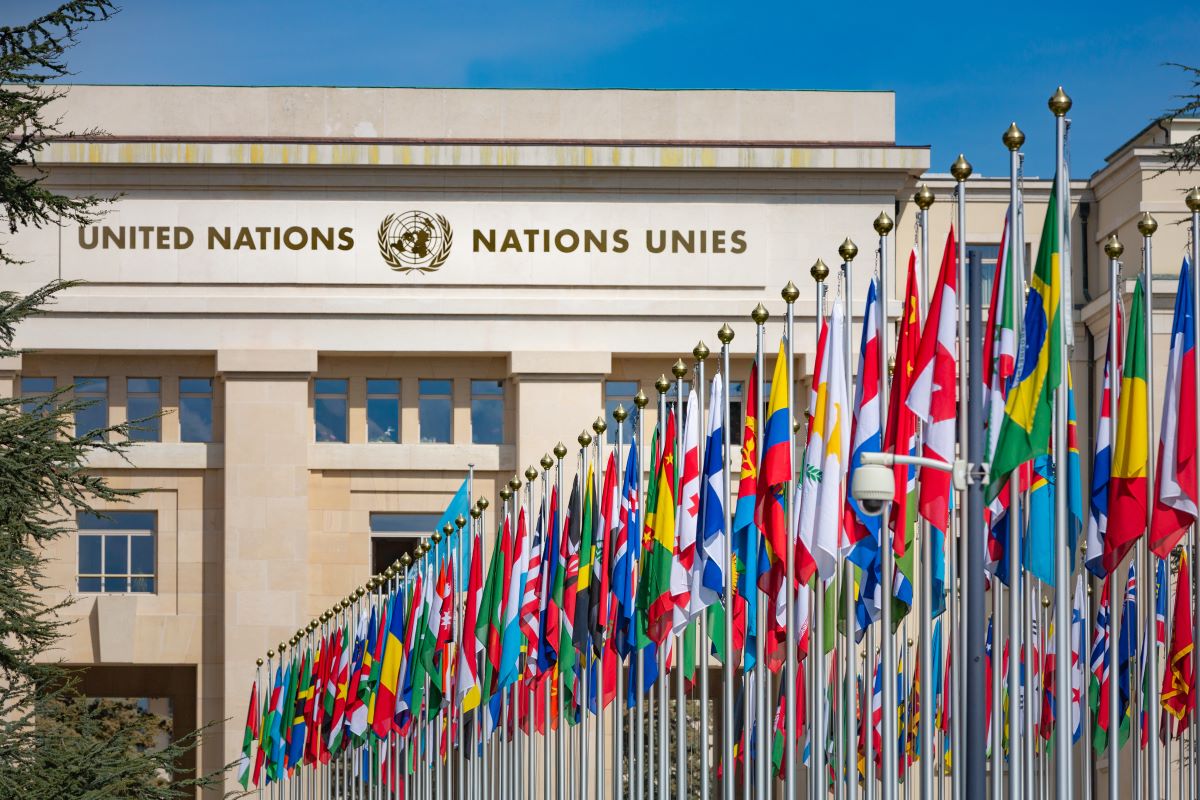
The penultimate meeting to draft a global plastic pollution treaty will kick off next week in Ottawa, Canada, and stakeholders say there’s a lot riding on this fourth meeting.
Hundreds of delegates from around the world will gather April 21-30 to try to make progress on a legally binding agreement to end plastic pollution in the environment.
The third United Nations Intergovernmental Negotiating Committee meeting, INC-3, met in Nairobi, Kenya, in November. It was slated to produce a second full draft of the treaty and lay out a plan for a significant amount of work to be completed between sessions, but instead it ended with an expanded version of the first draft and no intersession work plan.
The meetings follow a 2022 vote on a U.N. resolution to create a legally binding agreement by the end of 2024.
Among the topics that saw changes from the zero draft are definitions of emissions, financial mechanisms, the merging of several different sub-options from the original draft text, periodic assessment and monitoring of the progress of implementation, and how to approach capacity building, technical assistance and technology transfer.
Many groups previously expressed mixed feelings about the work completed at INC-3. The Center for International Environmental Law said while the week started with high hopes, several delegations instead blocked progress and are endangering the entire treaty.
“Governments that began the week with a ‘Zero Draft’ of the treaty text and a clear mandate to agree on an active intersessional program of work are leaving eight days later with a ‘Revised Zero Draft’ that has ballooned to 100 plus pages, with no intersessional agenda and a clear warning that entertaining endless debate by those few who want to block progress at every turn is a recipe for inertia and eventual disaster,” CIEL said in a statement.
Carroll Muffett, CIEL president, also noted the “massive presence” of 143 fossil fuel and chemical industry lobbyists registered for the negotiations.
A strong treaty is “still achievable in these talks, but only if negotiators acknowledge and confront the coordinated campaign by fossil fuel and petrochemical exporters to prevent real progress of any kind,” Muffett added.
Willemijn Peeters, founder of ocean advocacy group Searious Business, told Plastics Recycling Update that there “have been some disappointing delays caused by the less-than-ambitious countries and a lot of discussion on how the voting should be handled.”
“All is to be expected, but it is such a waste of time, and we don’t have time to waste,” she said.
Peeters said two clear schools of thought have emerged: those who want to tackle plastics holistically, including removing toxic chemicals, reduction and reuse, and those who “believe it’s just a waste problem and recycling can handle it.”
“This treaty has to be about the whole lifecycle of plastic, not just the end bit,” she said.
At the 2024 Plastics Recycling Conference last month, Anja Brandon, associate director of U.S. plastics policy for the Ocean Conservancy, said in the “Plastics: A Global Conversation” session that “I think we should be pretty honest: The first three meetings have not yet resulted in what we need to have happen if we actually want to live up to the goal of getting to a resolution to really end plastic pollution in the environment.”
“We were stuck in the quagmire of procedure and politics,” she said, adding that the first three meetings taught everyone “a lot about how slow and patient we need to be in this process.”
Challenges
Peeters said the biggest obstacle to success is getting everyone to agree, followed by implementation details and enforcement.
“In fact, I think that could be an unachievable goal, and do you really need everyone to agree?” she said. “Should a few countries hold back the progress of the rest of the world?”
She added that other multilateral environmental agreements have struggled with enforcement, and “in theory, countries in breach will face sanctions, but it’s more likely they’ll be offered support.”
“It’s got to be a global effort,” she said. “We need to learn from the success of the Montreal Protocol.”
Brandon said there also needs to be more representation of actual recyclers.
“We’ve had a lot of production industries show up, both from the U.S. and other countries who have a vested interest in keeping the status quo and maintaining the production and overproduction of virgin plastic,” she said.
It would be helpful for plastic recyclers to show up more and talk about the realities of recycling and how recycling fits in, she added.
“You have different goals, you have different needs than the other folks in the room, because otherwise you get painted with one brush, and I think that’s unfair to everyone,” Brandon said.
In advance of the meeting, The Global Expanded Polystyrene Sustainability Alliance started a LinkedIn group discussion forum. Spokesperson Betsy Bowers, executive director of EPS-IA, said in a press release that the forum “is not just another online community; it is a dedicated space to exchange ideas, perspectives and knowledge aimed at improving sustainability and tackling pressing environmental challenges.”
Goals for Ottawa
Looking forward to the meeting in Ottawa, Peeters said she hopes to see a shift in emphasis to prevention of plastic pollution “instead of distracting with end-of-pipe solutions.”
She said she’s comforted by “the conversations being had outside the negotiating room in the corporate world.”
“I’m hoping this time, we can get straight down to the practical stuff and that the high-ambition countries and companies will stand up to the bad-faith actors,” she said. “There’s not a lot of time left to get this nailed down.”
Brandon said that INC-3 showed some progress because countries started to state what they wanted to see out of the treaty.
“INC-4 is going to be a make-or-break moment to figure out what we actually end up with,” she said.
As for what stakeholders are looking for, Brandon said the goal of Ocean Conservancy is based on the original UN resolution: ending plastic pollution across the full life cycle.
“We’re looking for a treaty that is comprehensive in scope across the full life cycle of plastics,” she said. “And from there we hope it’s as ambitious as humanly possible and something that we can build on. We know that this treaty is an opportunity for continued further growth, both as a country and for other countries around the world.”
In a press release, Graham Forbes, head of the Greenpeace delegation and global plastics campaign lead for Greenpeace USA, said the environmental group wants to see total plastic production cut by at least 75% by 2040.
“We only have two negotiation meetings left – the clock is ticking and we are either heading towards a treaty that will solve the global plastics crisis or end up with a weak treaty that will only let the planet spiral towards disaster,” Forbes said. “We cannot let the fossil fuel industry dictate the terms of how the world solves a problem that they’ve created.”
The World Wildlife Fund made a similar call, encouraging delegates to prioritize negotiations on binding, global bans, phase-outs, product design changes, reuse and enforcement. It also pushed for a mandate to develop a full draft of the treaty before INC-5 in South Korea.
Greenpeace released the results of a survey across 19 countries that found 82% of respondents supported cutting the production of plastic, 90% endorsed transitioning away from single-use plastic packaging and 75% supported a ban on single-use plastic packaging.
The Global Partners for Plastics Circularity, which represents the plastic industry, said in a statement it encourages “negotiators to come with a collaborative spirit” and that the “plastics agreement should continue to enable the essential role of plastics in creating a more sustainable future.”
During the March “Plastics: A Global Conversation” session Alex Schenck, director of global public policy at Walmart, said that “first and foremost, we want a treaty.”
“That’s not a guarantee at this point,” he added. “It’s very important, and this is – even on the global stage – this is a highly contentious issue. We have different coalitions forming that are very powerful and at odds with one another.”
Past that, Walmart wants to see recommendations for frameworks, he added, especially extended producer responsibility.
“We want a recommendation for EPR that we can leverage and we also want to make sure that that recommendation for EPR is one that is feasible for everyone,” he said. “You don’t need to be too specific, but make this treaty the North Star.”
Similarly, Susan Fife-Ferris, director of solid waste planning and program management for the City of Seattle’s Public Utilities, said during the session that she’s hoping for standardization and harmonization.
“I just hope that there’s a treaty,” she said. “That they get something that has some kind of a large framework that encourages a lot of the different concepts that we have put forth, EPR being one of the main ones.”