
Resource Recycling
  • The Latest
  • Analysis
    • All
    • Certification Scorecard
    • Industry Announcements
    • Opinion
    Data quantifies progress on plastic recycling

    Inside the Circle: Don’t break the sustainable accounting system

    Assurant releases Q2 trade-in and upgrade data

    iPhone changes could flip script on secondhand market

    From claims to custody: PCR procurement grows up

    From claims to custody: PCR procurement grows up

    What the NAND flash crunch means for remarketing, refurbishment and residual values

    Telamon acquires ITAD consultancy Retire-IT

    Certification Scorecard — Week of July 6, 2026

    Tech giant pens detailed ‘plastic-free packaging’ guide

    What Google’s latest report means for ITAD

  • Conferences
    • Resource Recycling Conference
    • Plastics Recycling Conference
    • E-Scrap: The Longevity Conference
    • Textiles Recovery Summit
  • Publications
    • E-Scrap News
    • Plastics Recycling Update
    • Policy Now
    • Resource Recycling
    • Other Topics
      • All Topics
      • Brand Owners
      • Critical Minerals
      • Glass
      • Grant Watch / RFPs
      • Markets
      • Organics
      • Packaging
      • Research
      • Technology
      • Textiles
Subscribe
No Result
View All Result
Resource Recycling
  • The Latest
  • Analysis
    • All
    • Certification Scorecard
    • Industry Announcements
    • Opinion
    Data quantifies progress on plastic recycling

    Inside the Circle: Don’t break the sustainable accounting system

    Assurant releases Q2 trade-in and upgrade data

    iPhone changes could flip script on secondhand market

    From claims to custody: PCR procurement grows up

    From claims to custody: PCR procurement grows up

    What the NAND flash crunch means for remarketing, refurbishment and residual values

    Telamon acquires ITAD consultancy Retire-IT

    Certification Scorecard — Week of July 6, 2026

    Tech giant pens detailed ‘plastic-free packaging’ guide

    What Google’s latest report means for ITAD

  • Conferences
    • Resource Recycling Conference
    • Plastics Recycling Conference
    • E-Scrap: The Longevity Conference
    • Textiles Recovery Summit
  • Publications
    • E-Scrap News
    • Plastics Recycling Update
    • Policy Now
    • Resource Recycling
    • Other Topics
      • All Topics
      • Brand Owners
      • Critical Minerals
      • Glass
      • Grant Watch / RFPs
      • Markets
      • Organics
      • Packaging
      • Research
      • Technology
      • Textiles
Subscribe
No Result
View All Result
Resource Recycling
No Result
View All Result
Home Plastics

AI helps US compounder detect recycled resin odors

byJared Paben
December 15, 2021
in Plastics
AI helps US compounder detect recycled resin odors
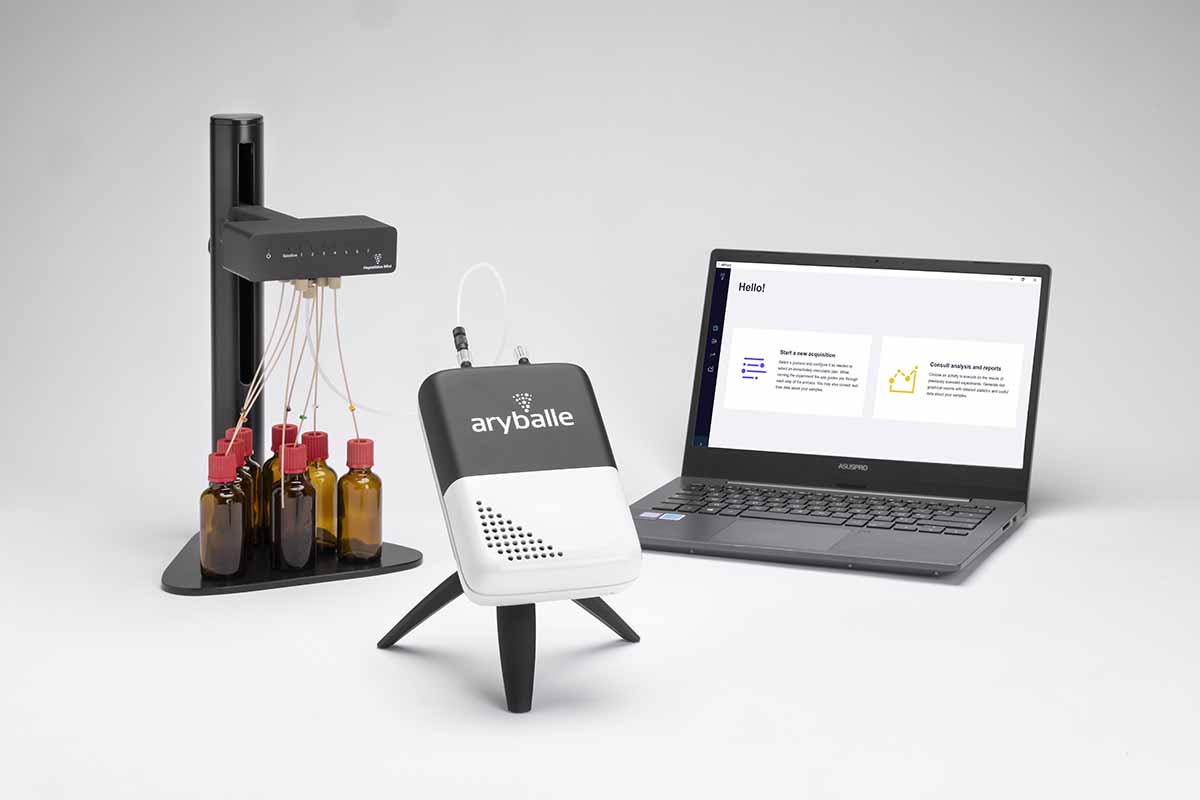
Digital nose technology developed by French company Aryballe provides consistent, AI-powered analysis while different humans experience smells differently. | Courtesy of Aryballe

Artificial intelligence is already used to recognize how different scrap plastics look. Now, a Michigan compounder is testing AI to evaluate how recycled resins smell.

Using a digital nose technology developed by French company Aryballe, Asahi Kasei Plastics North America (APNA) is evaluating whether different recycled resins have odors. The work at a  APNA facility in Fowlerville, Mich. serves the company’s effort to use recycled resin in vehicle components.

“With the OEM odor standards, we want to make sure we are easily able to use recycled products,” said Samantha Cronin, marketing communications manager for APNA. “This could potentially be a way to identify material that can go in our products while meeting the automotive emission requirements.”

AI is already used in materials recovery facilities (MRFs) and plastics recycling plants to sort scrap plastics. In those cases, cameras are used to record images of items on a conveyor belt, and AI software compares their visual characteristics to images in a massive database to quickly categorize them so they can be properly sorted by a robot or optical sorter.

But instead of eyes, the technology from Aryballe, which was founded by biochemists in 2014, replaces the human nose. In an interview with Plastics Recycling Update, Fanny Turlure, global product manager at the Grenoble, France-based company, noted that different humans experience smells differently, and sense of smell can be impacted by sickness and runny noses.

Aryballe’s technology uses a small device to capture smells, generally over a period of 5 to 10 seconds. The readings are converted into a unique signature, and AI-powered software then matches the signature with odor signatures in a database, she explained.

The goal is to track odors in a traceable and transparent way, Turlure explained.

“There’s already a number of use cases where you can use this type of technology,” she said, especially evaluating using recovered materials to create desired scents in fragrance products. The technology can be used by the fragrance industry to replace panels of human testers, she said.

For the automotive industry, odors are a big part of the experience for the consumer. Hyundai Motor America faced a class-action lawsuit earlier this year because of four odors in its Palisade SEL and Limited trim models. The odor, compared to garlic and rotten eggs, was ultimately traced to the headrest. The lawsuit has since been dismissed.

Hyundai, incidentally, was one of the companies that invested in Aryballe over the past few years. Business Korea reported the company put 1.16 million euros into Aryballe.

Turlure noted that using recycled plastic is huge in the automotive industry, and Asahi Kasei Plastics has goals for producing recycled resin for use in auto components. Part of Japanese chemical conglomerate Asahi Kasei, APNA produces compounds for use in a variety of durable goods.

Cronin said APNA is “evaluating it as a screening tool to get more information on the recycled material when it arrives.”

She noted that as demand for recycled plastic grows, APNA is less likely to have consistent streams.

“Supply will be sparse and when there are recyclers competing for the same feed stream, we may not always get recyclables from the same sources,” she said. “The recyclers themselves may have trouble securing supply.”

 

Tags: ProcessorsTechnology
TweetShare
Jared Paben

Jared Paben

Related Posts

What the NAND flash crunch means for remarketing, refurbishment and residual values

Telamon acquires ITAD consultancy Retire-IT

byDavid Daoud
July 9, 2026

Telamon will be retaining Retire-IT founder Kyle Marks, who built that business over 21 years.

Canada EV battery reuse pilot to start

Canada EV battery reuse pilot to start

byPaul Lane
July 8, 2026

Mapleview Energy is testing the use of older EV batteries to store solar energy gathered on a farm in Fergus,...

Tech giant pens detailed ‘plastic-free packaging’ guide

What Google’s latest report means for ITAD

byDavid Daoud
July 8, 2026

The centerpiece is Google's Reverse Supply Chain program, which the company says harvested more than 7.5 million components from decommissioned...

Amazon cutting out more flexible packaging

Amazon’s AWS hardware reuse is measured

byDavid Daoud
July 7, 2026

The numbers are significant, but retail electronics are still missing from the ledger.

Lithium-ion battery recycler to build New York facility

Earthworks acquires metals sorting tech

byPaul Lane
July 1, 2026

The system that’s now owned by Earthworks Industries will help it maximize critical mineral recovery efforts.

Groups call for end to e-scrap imports to Philippines

Groups call for end to e-scrap imports to Philippines

byPaul Lane
June 30, 2026

A task force claims hundreds of containers of material have illegally entered the country since last year.

Load More
Next Post

Curbside HDPE prices continue steep declines

More Posts

Unpacking the Starbucks cup data

Unpacking the Starbucks cup data

July 8, 2026
Tech giant pens detailed ‘plastic-free packaging’ guide

What Google’s latest report means for ITAD

July 8, 2026
Two recycled-content bills gain approval in California

California agriculture seeks SB 54 repeal

July 7, 2026
SB 54 draft rules generate debate on rates, review

California increases PET market payments

July 7, 2026

Plastics ease as paper, cans steady

July 13, 2026
In Our Opinion: Coalitions: The EPR Differentiator

Inside NAW’s constitutional case against packaging EPR

July 6, 2026
MP Materials breaks ground on rare earth magnet campus in North Texas

ERI confirms ITAD shift toward minerals

July 3, 2026
Data quantifies progress on plastic recycling

Inside the Circle: Don’t break the sustainable accounting system

July 13, 2026
Canada EV battery reuse pilot to start

Canada EV battery reuse pilot to start

July 8, 2026
EPR fees are a market signal. Here’s what they’re telling you.

Building the infrastructure behind EPR

July 6, 2026
Load More

About & Publications

About Us

Staff

Archive

Magazine

Work With Us

Advertise
Jobs
Contact
Terms and Privacy

Newsletter

Get the latest recycling news and analysis delivered to your inbox every week. Stay ahead on industry trends, policy updates, and insights from programs, processors, and innovators.

Subscribe

Welcome Back!

Login to your account below

Forgotten Password?

Retrieve your password

Please enter your username or email address to reset your password.

Log In

Add New Playlist

No Result
View All Result
  • The Latest
  • Analysis
  • Recycling
  • E-Scrap
  • Plastics
  • Policy Now
  • Conferences
    • E-Scrap Conference
    • Plastics Recycling Conference
    • Resource Recycling Conference
    • Textiles Recovery Summit
  • Magazine
  • About Us
  • Advertise
  • Archive
  • Jobs
  • Staff
Subscribe
This website uses cookies. By continuing to use this website you are giving consent to cookies being used. Visit our Privacy and Cookie Policy.