






Resource Recycling
  • The Latest
  • Analysis
    • All
    • Certification Scorecard
    • Industry Announcements
    • Opinion
    Tzvika Shahaf of Blancco

    Blancco names new SVP of product strategy

    IT security driving plans, reshaping budgets

    Study cuts projected AI server e-waste by 90%

    A call to action: End markets and EPR

    A call to action: End markets and EPR

    Recycling council emphasizes importance of supply

    Sorted: Why recycling isn’t a ‘scam’

    AI and the changing economics of retired hardware

    Certification Scorecard — Week of June 8, 2026

  • Conferences
    • Resource Recycling Conference
    • Plastics Recycling Conference
    • E-Scrap: The Longevity Conference
    • Textiles Recovery Summit
  • Publications
    • E-Scrap News
    • Plastics Recycling Update
    • Policy Now
    • Resource Recycling
    • Other Topics
      • All Topics
      • Brand Owners
      • Critical Minerals
      • Glass
      • Grant Watch / RFPs
      • Markets
      • Organics
      • Packaging
      • Research
      • Technology
      • Textiles
Subscribe
No Result
View All Result
Resource Recycling
  • The Latest
  • Analysis
    • All
    • Certification Scorecard
    • Industry Announcements
    • Opinion
    Tzvika Shahaf of Blancco

    Blancco names new SVP of product strategy

    IT security driving plans, reshaping budgets

    Study cuts projected AI server e-waste by 90%

    A call to action: End markets and EPR

    A call to action: End markets and EPR

    Recycling council emphasizes importance of supply

    Sorted: Why recycling isn’t a ‘scam’

    AI and the changing economics of retired hardware

    Certification Scorecard — Week of June 8, 2026

  • Conferences
    • Resource Recycling Conference
    • Plastics Recycling Conference
    • E-Scrap: The Longevity Conference
    • Textiles Recovery Summit
  • Publications
    • E-Scrap News
    • Plastics Recycling Update
    • Policy Now
    • Resource Recycling
    • Other Topics
      • All Topics
      • Brand Owners
      • Critical Minerals
      • Glass
      • Grant Watch / RFPs
      • Markets
      • Organics
      • Packaging
      • Research
      • Technology
      • Textiles
Subscribe
No Result
View All Result
Resource Recycling
No Result
View All Result
Home Plastics

Maine EPR bills differ on producer control

Colin StaubbyColin Staub
May 12, 2021
in Plastics
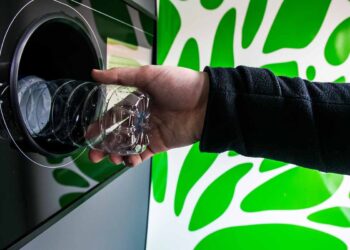
Lawmakers in Maine are considering two bills that each establish extended producer responsibility programs covering packaging of all material types, but with key differences in program management. | Wangkun Jia / Shutterstock

Two state proposals under consideration in the Northeast get at a central question of extended producer responsibility programs for packaging: Should the government or private industry have more control?

Maine lawmakers last month introduced LD 1471, billed as “an act to establish a stewardship program for packaging,” and LD 1541, “an act to support and improve municipal recycling programs and save taxpayer money.”

Both bills establish extended producer responsibility (EPR) programs covering packaging of most material types, requiring producers to fund end-of-life management for those materials. But they contain key differences, particularly in how the EPR program would be managed and how producer payments would be calculated.

Under LD 1471, a stewardship organization would annually determine its budget for managing the program and meeting regulatory requirements, and it would adopt a fee schedule for how much each producer would need to pay. Under LD 1541, on the other hand, the state Department of Environmental Protection would set the fee schedule, which would be based on the per-ton costs associated with collecting and processing the producer’s packaging material.

In general, LD 1541 creates a more government-managed EPR program, whereas LD 1471 puts producers in the driver’s seat.

LD 1471, sponsored by Democratic Sen. James Dill, was referred to the Committee on Environment and Natural Resources on April 12, and LD 1541, sponsored by Democratic Rep. Nicole Grohoski, was referred to the committee on April 20. Both bills were discussed in a public hearing on May 10.

During the hearing, Dill said his bill is similar to EPR approaches taken by lawmakers in New York and Oregon, and he said it follows EPR principles set out by the Product Stewardship Institute and Flexible Packaging Association.

“My hope is that concepts in LD 1471 create not just a short-term funding solution but truly a long-term collaborative structure that will improve recycling for the long haul,” Dill said.

Grohoski, who introduced an EPR bill in 2020, said during the hearing that LD 1541 “creates a market mechanism to support municipal recycling programs as well as incentives for producers to make better packaging over time.”

The committee also on May 10 heard testimony on bills to modify landfill tipping fees, support the development of the chemical recycling industry, and to exclude certain food packaging from a statewide polystyrene packaging ban.

Producers prefer LD 1471

The Flexible Packaging Association (FPA), which represents manufacturers of flexible packaging made from a variety of materials, wrote that both bills “purport to establish a stewardship program to support increased collection and recycling of packaging materials.”

However, in the trade association’s view, “only LD 1471 would actually provide for that.” The organization took issue with the government role that LD 1541 would establish. That bill’s EPR program would “be run by a government contractor who will collect money from producers and disperse that money to current municipal solid waste programs, as prescribed by departmental rulemaking,” the organization wrote.

Under a “true EPR program,” however, producers would have “the ability to control how funding is used and invested to ensure the goals of the program are met or exceeded,” FPA wrote. The organization says LD 1471 would set up that type of system in which producers would propose a plan to the state government. The plan would cover improvements to infrastructure, recycling access, financial stability and more.

“Merely reimbursing municipal governments for what they are already doing today, including disposal, will not solve the packaging waste issue in the state and will not increase packaging recycling,” FPA wrote.

The American Chemistry Council (ACC) also voiced its support for LD 1471, stating that the bill’s EPR system would increase collection and sortation of all recyclables, facilitate investment in infrastructure, improve outreach and more.

ACC also highlighted how LD 1471 treats the chemical recycling sector, which is often termed “advanced recycling.” This suite of technologies includes pyrolysis, depolymerization and more.

Unlike some EPR proposals that restrict the chemical recycling sector, such as the national Break Free From Plastic Pollution Act, LD 1471 provides a grant fund mechanism that is open to “proposals designed to support or improve advanced recycling technology or infrastructure” in Maine, alongside traditional recycling technologies.

“This legislation appropriately recognizes the importance of advanced recycling infrastructure,” ACC wrote in its testimony.

LD 1541 draws support from municipal and environmental advocates

The Natural Resources Council of Maine previously expressed support for LD 1541, as did Sierra Club Maine and the Surfrider Foundation.

Cheryl Robertson, a town councilor in Orono, Maine, wrote in support of LD 1541, explaining that it promotes a “shared responsibility between producers and consumers for recycled waste.”

She wrote that, from a municipal perspective, “revenue is critical,” and that recycling market fluctuations have led some Maine municipalities to discontinue recycling service.

“We recognize that a producer stewardship program will not ameliorate the high cost of waste management, but it will increase a revenue stream that will help offset recycling costs,” Robertson wrote.

Additionally, Robertson described LD 1471 as a “much less robust and comprehensive bill” to address recycling improvements.

Lynn Gilbert, a Maine resident who has been involved in litter pickup projects, wrote to voice support for LD 1541 and opposition to LD 1471.

“Even if every town does its very best to recycle, producers are still going to continue producing non-recyclable packaging,” Gilbert wrote. “For this reason, it is important that the financial impact on manufacturers should be significant; otherwise they will not be convinced to actually change their packaging to something more sustainable. It’s important not only that legislation will transfer the cost of landfilling trash from taxpayers to the manufacturers, but that the volume of the trash will be reduced.”

Gilbert wrote that it is “critical that the legislature passes LD 1541,” adding that “LD 1471 is a much weaker bill, and will not suffice to accomplish these goals.”

A version of this story appeared in Resource Recycling on May 11.

 

Tags: EPRLegislation & Enforcement
TweetShare
Colin Staub

Colin Staub

Colin Staub was a reporter and associate editor at Resource Recycling until August 2025.

Related Posts

CAA seeks industry input on EPR fees

CAA seeks industry input on EPR fees

byAntoinette Smith
June 16, 2026

A new producer steering committee will help involve stakeholders more directly in the fee-setting process as packaging EPR law is...

A call to action: End markets and EPR

A call to action: End markets and EPR

byKatherine Doerr, Goldfinch Environmental
June 16, 2026

State-level EPR schemes must mandate rather than simply incentivizing the use of recycled content, consultant Kat Doerr argues.

Revised CA budget includes $200m for recycling

CAA files California program plan for SB 54

byStefanie Valentic
June 15, 2026

CAA has delivered its California program plan as litigation over the underlying regulations continues and smaller producers scramble to meet...

Australia battery recycling sector could reach A$6.9bn by 2050

Colorado and California bills take aim at battery recycling gaps

byStefanie Valentic
June 12, 2026

Colorado's EV battery EPR law and California's SB 501 together represent a push to bring the full battery supply chain...

Aluminum can bale close up.

Aluminum scrap exports face scrutiny under HB 9161

byStefanie Valentic
June 9, 2026

A new House bill would direct the US International Trade Commission to investigate whether US aluminum scrap exports to adversarial...

Three-bill package aims to revamp Michigan’s bottle return system

byStefanie Valentic
June 9, 2026

Michigan lawmakers introduced a bipartisan three-bill package aimed at strengthening consumer access to bottle deposit refunds and clarifying retailer obligations...

Load More
Next Post
Corporate giants get some help as they rethink plastics use

Corporate giants get some help as they rethink plastics use

More Posts

IT security driving plans, reshaping budgets

Study cuts projected AI server e-waste by 90%

June 16, 2026
Revised CA budget includes $200m for recycling

CAA files California program plan for SB 54

June 15, 2026
Group updates on UBC-sorting robot’s success

Plastic bale pricing falls while paper, UBCs firm

June 15, 2026
Recycling council emphasizes importance of supply

Sorted: Why recycling isn’t a ‘scam’

June 15, 2026
Rare look inside the world’s largest plastics recycler

TRP launches fund to boost recycling

June 12, 2026

Three-bill package aims to revamp Michigan’s bottle return system

June 9, 2026
Various PET thermoform containers.

Thermoform recovery soars, PCR content falls

June 10, 2026

ITAD is moving past its adolescent phase: beyond end-of-life

June 10, 2026

Battery fires still a major risk to recyclers: report

June 9, 2026
House resolution aims to make recyclability central to product design

NY EPR bill fails to advance after third try

June 8, 2026
Load More

About & Publications

About Us

Staff

Archive

Magazine

Work With Us

Advertise
Jobs
Contact
Terms and Privacy

Newsletter

Get the latest recycling news and analysis delivered to your inbox every week. Stay ahead on industry trends, policy updates, and insights from programs, processors, and innovators.

Subscribe

Welcome Back!

Login to your account below

Forgotten Password?

Retrieve your password

Please enter your username or email address to reset your password.

Log In

Add New Playlist

No Result
View All Result
  • The Latest
  • Analysis
  • Recycling
  • E-Scrap
  • Plastics
  • Policy Now
  • Conferences
    • E-Scrap Conference
    • Plastics Recycling Conference
    • Resource Recycling Conference
    • Textiles Recovery Summit
  • Magazine
  • About Us
  • Advertise
  • Archive
  • Jobs
  • Staff
Subscribe
This website uses cookies. By continuing to use this website you are giving consent to cookies being used. Visit our Privacy and Cookie Policy.