
Advertisement Header Ad
Resource Recycling
  • The Latest
  • Analysis
    • All
    • Certification Scorecard
    • Industry Announcements
    • Opinion

    Certification scorecard for Dec. 18, 2025

    Industry announcements for the week of Dec. 15

    Certification scorecard for December 10, 2025

    Industry Announcements for Week of December 8

    Certification Scorecard for December 3, 2025

    Industry Announcements for Week of December 1

    News from Dynamic Lifecycle Innovations, Precision E-Cycle

    News from Northeast Recycling Council, Plastipak and more

    News from Northeast Recycling Council, Sortera Technologies and more

  • Conferences
  • Publications

    Other Topics

    Textiles
    Organics
    Packaging
    Glass
    Brand Owners

    Metals
    Technology
    Research
    Markets
    Grant Watch

    All Topics

Subscribe
No Result
View All Result
Resource Recycling
  • The Latest
  • Analysis
    • All
    • Certification Scorecard
    • Industry Announcements
    • Opinion

    Certification scorecard for Dec. 18, 2025

    Industry announcements for the week of Dec. 15

    Certification scorecard for December 10, 2025

    Industry Announcements for Week of December 8

    Certification Scorecard for December 3, 2025

    Industry Announcements for Week of December 1

    News from Dynamic Lifecycle Innovations, Precision E-Cycle

    News from Northeast Recycling Council, Plastipak and more

    News from Northeast Recycling Council, Sortera Technologies and more

  • Conferences
  • Publications

    Other Topics

    Textiles
    Organics
    Packaging
    Glass
    Brand Owners

    Metals
    Technology
    Research
    Markets
    Grant Watch

    All Topics

Subscribe
No Result
View All Result
Resource Recycling
No Result
View All Result
Home Plastics

Chemical recycling now at the center of national plastics debate

Colin StaubbyColin Staub
March 31, 2021
in Plastics
Trump: Recycling can ‘unleash American manufacturing’
Share on XLinkedin
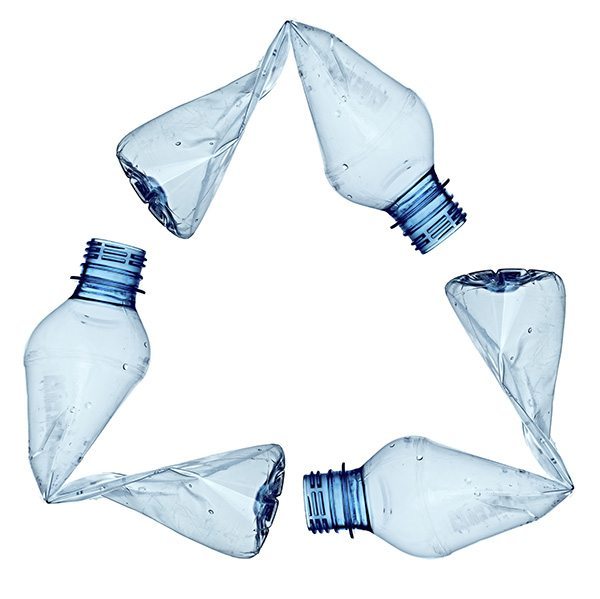
Chemical recycling processes are specifically excluded from the definition of “recycling” under the recently introduced Break Free From Plastic Pollution Act. | Andriy Blokhin/Shutterstock
Legislation that makes sweeping changes to the U.S. plastics recycling system generated quick opposition from industry groups, with plastics industry representatives focused on the bill’s treatment of certain materials recovery processes.

The Break Free From Plastic Pollution Act hit the Congressional stage on March 25, reviving a push for national extended producer responsibility for packaging, a nationwide bottle bill, recycled content standards and more.

It also puts several restrictions on technologies, some decades old and some newer, that the plastics industry has rallied behind. Chemical recycling facilities would face new hurdles in permitting and would not be considered true “recycling” under the bill’s definition. Chemical recycling, sometimes called “advanced plastics recycling,” refers to a broad range of processes that break down recovered plastics to the molecular level for use in oils, waxes, new polymers and other products.

The provisions around chemical recycling in the Break Free legislation have drawn significant focus from bill opponents.

During a press conference hosted by the American Chemistry Council (ACC) prior to the bill’s introduction, plastics industry representatives said the chemical recycling regulations would run counter to the bill’s stated goal of reducing plastic waste.

“It would prevent advanced recycling technologies that can dramatically expand the types and amounts of plastics that can be recycled and reduce plastic waste,” said Jim Fitterling, CEO of Dow. “Under the act, these facilities are subject to a pause. We need to accelerate – not pause – progress on these important recycling innovations.”

But the bill’s sponsors say they don’t want to prevent viable plastics recovery processes. The pause-and-study period is a way of observing and better regulating chemical recycling to ensure it’s a safe process, explained Rep. Alan Lowenthal, D-Calif., one of the chief sponsors of the bill.

“We do not want these chemical approaches … to poison the environment or the populations that live near these facilities,” Lowenthal said in a press conference held March 25, the day the bill was introduced. “If they can demonstrate that they’re effective and they do not pollute, we’re all for them.”

Proposal halts permitting for three years

In a section focused on “clean air, clean water, and environmental justice,” the Break Free bill suspends federal permitting for a variety of “covered facilities.”

The list of covered facilities includes those meeting the following definition: “an industrial facility that transforms natural gas liquids into ethylene and propylene for later conversion into plastic polymers; a plastic polymerization or polymer production facility; an industrial facility that repolymerizes plastic polymers into chemical feedstocks for use in new products or as fuel; and an industrial facility that generates fuel or energy from plastic polymers through waste-to-fuel technology, an incinerator, or other similar technology” as determined by the U.S. EPA.

Permitting for these plants would be halted for up to three years to “update needed regulations on these facilities” to prevent air and water pollution, and to prohibit impacts on communities surrounding such facilities, the bill’s sponsors wrote of that provision. The technologies would be studied by the U.S. EPA, National Academy of Sciences and the National Institutes of Health.

Additionally, chemical recycling processes are specifically excluded from the definition of “recycling” under the legislation.

The prospect of slowing the advance of chemical recycling drew quick ire among major resin producers and chemical recycling operators.

Preventing chemical recycling technologies from coming to market would “eliminate the best tool we have to recover more plastic waste,” said Joshua Baca, vice president of the plastics division of the ACC, in the press conference shortly before the bill was introduced.

Fitterling of Dow likened the development of chemical recycling to the growth of the electric car industry and the renewable energy industries, and he reiterated the results the plastics industry anticipates from commercializing chemical recycling.

“Over the next 10 years, you will notice a significant increase in recycling rates here in the United States, enabled by advanced recycling, enabled by the ability to take materials that mechanical recycling can’t,” Fitterling said.

Bob Powell, CEO of Brightmark, a company that is commercializing a plastics-to-fuel process with nationwide expansion plans, expressed a similar concern.

“If you limit our and others’ ability to utilize advanced recycling technologies with this legislation, you’re going to hinder our progress, put a pause on solving what we believe to be one of the Earth’s most impactful issues,” he said.

Lowenthal, the bill’s sponsor, took issue with the ACC and other opponents framing the pause as a ban on that emerging sector.

“In the bill, we do not ban some of things they’re saying, like chemical recycling,” Lowenthal said. “We just say that you can’t call it recycling, and require that whatever facilities the chemical association wants to do, that they be included in the comprehensive study by EPA and the National Academy of Sciences, so we can understand their cumulative impacts on human health and the environment, so we can adequately update our clean air and clean water regulations.”

“In no way do we want to stifle innovation and stop what the chemical association says we’re trying to do,” Lowenthal added. “It’s just the opposite.”

Besides the ACC, the Plastics Industry Association also mentioned the bill’s pause on chemical recycling operations in describing the group’s opposition.

Environmental advocacy group Greenpeace responded to the opposition by linking to its own research into the chemical recycling sector. Greenpeace wrote that, “despite the fact that these projects have not proven viable, consumer goods companies have promoted them through their corporate responsibility materials and circular economy commitments.”

 

Tags: Industry GroupsLegislation
Colin Staub

Colin Staub

Colin Staub was a reporter and associate editor at Resource Recycling until August 2025.

Related Posts

paint cans recycling

PaintCare brings stewardship to Illinois, Maryland on deck

byStefanie Valentic
December 19, 2025

Illinois is the 12th state to launch a paint recycling program, while Maryland is poised to launch its own program...

Republicans propose US House bill on chemical recycling

byAntoinette Smith
December 12, 2025

The bill seeks to classify chemical recycling as a manufacturing process rather than as waste incineration, to help speed infrastructure...

New rules push OEMs to design for repair, reuse

byScott Snowden
December 11, 2025

Right-to-repair rules are pushing longevity and reuse deeper into product design, but thin hardware, device locks and weak data are...

plastic bale

NAPCOR finds RPET imports hit record in 2024

byAntoinette Smith
December 11, 2025

Despite gains for thermoforms and other materials, bottle recovery rates and RPET consumption eased from 2023 highs amid abundant imported...

Recycling conveyor belt

Canadian groups building flexibles database

byAntoinette Smith
December 10, 2025

Using composition analysis and industry input, the Circular Plastics Taskforce and PROs in British Columbia and Quebec aim to provide...

Colorado approves final EPR plan for packaging

Colorado approves final EPR plan for packaging

byAntoinette Smith
December 10, 2025

The state approved the plan from Circular Action Alliance, clearing the way for the law's implementation within the next six...

Load More
Next Post

Certification Scorecard: April 1, 2021

More Posts

ERI and ReElement partner on rare earth magnet recovery

ERI and ReElement partner on rare earth magnet recovery

November 26, 2025
Cyber risks confront ITAD work, contracts, coverage

Cyber risks confront ITAD work, contracts, coverage

November 26, 2025
Ohio start-up turns plastics into high-end furniture

Ohio start-up turns plastics into high-end furniture

November 24, 2025
WM adds PP and paper cups to curbside recycling lists

WM adds PP and paper cups to curbside recycling lists

November 24, 2025
Atlas acquisition boosts Circular Services’ organics reach

Atlas acquisition boosts Circular Services’ organics reach

November 24, 2025
Policy Now | December 2025 – Year-end nears, policy talks continue

Policy Now | December 2025 – Year-end nears, policy talks continue

December 1, 2025
WM rolling out curbside acceptance of PP cups 

WM rolling out curbside acceptance of PP cups 

November 25, 2025
Ohio startup creates end market for small challenging plastics

Ohio startup creates end market for small challenging plastics

November 25, 2025
Global recycling patent trends may reflect legislative push

Global recycling patent trends may reflect legislative push

November 25, 2025
Oregon’s Recycling Modernization Act faces injunction

Oregon’s Recycling Modernization Act faces injunction

December 2, 2025
Load More

About & Publications

About Us

Staff

Archive

Magazine

Work With Us

Advertise
Jobs
Contact
Terms and Privacy

Newsletter

Get the latest recycling news and analysis delivered to your inbox every week. Stay ahead on industry trends, policy updates, and insights from programs, processors, and innovators.

Subscribe

Welcome Back!

Login to your account below

Forgotten Password?

Retrieve your password

Please enter your username or email address to reset your password.

Log In

Add New Playlist

No Result
View All Result
  • The Latest
  • Analysis
  • Recycling
  • E-Scrap
  • Plastics
  • Conferences
    • E-Scrap Conference
    • Plastics Recycling Conference
    • Resource Recycling Conference
    • Textiles Recovery Summit
  • Magazine
  • About Us
  • Advertise
  • Archive
  • Jobs
  • Staff
Subscribe
This website uses cookies. By continuing to use this website you are giving consent to cookies being used. Visit our Privacy and Cookie Policy.