





Resource Recycling
  • The Latest
  • Analysis
    • All
    • Certification Scorecard
    • Industry Announcements
    • Opinion
    Apple Watch on product box.

    Wearables are coming and ITAD isn’t ready

    Certification Scorecard — Week of April 13, 2026

    EV Battery Pack - Sergii Chernov-Shutterstock

    Redwood, Rivian deal fuels US infrastructure plans

    Bloom ESG and e-Stewards roll out critical metals metric

    Colorado regulators suggest mid-range EPR scenario

    Why collaboration on plastic waste still matters

    Battery recycler Ascend Elements files for bankruptcy

    Battery recycler Ascend Elements files for bankruptcy

    EPR fees are a market signal. Here’s what they’re telling you.

    EPR fees are a market signal. Here’s what they’re telling you.

    Wolframite ore, the primary ore of tungsten from Altai, Russia

    Tungsten scrap export controls draw industry attention

    Certification Scorecard — Week of April 6, 2026

  • Conferences
  • Publications

    Other Topics

    Textiles
    Organics
    Packaging
    Glass
    Brand Owners

    Metals
    Technology
    Research
    Markets
    Grant Watch

    All Topics

Subscribe
No Result
View All Result
Resource Recycling
  • The Latest
  • Analysis
    • All
    • Certification Scorecard
    • Industry Announcements
    • Opinion
    Apple Watch on product box.

    Wearables are coming and ITAD isn’t ready

    Certification Scorecard — Week of April 13, 2026

    EV Battery Pack - Sergii Chernov-Shutterstock

    Redwood, Rivian deal fuels US infrastructure plans

    Bloom ESG and e-Stewards roll out critical metals metric

    Colorado regulators suggest mid-range EPR scenario

    Why collaboration on plastic waste still matters

    Battery recycler Ascend Elements files for bankruptcy

    Battery recycler Ascend Elements files for bankruptcy

    EPR fees are a market signal. Here’s what they’re telling you.

    EPR fees are a market signal. Here’s what they’re telling you.

    Wolframite ore, the primary ore of tungsten from Altai, Russia

    Tungsten scrap export controls draw industry attention

    Certification Scorecard — Week of April 6, 2026

  • Conferences
  • Publications

    Other Topics

    Textiles
    Organics
    Packaging
    Glass
    Brand Owners

    Metals
    Technology
    Research
    Markets
    Grant Watch

    All Topics

Subscribe
No Result
View All Result
Resource Recycling
No Result
View All Result
Home Plastics

Technical takeaways from two industry experts

byJared Paben
August 3, 2020
in Plastics
Technical takeaways from two industry experts
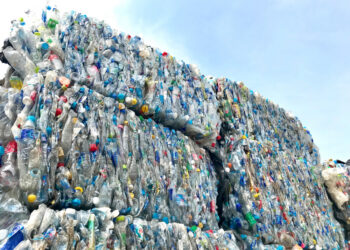
Two industry veterans recently spoke about scrap plastics supply conditions and typical practices at recycling facilities. | Maciej Bledowski/Shutterstock

A pair of longtime plastics recycling professionals discussed melt filtration advancements, deodorizing processes, bale supply issues and more during a recent webinar.

Curt Cozart, president and owner of consulting firm Common Sense Solutions, and Khosrow Hallaji, technical director at Envision Plastics, participated in the May 6 webinar presented by Plastics Technology magazine.

With decades of experience, Cozart has helped establish many of the PET, HDPE and film recycling plants in North America. Hallaji is multi-plant technical director at Envision, which is the second-largest HDPE reclaimer in North America (after KW Plastics). Before that, he was vice president of operations at CarbonLITE Industries, a multi-facility PET reclaimer.

Following presentations laying out scrap plastics supply conditions and typical practices at recycling facilities, the duo answered questions from the audience on a number of important technical topics.

Focus on melt filtration: Asked about melt filtration and how it can reduce specks in recycled resins, Hallaji said the finer the screen the better in terms of reducing speck count and size, but he acknowledged the strategy could also reduce productivity. To produce high-quality recycled resin, the entire recycling process is very important, as is communicating with suppliers and producers, he said. 

“We are even talking to companies which make adhesive. For example, hot melt is really hard to get off,” he said. Hot melt adhesive can make it all the way through extrusion and remain on the pellets, he noted. 

Cozart noted filtration is different for different polymers. For instance, HDPE reclaimers can generally allow some contaminants to pass through because they know their melt filtration will be able to remove unwanted material. But if scrap PET is going to be recycled into a clear, food-grade application, the reclaimer will spend a lot more time at the front end trying to eliminate sand, glass, dirt, glue and other contaminants, he said. 

When asked how reclaimers avoid clogged melt filters, Hallaji noted technologies that use a blade or other approach to continuously remove contaminants are becoming more widely used. 

Reducing odors: Hallaji said Envision uses a process that removes odors after the pellets are made, bringing them up to virgin quality in terms of smell. Those pellets are covered by a U.S. Food and Drug Administration letter of no objection (LNO), allowing them to be used in food-contact applications. 

The deodorizer technology, which was patented by Envision, is different from others that remove moisture, volatiles and semivolatiles during the closed system extrusion process itself, he said. 

Cozart said that deodorizer technologies generally all involve heating the plastic and using a vacuum to remove the odors. 

Using PCR in sheets: A listener asked about what changes a PET sheet producer would need to make if it wanted to begin manufacturing 25% PCR sheets, up from using zero to little PCR. 

Cozart said that a producer is typically going to buy RPET flake, not pellets, to make sheets. Because the flakes haven’t gone through an extrusion process, they will generally be cheaper than pellets. But the flakes also flow differently than virgin pellets, so the sheet manufacturer will need to adjust feeders and screws that convey the material. 

Additionally, because the PET hasn’t been melted and filtered, the sheet producer will want to source from a supplier with good metals-removal techniques. Lower-quality PET flakes may require the sheet producer to install a screen changer on the extruder that can remove aluminum and other contaminants on the fly, rather than having a fixed screen that requires temporarily shutting down the system, Cozart said. 

“There are a couple of tweaks like that, but you certainly can get 25% – that’s absolutely doable,” Cozart said. “People are doing that every day, but it does take a little bit of work.” 

Hallaji noted that flake density is different from pellet density. As a result, to ensure the producer is hitting 25% recycled content in the sheets, it will need to have well-blended RPET flakes and virgin resin before the mix enters the extruder, he said. 

Constrained supply: A few questions centered on the limited supply of post-consumer plastic available, including whether there’s enough on the market for brand owners to achieve their PCR goals. Cozart noted the industry has plants and equipment capable of producing high-quality recycled plastic, but there just isn’t enough plastic being collected and sorted. 

In terms of the limited availability of food-grade PCR, specifically, Cozart said sourcing is part of the challenge: Some virgin PE was never intended for food packaging, and there are PET containers holding household chemicals. Those materials must be kept out of the recycled plastic stream. 

“This is back to the source question. We need more material,” he said.  

Then the recycling process itself, including the decontamination stage, must be designed to achieve FDA acceptance.  

The presenters were asked why there’s a shortage given that China stopped allowing imports of scrap plastics in 2018 with its National Sword campaign. Cozart noted they’re talking about different polymers. Materials recovery facilities (MRFs) were removing PET and HDPE from the stream, baling all the other plastics, and then selling those mixed-plastic bales to Chinese companies for further sorting and recycling. 

Now, many MRFs are pulling out PET, color and natural HDPE and PP, and they’re landfilling the rest, Cozart said.

To receive the latest news and analysis about plastics recycling technologies, sign up now for our free monthly Plastics Recycling Update: Technology Edition e-newsletter.
2021 Plastics Recycling Conference and Trade Show

Tags: HDPEPETReclaimersTechnology
TweetShare
Jared Paben

Jared Paben

Related Posts

AI surge, dealmaking reshape  ITAD industry 

byScott Snowden
April 16, 2026

ITAD industry representatives spoke at the ReMA conference in Las Vegas about how AI tools, data center demand and consolidation...

Apple Watch on product box.

Wearables are coming and ITAD isn’t ready

byDavid Daoud
April 16, 2026

Wearable devices provide unique challenges at end of life.

EV Battery Pack - Sergii Chernov-Shutterstock

Redwood, Rivian deal fuels US infrastructure plans

byStefanie Valentic
April 15, 2026

Batteries that are no longer ideal for powering a vehicle still have substantial capacity left. Automobile manufacturer Rivian and battery...

Industry group: Help us find the plastic bale volumes we need

PET bales sink further as other grades firm 

byRecyclingMarkets.net Staff
April 15, 2026

Pricing for HDPE and PP bales rose again, while PET bales remained low, film grades have steadied, and paper and...

TOMRA rolls out updated FINDER with AI tools

byScott Snowden
April 14, 2026

TOMRA introduced an updated FINDER metal sorting system with modular sensors and AI tools, aiming to improve separation of complex...

Amazon, DOE partner on critical materials recovery

byScott Snowden
April 13, 2026

DOE and Amazon will study recovery of graphite from textiles and gallium from IT hardware, aiming to strengthen US supply...

Load More
Next Post

Major outlet for recycled UBCs coming to Northeast

Leading the Charge in Safe Battery Recycling
Sponsored

Leading the Charge in Safe Battery Recycling

byThe Battery Network
April 13, 2026

We’re connecting people, brands, and communities through one nationwide network built to make battery recycling safer, simpler, and more accessible...

Read moreDetails

More Posts

EPR fees are a market signal. Here’s what they’re telling you.

EPR fees are a market signal. Here’s what they’re telling you.

April 10, 2026

Recycling Partnership CEO stepping down

April 15, 2026
Battery recycler Ascend Elements files for bankruptcy

Battery recycler Ascend Elements files for bankruptcy

April 13, 2026

WM opens new $60m MRF in Indy

April 10, 2026
Industry group: Help us find the plastic bale volumes we need

PET bales sink further as other grades firm 

April 15, 2026

GFL acquires SECURE Waste for $6.4bn

April 13, 2026
Colorado regulators suggest mid-range EPR scenario

Why collaboration on plastic waste still matters

April 13, 2026
Wolframite ore, the primary ore of tungsten from Altai, Russia

Tungsten scrap export controls draw industry attention

April 9, 2026

Amazon, DOE partner on critical materials recovery

April 13, 2026
Solarcycle starts up Georgia recycling plant

S3399 signals a shift in how states are tackling solar panel waste

April 6, 2026
Load More

About & Publications

About Us

Staff

Archive

Magazine

Work With Us

Advertise
Jobs
Contact
Terms and Privacy

Newsletter

Get the latest recycling news and analysis delivered to your inbox every week. Stay ahead on industry trends, policy updates, and insights from programs, processors, and innovators.

Subscribe

Welcome Back!

Login to your account below

Forgotten Password?

Retrieve your password

Please enter your username or email address to reset your password.

Log In

Add New Playlist

No Result
View All Result
  • The Latest
  • Analysis
  • Recycling
  • E-Scrap
  • Plastics
  • Policy Now
  • Conferences
    • E-Scrap Conference
    • Plastics Recycling Conference
    • Resource Recycling Conference
    • Textiles Recovery Summit
  • Magazine
  • About Us
  • Advertise
  • Archive
  • Jobs
  • Staff
Subscribe
This website uses cookies. By continuing to use this website you are giving consent to cookies being used. Visit our Privacy and Cookie Policy.