


Resource Recycling
  • The Latest
  • Analysis
    • All
    • Certification Scorecard
    • Industry Announcements
    • Opinion
    The electronics recycling industry is undergoing a transformation from labor-intensive manual operations to highly automated, AI-driven facilities that use advanced robotics, cleaner chemistry and digital tracking systems to extract critical materials.

    The cyber-physical MRF: AI and robotics reshape e-waste recovery

    Certification scorecard for the week of Feb. 9, 2026

    Meta-Corning deal signals IT hardware retirement wave

    Meta-Corning deal signals IT hardware retirement wave

    Malaysia clamps down on illegal e-waste imports amid probes

    Malaysia clamps down on illegal e-waste imports amid probes

    URT builds alliance to remake electronics plastics at scale

    ICYMI: Top 5 e-scrap stories from January 2026

    The electronics recycling industry is undergoing a transformation from labor-intensive manual operations to highly automated, AI-driven facilities that use advanced robotics, cleaner chemistry and digital tracking systems to extract critical materials.

    Certification scorecard for the week of Feb. 2, 2026

    Auditors warn EU may fall short on critical metals

    Auditors warn EU may fall short on critical metals

    Industry announcements for January 2026

    Industry announcements for February 2026

    ICYMI: Top 5 recycling stories from January 2026

  • Conferences
  • Publications

    Other Topics

    Textiles
    Organics
    Packaging
    Glass
    Brand Owners

    Metals
    Technology
    Research
    Markets
    Grant Watch

    All Topics

Subscribe
No Result
View All Result
Resource Recycling
  • The Latest
  • Analysis
    • All
    • Certification Scorecard
    • Industry Announcements
    • Opinion
    The electronics recycling industry is undergoing a transformation from labor-intensive manual operations to highly automated, AI-driven facilities that use advanced robotics, cleaner chemistry and digital tracking systems to extract critical materials.

    The cyber-physical MRF: AI and robotics reshape e-waste recovery

    Certification scorecard for the week of Feb. 9, 2026

    Meta-Corning deal signals IT hardware retirement wave

    Meta-Corning deal signals IT hardware retirement wave

    Malaysia clamps down on illegal e-waste imports amid probes

    Malaysia clamps down on illegal e-waste imports amid probes

    URT builds alliance to remake electronics plastics at scale

    ICYMI: Top 5 e-scrap stories from January 2026

    The electronics recycling industry is undergoing a transformation from labor-intensive manual operations to highly automated, AI-driven facilities that use advanced robotics, cleaner chemistry and digital tracking systems to extract critical materials.

    Certification scorecard for the week of Feb. 2, 2026

    Auditors warn EU may fall short on critical metals

    Auditors warn EU may fall short on critical metals

    Industry announcements for January 2026

    Industry announcements for February 2026

    ICYMI: Top 5 recycling stories from January 2026

  • Conferences
  • Publications

    Other Topics

    Textiles
    Organics
    Packaging
    Glass
    Brand Owners

    Metals
    Technology
    Research
    Markets
    Grant Watch

    All Topics

Subscribe
No Result
View All Result
Resource Recycling
No Result
View All Result
Home Plastics

How technology is helping carpet processor roll forward

byJared Paben
November 28, 2018
in Plastics
How technology is helping carpet processor roll forward

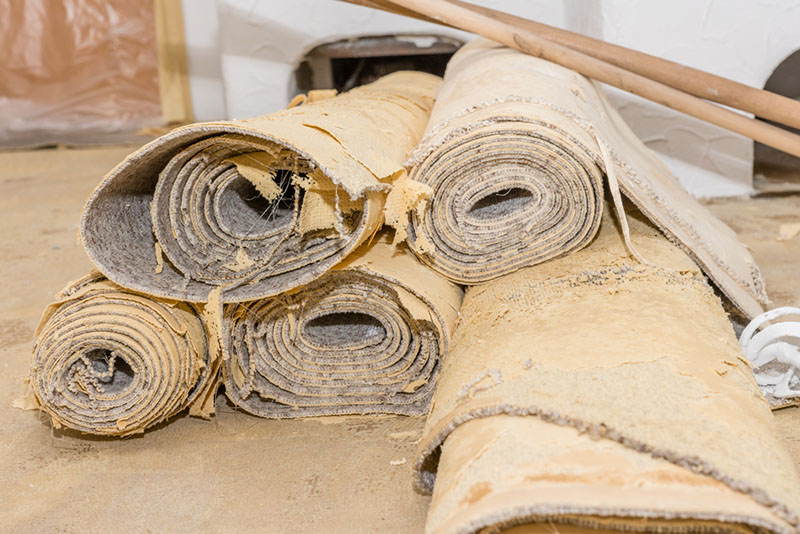
A facility in California is using a unique rotary impact separation technology to break carpet into its components so plastics and calcium carbonate can be efficiently recovered.

Circular Polymers has installed new technology and tripled output at its Lincoln, Calif. recycling plant. The facility, which the state of California helped to finance, is capable of processing 30 million pounds per year. Plans for adding more capacity are in the works.

The company is currently recovering PET, PP, nylon 6, nylon 6,6 and calcium carbonate from different types of carpet.

“This is the first plant to do all carpet types, and we’re hoping to have tremendous expansion both inside and outside California,” said David Bender, CEO of Circular Polymers and a veteran of the plastics recycling industry.

Separation advantage

A textile product made for longevity, carpet is made of face fiber (the upper part your feet touch) and a backing. The face fiber, which can be either tufted or woven, is made from PET, PP, nylon 6 or nylon 6,6. It makes up 40 to 45 percent of the carpet’s weight. The backing is made of a plastic (often PP) and calcium carbonate.

Bender said separating plastics in post-consumer carpet usually involves shearing or using a hammer mill. Shearing, or cutting the face fibers off the carpet as one would shear a sheep, results in a high-quality plastic stream but poor yields, he said. Hammer mills generate good yields but need a lot of power to operate, he said. The economics are challenging in both cases.

Circular Polymers’ Sacramento, Calif.-area site is unique for its use of a rotary impact separator to efficiently separate shredded post-consumer carpet into the face fiber, backing and calcium carbonate. The equipment, which Circular Polymers has the exclusive North American rights to use, generates high yields of clean plastics at lower cost, Bender said. Circular Polymers can generate greater than 94 percent yield on the carpet input, according to the company.

According to a staff report from the California Alternative Energy and Advanced Transportation Financing Authority, which approved sales tax breaks for the equipment, the rotary impact separator units were designed by Broadview Group International, an Ohio engineering design and research firm.

Some pre-processing occurs before the rotary impact separator is used. Staff use handheld FTIR equipment to identify the plastic resins that make up the face fiber of incoming material. Then they hand sort the fiber by polymer type. Material is shredded before its fed into the separator.

Circular Polymers does what Bender described as the “heavy lifting” in the carpet recycling industry: the collection and processing by removing the backing. Handling mostly residential carpet, the company does most of its own collections, although it does purchase some from other collectors.

The company is selling the plastics in fluff and pellet form. As examples, several samples handed out at the Circular Polymers booth at the 2018 Plastics Recycling Conference included black PP pellets, gray nylon 6 pellets, black PET pellets, PP fiber and PET fiber. The company noted all samples had less than 6 percent ash, and the nylon and PET samples contained less than 2 percent PP.

No washing occurs before plastic is sent to the extruder, although one could wash the higher-value plastics, such as nylon 6,6, to increase their purity, Bender noted. Circular Polymers doesn’t introduce additives itself, although some of the plastic is later compounded for specific customer applications.
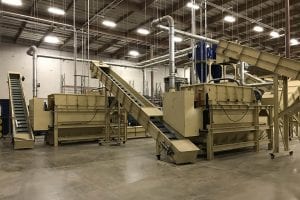
Inside the Circular Polymers facility.
Inside the new Circular Polymers carpet recycling plant.

Circular Polymers’ website notes its products can be used in a number of industries, including housing and cold chain management. If a chemical recycling process is later used, end markets could include food and beverage packaging. Bender noted his company makes a product that’s an ideal feedstock for depolymerization technologies, which break down plastics into monomers that can later be reassembled into new polymers.

The company currently has customers in the U.S. and Canada, Bender said.

Launching the plant

Bender has a background in PET reclamation, including with past ownership of Pure Tech Plastics (now owned by PolyQuest) in Farmingdale, N.Y. and Richmond, Ind. reclaimer Perpetual Recycling Solutions, which produces food-grade PET flake.

In March 2018, Bender and Jeff Kupets, Circular Polymer’ chief financial officer, purchased Lincoln, Calif. carpet recycling company California Landfill Elimination and Recycling (CLEAR). Kupets was the managing partner of an index options trading firm. The two founders of Circular Polymers then brought on CLEAR’s president, Nick Fiore, as a partner, Bender said.

After acquiring CLEAR, Circular Polymers retrofitted the plant with its separation technology, as well as off-the-shelf equipment such as shredders and balers. The investments boosted processing capacity from 10 million pounds per year to 30 million pounds annually. The company has plans to double capacity next year by installing a second line, Bender said.

Circular Polymers currently occupies 110,000 square feet of the Lincoln building, with rights to the rest of the building, which totals 145,000 square feet.

Circular Polymers has received financial support from both industry and government initiatives.

In February 2018, Carpet America Recovery Effort (CARE) announced it had awarded the company a $10,000 grant to help boost carpet collection.

In January 2018, the California Department of Resources Recycling and Recovery (CalRecycle) approved a $2 million Recycling Market Development Zone loan for Circular Polymers. Of that amount, three quarters was to go toward equipment purchases, with the remainder for working capital and loan closing costs. The loan was expected to help create 35 additional jobs, according to a CalRecycle press release.

“We were excited to get a loan from CalRecycle and to see CalRecycle’s excitement about our project and our technology,” Bender said. “It was absolutely important to our overall funding efforts.”

In June 2017, the California Alternative Energy and Advanced Transportation Financing Authority approved sales tax breaks totaling an estimated $636,000 for $7.5 million worth of equipment for the Lincoln plant. The rotary impact separators were the single most expensive items to be purchased, estimated at more than $2 million total.

“California isn’t the cheapest state to do business in,” Bender said, “and we’ve very happy to work with the governor’s office, the county and the local municipality to put together the right program to attract manufacturing and manufacturing jobs in the state.”

Top photo credit: SKatzenberger/Shutterstock

Bottom photo courtesy of Circular Polymers

To receive the latest news and analysis about plastics recycling technologies, sign up now for our free monthly Plastics Recycling Update: Technology Edition e-newsletter.

 

Plastics Recycling Conference

Tags: CaliforniaPETPPTechnology
TweetShare
Jared Paben

Jared Paben

Related Posts

The electronics recycling industry is undergoing a transformation from labor-intensive manual operations to highly automated, AI-driven facilities that use advanced robotics, cleaner chemistry and digital tracking systems to extract critical materials.

The cyber-physical MRF: AI and robotics reshape e-waste recovery

byDavid Daoud
February 12, 2026

The electronics recycling industry is entering a new phase of technological acceleration. Advances in artificial intelligence, robotics, advanced chemistry, and...

APR, industry create proactive guidance for PET caps

byAntoinette Smith
February 12, 2026

The Association of Plastic Recyclers recognized that developing guidelines before PET caps were completely developed and commercialized was crucial, and...

NERC: Blended average prices fell 40% in third quarter

HDPE, PP bales rise as paper fiber and cans stabilize

byRecyclingMarkets.net Staff
February 12, 2026

National average prices of post-consumer material bales were flat to higher on the month.

Alpek talks PET overcapacity, soft demand

byAntoinette Smith
February 11, 2026

Executives from the Mexico-headquartered polyester giant said the Chinese government has acknowledged issues and convened PET producers, but Alpek is...

Kentucky’s Global Polymers expanding, moving to Indiana

byAntoinette Smith
February 6, 2026

The polypropylene recycler will invest $8.5 million to fit an existing facility in Charlestown, across the Ohio River from its...

PP cups now ‘widely recyclable’ with increased acceptance

byAntoinette Smith
February 3, 2026

With more than 60% of US households having access to curbside recycling collection for PP to-go drink cups, the How2Recycle...

Load More
Next Post
Canada to pursue aggressive strategy on plastic waste

Canada to pursue aggressive strategy on plastic waste

More Posts

Oregon’s Recycling Modernization Act faces injunction

Court partially blocks Oregon EPR law, dismisses bulk of lawsuit

February 10, 2026
Chinese processing group details goals for US visit

AMP lays out vision of next-generation, AI-driven MRFs

July 24, 2024

Greenchip launches fund for community impact and trust

February 5, 2026

REUSE Act heads to US House for consideration

February 9, 2026

Allied Industrial portfolio companies complete two early-year deals

February 5, 2026

Amcor expects flat sales volumes to continue 

February 6, 2026
Packaging Corp. to buy Greif containerboard segment

Export trends offset containerboard production decline

February 6, 2026
Agilyx leaves US chem recycling, Houston sorting center

Agilyx leaves US chem recycling, Houston sorting center

February 4, 2026
Third ExxonMobil recycling plant operational

Third ExxonMobil recycling plant operational

February 4, 2026

ecoATM recycled 7.5M phones in 2025 as payouts hit $1.5B

February 10, 2026
Load More

About & Publications

About Us

Staff

Archive

Magazine

Work With Us

Advertise
Jobs
Contact
Terms and Privacy

Newsletter

Get the latest recycling news and analysis delivered to your inbox every week. Stay ahead on industry trends, policy updates, and insights from programs, processors, and innovators.

Subscribe

Welcome Back!

Login to your account below

Forgotten Password?

Retrieve your password

Please enter your username or email address to reset your password.

Log In

Add New Playlist

No Result
View All Result
  • The Latest
  • Analysis
  • Recycling
  • E-Scrap
  • Plastics
  • Policy Now
  • Conferences
    • E-Scrap Conference
    • Plastics Recycling Conference
    • Resource Recycling Conference
    • Textiles Recovery Summit
  • Magazine
  • About Us
  • Advertise
  • Archive
  • Jobs
  • Staff
Subscribe
This website uses cookies. By continuing to use this website you are giving consent to cookies being used. Visit our Privacy and Cookie Policy.