




Resource Recycling
  • The Latest
  • Analysis
    • All
    • Certification Scorecard
    • Industry Announcements
    • Opinion
    Industry announcements for January 2026

    Industry Announcements for March 2026

    HP receives ocean plastics certification

    HP Inc. earnings point to memory inflation challenge

    Certification scorecard for the week of Feb. 23, 2026

    Umicore highlights strength in recycling, catalysis

    Apto, Tusaar partner on rare earths recovery

    Apto, Tusaar partner on rare earths recovery

    Certification scorecard for the week of Feb. 16, 2026

    Sims Lifecycle leverages hyperscale decommissioning

    Sims Lifecycle leverages hyperscale decommissioning

    The electronics recycling industry is undergoing a transformation from labor-intensive manual operations to highly automated, AI-driven facilities that use advanced robotics, cleaner chemistry and digital tracking systems to extract critical materials.

    The cyber-physical MRF: AI and robotics reshape e-waste recovery

    Certification scorecard for the week of Feb. 9, 2026

  • Conferences
  • Publications

    Other Topics

    Textiles
    Organics
    Packaging
    Glass
    Brand Owners

    Metals
    Technology
    Research
    Markets
    Grant Watch

    All Topics

Subscribe
No Result
View All Result
Resource Recycling
  • The Latest
  • Analysis
    • All
    • Certification Scorecard
    • Industry Announcements
    • Opinion
    Industry announcements for January 2026

    Industry Announcements for March 2026

    HP receives ocean plastics certification

    HP Inc. earnings point to memory inflation challenge

    Certification scorecard for the week of Feb. 23, 2026

    Umicore highlights strength in recycling, catalysis

    Apto, Tusaar partner on rare earths recovery

    Apto, Tusaar partner on rare earths recovery

    Certification scorecard for the week of Feb. 16, 2026

    Sims Lifecycle leverages hyperscale decommissioning

    Sims Lifecycle leverages hyperscale decommissioning

    The electronics recycling industry is undergoing a transformation from labor-intensive manual operations to highly automated, AI-driven facilities that use advanced robotics, cleaner chemistry and digital tracking systems to extract critical materials.

    The cyber-physical MRF: AI and robotics reshape e-waste recovery

    Certification scorecard for the week of Feb. 9, 2026

  • Conferences
  • Publications

    Other Topics

    Textiles
    Organics
    Packaging
    Glass
    Brand Owners

    Metals
    Technology
    Research
    Markets
    Grant Watch

    All Topics

Subscribe
No Result
View All Result
Resource Recycling
No Result
View All Result
Home Plastics

EU panel considers sunflower seeds in packaging, other requests

byJared Paben
November 29, 2016
in Plastics
EU panel considers sunflower seeds in packaging, other requests

A European Union panel approved a pair of proposals that bring recovered material into plastic food and beverage packaging.

But that panel, which is called the Panel on Food Contact Materials, Enzymes, Flavourings and Processing Aids (CEF), refused to sign off on one recycling process, saying too little information was submitted for it to make a determination on the safety.

The CEF is part of the European Food Safety Authority (EFSA). In the European Union, recycled plastics and additives can only be used in food and beverage packaging if they’re first reviewed by EFSA for safety. Under EU law, recycling companies submit applications to individual countries, which apply to the EFSA on their behalf.

The following is a roundup of recent opinions from the CEF (previous entries were published in June).

PET recycling process

CEF said it saw no safety concerns with a PET recycling process based on Polymetrix (a former Buhler Group company) technology. The CEF opinion was published in July.

The review request came from the Greek government, which applied on behalf of Polisan Hellas S.A., Greece.

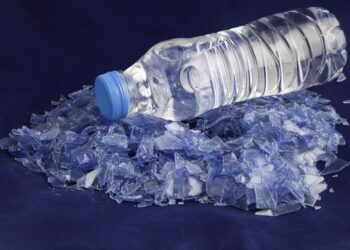
The technology aims to recycle PET food packaging into pellets for the molding of new food and drink packaging, typically bottles and thermoformed sheets. The new packaging is intended to be used for all kinds of foods for long-term storage at room temperature, with or without hotfill. The recycled content mainly comes from curbside and deposit beverage containers, although up to 5 percent may include non-food packaging such as soap bottles, mouthwash bottles and more.

The recycling process works as follows, according to the application:

The post-consumer containers are processed into hot caustic washed and dried flakes. Then, the flakes are melted and mixed with at least 67 percent virgin PET melt before it is all pelletized, crystallized and heated to the decontamination temperature (alternatively, the recycled PET is pelletized and then mixed with virgin pellets before they’re all crystallized and heated to the decontamination temperature). Finally, the crystallized and preheated pellets are decontaminated during solid-state polycondensation (SSP) in a continuous countercurrent reactor under high temperature and inert gas flow. The last step also boosts intrinsic viscosity of the material.

Lack of information

The CEF said another request submitted by the Greek government, specifically the Hellenic Republic Ministry of Finance, lacked information needed to give a proper review. That opinion was published in October.

The application, submitted on behalf of Pokas Arcadian Recycle Ltd. of Greece, asked the CEF to review a process for recycling PP or HDPE into food packaging. The proposed source of feedstock is PP or HDPE crates used to hold fruits and vegetables and PP and HDPE primary packaging. The material would be collected from food and packaging manufacturers and suppliers.

In the process, the incoming material is separated into three fractions: production scrap and used crates, primary packaging from the food packaging and processing industry and all other material coming from “an approved packaging management recycling system.”

The material is ground into flakes, washed, dried and extruded into granules. Those granules, which may or may not be mixed with virgin material, would then be used to mold new crates and packaging.

The request was rejected because too little detail was provided in terms of the feedstock and its source, the intended use of the recycled plastic and the recycling process steps. Additionally, the CEF questioned the results of the testing.

“Based on the information submitted to EFSA, the applicant has not demonstrated in a challenge test or by other appropriate evidence that the recycling process … is able to reduce any contamination of the PP and HDPE input to a concentration that does not pose a risk to human health,” according to the opinion.

Sunflower seed hull additives

CEF said it sees no safety concerns with a proposal to mix finely ground sunflower seed hulls into various plastics used in food packaging. Doing so boosts the plastic’s stiffness and tensile strength, according to the applicant. CEF’s decision was published in July.

The request was submitted by Germany’s Federal Office of Consumer Protection and Food Safety on behalf of a company called Golden Compound.

The proposal is to add the ground sunflower seed hulls as a filler in PP, PE, PVC, PLA or PS food packaging. The filler would be used at up to 50 percent, by weight.

“The additive is mixed with the polymer (most commonly PP) along with authorised antioxidants and processing aids, and then melt extruded into pellets,” according to the opinion.

The pellets are used to make products typically by injection molding or extrusion. The final packaging is intended for dry and solid foods only at room temperature or below for up to one month. The plastic containing the additives can be heated to up to 240 celsius (464 Fahrenheit).

The CEF said fatty acids can migrate from the plastic into the foods but saw no concern for it. That being said, CEF said, any migration of fatty acids should not affect the look, smell or taste of the food.

Tags: EquipmentEuropeHard-to-Recycle MaterialsHDPEIndustry GroupsPEPETPLAPPPSPVCTechnology
TweetShare
Jared Paben

Jared Paben

Related Posts

Panelists: Textile recycling requires more automation

Panelists: Textile recycling requires more automation

byBrian Clark Howard
March 3, 2026

A workshop at the Textile Recycling Summit in San Diego explored how much automation could be deployed in sorting and...

PureCycle sees easing headwinds to R-PP adoption

PureCycle sees easing headwinds to R-PP adoption

byAntoinette Smith
March 3, 2026

CEO Dustin Olson thinks the worst years of "high headwinds" are mostly behind the industry and that demand from legislation...

California selects Landbell USA as PRO for textile EPR

byStefanie Valentic
March 2, 2026

CalRecycle has tapped European recycling veteran Landbell USA to lead the nation's first textile EPR program.

K-Cup recycling comes to Ontario Blue Boxes

K-Cup recycling comes to Ontario Blue Boxes

byKeith Loria
March 2, 2026

Keurig Dr Pepper Canada and recyclers across the country worked together for nearly a decade on redesign, material conversion and...

Borealis, Borouge aim to bolster PE, PP recycling in Indonesia

byPaul Lane
February 27, 2026

Plastics recycling in the Southeast Asian nation focuses on PET and on industrial and commercial waste, while post‑consumer polyolefin packaging...

Recycling education needs consistency, simplicity 

byBrian Clark Howard
February 25, 2026

Several members of Circular Action Alliance team shared insights during a workshop at the 2026 Resource Recycling Conference in San...

Load More
Next Post
Research examines barriers to using recycled content in food packaging

Research examines barriers to using recycled content in food packaging

More Posts

Rising containerboard demand comes as OCC prices taper

November 5, 2024
PET bales stacked for recycling.

Evergreen closing RPET plants in Ohio, New York

February 24, 2026

Paper giants foresee continuing rise in OCC prices

August 28, 2023

North American paper mills discuss demand, OCC pricing

May 15, 2023
Recycled plastic lumber firms report diverging results

Trex CEO to retire after 23-year run

February 25, 2026
Battery fire risk isn’t going away. Insurance is responding

Battery fire risk isn’t going away. Insurance is responding

February 24, 2026
Chinese processing group details goals for US visit

AMP lays out vision of next-generation, AI-driven MRFs

July 24, 2024
How will 2026 unfold for plastics recycling?

How will 2026 unfold for plastics recycling?

February 19, 2026

California selects Landbell USA as PRO for textile EPR

March 2, 2026
Minnesota publishes prelim EPR assessment

Minnesota publishes prelim EPR assessment

February 20, 2026
Load More

About & Publications

About Us

Staff

Archive

Magazine

Work With Us

Advertise
Jobs
Contact
Terms and Privacy

Newsletter

Get the latest recycling news and analysis delivered to your inbox every week. Stay ahead on industry trends, policy updates, and insights from programs, processors, and innovators.

Subscribe

Welcome Back!

Login to your account below

Forgotten Password?

Retrieve your password

Please enter your username or email address to reset your password.

Log In

Add New Playlist

No Result
View All Result
  • The Latest
  • Analysis
  • Recycling
  • E-Scrap
  • Plastics
  • Policy Now
  • Conferences
    • E-Scrap Conference
    • Plastics Recycling Conference
    • Resource Recycling Conference
    • Textiles Recovery Summit
  • Magazine
  • About Us
  • Advertise
  • Archive
  • Jobs
  • Staff
Subscribe
This website uses cookies. By continuing to use this website you are giving consent to cookies being used. Visit our Privacy and Cookie Policy.