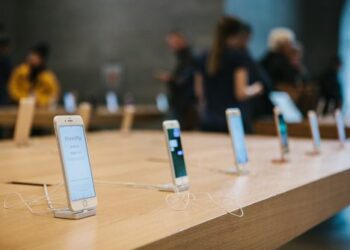




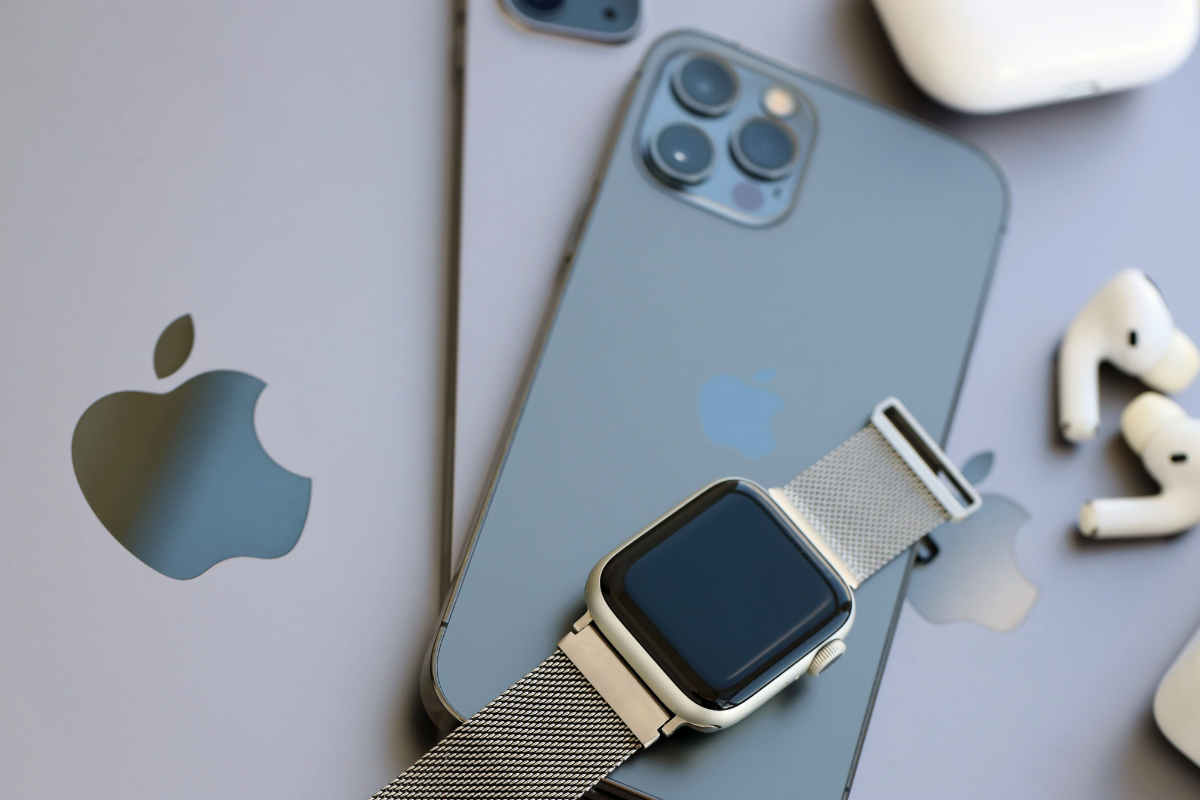
Ten years ago, Apple products contained virtually no recycled material. Last year, nearly a third of every device it shipped did.
The tech giant announced this week that 30% of material across all products shipped in 2025 came from recycled content, an all-time high, alongside a series of milestones that include the full elimination of plastic from its packaging supply chain and the launch of two recycling technologies it is now making available to outside processors.
The achievements anchor Apple’s annual Environmental Progress Report, released Wednesday ahead of Earth Day.
“From expanding recycled material to removing plastic from our packaging, we’re setting new benchmarks that inspire us to reach further and work even harder for the good of people and planet,” COO Sabih Khan said in a statement.
Closing the loop on critical minerals
The recycled content record comes alongside completed targets for several critical components. All Apple-designed batteries now use 100% recycled cobalt; all magnets use 100% recycled rare earth elements; and all Apple-designed printed circuit boards use 100% recycled gold plating and tin soldering, materials that have been historically difficult to recover at-scale in consumer electronics.
The rare earth milestone builds on groundwork Apple laid last July, when the company announced a $500 million commitment to purchase magnets from domestic rare earth producer MP Materials.
As part of that deal, Apple and MP Materials agreed to collaborate on a rare earth recycling facility in Mountain Pass, California, where e-scrap magnets will be recovered and reprocessed for use in Apple products.
The two companies had already worked together for five years on technology to process recycled rare earth magnets to Apple’s performance and design standards.
Apple also completed its transition to 100% fiber-based packaging, fulfilling a pledge made to eliminate plastic entirely from its packaging supply chain by the end of 2025. Over the past five years, the company stated it avoided more than 15,000 metric tons of plastic, the equivalent of roughly 500 million plastic water bottles.
New recovery tech
Apple is also pushing further upstream in the recycling process with two new technologies designed to improve what happens to devices at end of life.
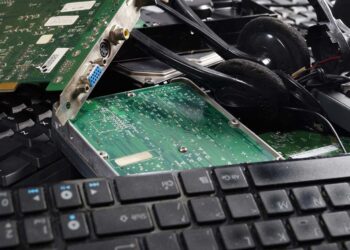
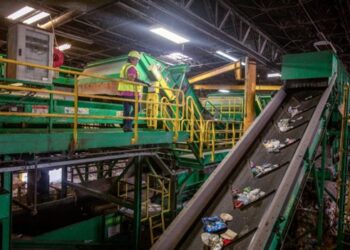
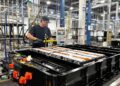
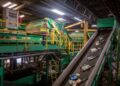
The company unveiled Cora, a new electronics-recycling line at its Advanced Recovery Center in California that uses precision shredding and advanced sensor technology to achieve material recovery rates above industry baselines.
Alongside it, Apple developed A.R.I.S., a machine learning-powered detection system that automates the classification and sorting of electronic scrap. The software, which runs on Mac mini, is currently being piloted with partner recyclers as an industry-deployable tool, the company indicated.
MacBook Neo
Apple’s newest laptop is also its most materials-intensive effort to date.
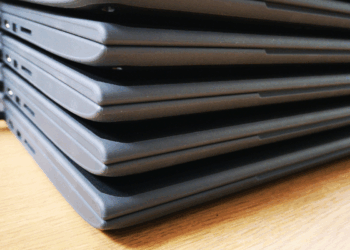
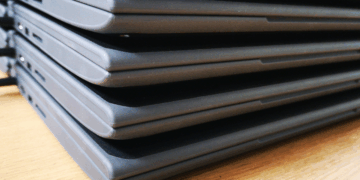
MacBook Neo, launched earlier this year, carries 60% recycled content, the highest of any Apple device, and serves as a testing bed for a new anodization process that recirculates 70% of the water used in its manufacture.
Apple stated the closed-loop method, which transforms a traditionally water-intensive manufacturing step, is slated for expansion to additional production lines in coming years.
CEO Tim Cook framed the progress as proof of concept for the company’s broader 2030 carbon neutrality goal.
“These milestones in our work to protect the planet show that ambitious goals can also be powerful engines of innovation,” he said.