











Resource Recycling
  • The Latest
  • Analysis
    • All
    • Certification Scorecard
    • Industry Announcements
    • Opinion
    HP receives ocean plastics certification

    HP Inc. earnings point to memory inflation challenge

    Certification scorecard for the week of Feb. 23, 2026

    Umicore highlights strength in recycling, catalysis

    Apto, Tusaar partner on rare earths recovery

    Apto, Tusaar partner on rare earths recovery

    Certification scorecard for the week of Feb. 16, 2026

    Sims Lifecycle leverages hyperscale decommissioning

    Sims Lifecycle leverages hyperscale decommissioning

    The electronics recycling industry is undergoing a transformation from labor-intensive manual operations to highly automated, AI-driven facilities that use advanced robotics, cleaner chemistry and digital tracking systems to extract critical materials.

    The cyber-physical MRF: AI and robotics reshape e-waste recovery

    Certification scorecard for the week of Feb. 9, 2026

    Meta-Corning deal signals IT hardware retirement wave

    Meta-Corning deal signals IT hardware retirement wave

  • Conferences
  • Publications

    Other Topics

    Textiles
    Organics
    Packaging
    Glass
    Brand Owners

    Metals
    Technology
    Research
    Markets
    Grant Watch

    All Topics

Subscribe
No Result
View All Result
Resource Recycling
  • The Latest
  • Analysis
    • All
    • Certification Scorecard
    • Industry Announcements
    • Opinion
    HP receives ocean plastics certification

    HP Inc. earnings point to memory inflation challenge

    Certification scorecard for the week of Feb. 23, 2026

    Umicore highlights strength in recycling, catalysis

    Apto, Tusaar partner on rare earths recovery

    Apto, Tusaar partner on rare earths recovery

    Certification scorecard for the week of Feb. 16, 2026

    Sims Lifecycle leverages hyperscale decommissioning

    Sims Lifecycle leverages hyperscale decommissioning

    The electronics recycling industry is undergoing a transformation from labor-intensive manual operations to highly automated, AI-driven facilities that use advanced robotics, cleaner chemistry and digital tracking systems to extract critical materials.

    The cyber-physical MRF: AI and robotics reshape e-waste recovery

    Certification scorecard for the week of Feb. 9, 2026

    Meta-Corning deal signals IT hardware retirement wave

    Meta-Corning deal signals IT hardware retirement wave

  • Conferences
  • Publications

    Other Topics

    Textiles
    Organics
    Packaging
    Glass
    Brand Owners

    Metals
    Technology
    Research
    Markets
    Grant Watch

    All Topics

Subscribe
No Result
View All Result
Resource Recycling
No Result
View All Result
Home E-Scrap

Robot pilot targets legacy parts to help supply defense

byScott Snowden
December 29, 2025
in E-Scrap
Robot pilot targets legacy parts to help supply defense

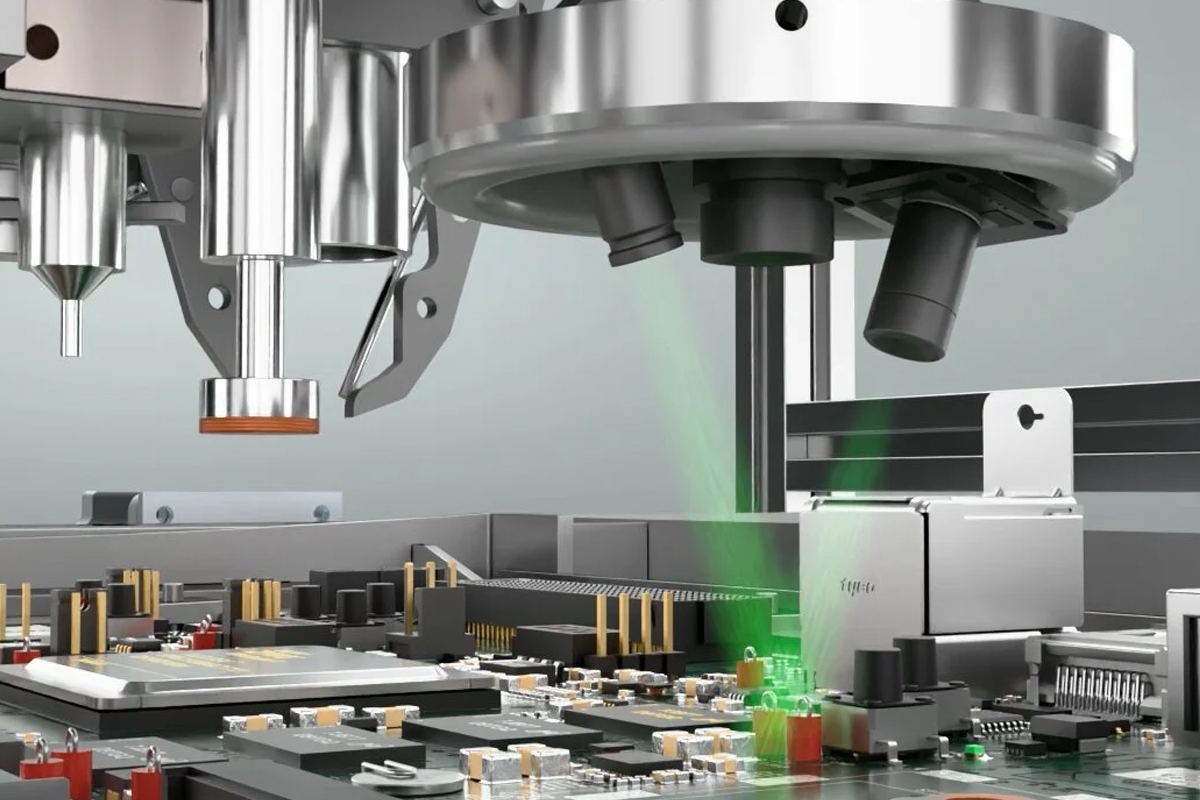
San Francisco-based startup Tuurny is building an AI guided robot to harvest usable chips and other components from discarded electronics and create a domestic parts supply.

A Northern California startup is developing an autonomous robot that recovers valuable electronic components intact, a process it describes as “surgical harvesting” and an alternative to standard shredding.

San Francisco-based Tuurny is pitching the approach as a response to persistent chip shortages and the rising volume of discarded electronics. Its goal is to supply a domestic stream of reusable parts by pulling high-value components from circuit boards without damaging them.

The platform uses computer vision to inspect each board, identify chips, capacitors, connectors and other parts, then remove them with precision robotics. The system is designed to allow each component to remain undamaged and to create documentation that follows the part once removed from the original hardware. In contrast, device shredding still dominates in the US and produces mixed scrap rather than individual, traceable electronics.

Sina Ghashghaei, CEO of Tuurny, argued that traditional destruction methods erase value. “Shredding electronics is like putting a classic Ferrari into a car crusher just to sell the metal as scrap,” he said. He added that the company wants to avoid destroying what he described as “a priceless engine and transmission” that could still be put to use. Tuurny aims to remove high-value components carefully, confirm their condition for potential reuse and return them to service in new hardware.

The timing, Ghashghaei noted, reflects growing demand for parts that have gone out of production. The company’s documentation process creates a digital certificate for every recovered component and links it to the hardware it came from. 

He said many long-life defense platforms rely on sunset or legacy electronics, and that sourcing those parts can be a logistical and security challenge with a risk of counterfeit infiltration. Tuurny intends to address that concern by proving where each component originated and by supporting compliance with the Pentagon’s DFARS 252.246-7007 requirement for a counterfeit electronic part detection and avoidance system.

Tuurny has secured a NASA grant to work with Texas A&M University on the development of the platform’s computer vision model. It has also been accepted into the NVIDIA Inception program, which supports startups that use AI tools in technical and industrial settings.

The company describes its work as a high-margin recovery model built to preserve value that is now lost in most e-scrap operations. The robot is being designed to handle a range of devices and to generate a consistent data record for every recovered part. Tuurny maintains that the value comes from supplying a certified component with a known history rather than a commodity mixture of shredded metals and plastic.

The first production-intent system is nearing completion as the startup prepares to expand its engineering team and move toward commercialization. The next step is raising its seed round to finalize development and begin paid pilot programs with customers who need traceable legacy components.

Tuurny places its work within ongoing concerns about supply chain reliability. Although chip availability has improved since the worst shortages earlier in the decade, demand for legacy electronics remains high in aerospace, defense, medical systems and other fields where equipment remains in service for many years. The aim is to create a recovery channel that returns documented components to manufacturers and service providers that depend on them.

The platform is still in the prototyping stage, but early testing supports the belief that value can be recovered without destroying the hardware. Tuurny’s long-term plan is to scale the system into an operation that can process discarded electronics in a controlled environment and return tested parts to circulation.


Tags: ProcessorsResearchTechnology
TweetShare
Scott Snowden

Scott Snowden

Scott has been a reporter for over 25 years, covering a diverse range of subjects from sub-atomic cold fusion physics to scuba diving off the Great Barrier Reef. He's now deeply invested in the world of recycling, green tech and environmental preservation.

Related Posts

What the NAND flash crunch means for remarketing, refurbishment and residual values

What the NAND flash crunch means for remarketing, refurbishment and residual values

byDavid Daoud
February 26, 2026

AI infrastructure demand is consuming the world's flash memory supply. The secondary market and ITAD industry will feel the consequences.

PET bales stacked for recycling.

Evergreen closing RPET plants in Ohio, New York

byAntoinette Smith
February 24, 2026

The Ohio-based company attributed the closure to the unexpected actions of a lender even as Evergreen was in talks with...

RCI, CurbWaste partner on waste management software 

RCI, CurbWaste partner on waste management software 

byPaul Lane
February 24, 2026

CurbWaste now provides the operational management and data platform for the Recycling Certification Institute, which works to improve transparency in...

WM opens new $90m MRF in south Florida 

WM opens new $90m MRF in south Florida 

byAntoinette Smith
February 23, 2026

The new facility is expected to process the most volume of recyclables in the hauler's MRF network.

Focus on recycling film, flexibles takes shape in two reports

byAntoinette Smith
February 13, 2026

The US Plastics Pact and the Alliance to End Plastic Waste released reports outlining necessary steps to improving recycling outcomes...

The electronics recycling industry is undergoing a transformation from labor-intensive manual operations to highly automated, AI-driven facilities that use advanced robotics, cleaner chemistry and digital tracking systems to extract critical materials.

The cyber-physical MRF: AI and robotics reshape e-waste recovery

byDavid Daoud
February 12, 2026

The electronics recycling industry is entering a new phase of technological acceleration. Advances in artificial intelligence, robotics, advanced chemistry, and...

Load More
Next Post
#PRC2026 Speaker Spotlight: Christine Yeager

#PRC2026 Speaker Spotlight: Christine Yeager

More Posts

WM opens new $90m MRF in south Florida 

WM opens new $90m MRF in south Florida 

February 23, 2026
PET bales stacked for recycling.

Evergreen closing RPET plants in Ohio, New York

February 24, 2026
Battery fire risk isn’t going away. Insurance is responding

Battery fire risk isn’t going away. Insurance is responding

February 24, 2026
Study links tagging tactics to lower contamination rates

Arizona, Reynolds reach settlement on Hefty bag lawsuit

February 23, 2026
Chinese processing group details goals for US visit

AMP lays out vision of next-generation, AI-driven MRFs

July 24, 2024
Recycled plastic lumber firms report diverging results

Trex CEO to retire after 23-year run

February 25, 2026
How will 2026 unfold for plastics recycling?

How will 2026 unfold for plastics recycling?

February 19, 2026
Minnesota publishes prelim EPR assessment

Minnesota publishes prelim EPR assessment

February 20, 2026
Polyolefins producer provides PCR updates

Economic downturn forces LyondellBasell to trim sustainability goals

February 23, 2026
Where textile MRFs fit in a global recovery system

Where textile MRFs fit in a global recovery system

February 19, 2026
Load More

About & Publications

About Us

Staff

Archive

Magazine

Work With Us

Advertise
Jobs
Contact
Terms and Privacy

Newsletter

Get the latest recycling news and analysis delivered to your inbox every week. Stay ahead on industry trends, policy updates, and insights from programs, processors, and innovators.

Subscribe

Welcome Back!

Login to your account below

Forgotten Password?

Retrieve your password

Please enter your username or email address to reset your password.

Log In

Add New Playlist

No Result
View All Result
  • The Latest
  • Analysis
  • Recycling
  • E-Scrap
  • Plastics
  • Policy Now
  • Conferences
    • E-Scrap Conference
    • Plastics Recycling Conference
    • Resource Recycling Conference
    • Textiles Recovery Summit
  • Magazine
  • About Us
  • Advertise
  • Archive
  • Jobs
  • Staff
Subscribe
This website uses cookies. By continuing to use this website you are giving consent to cookies being used. Visit our Privacy and Cookie Policy.