
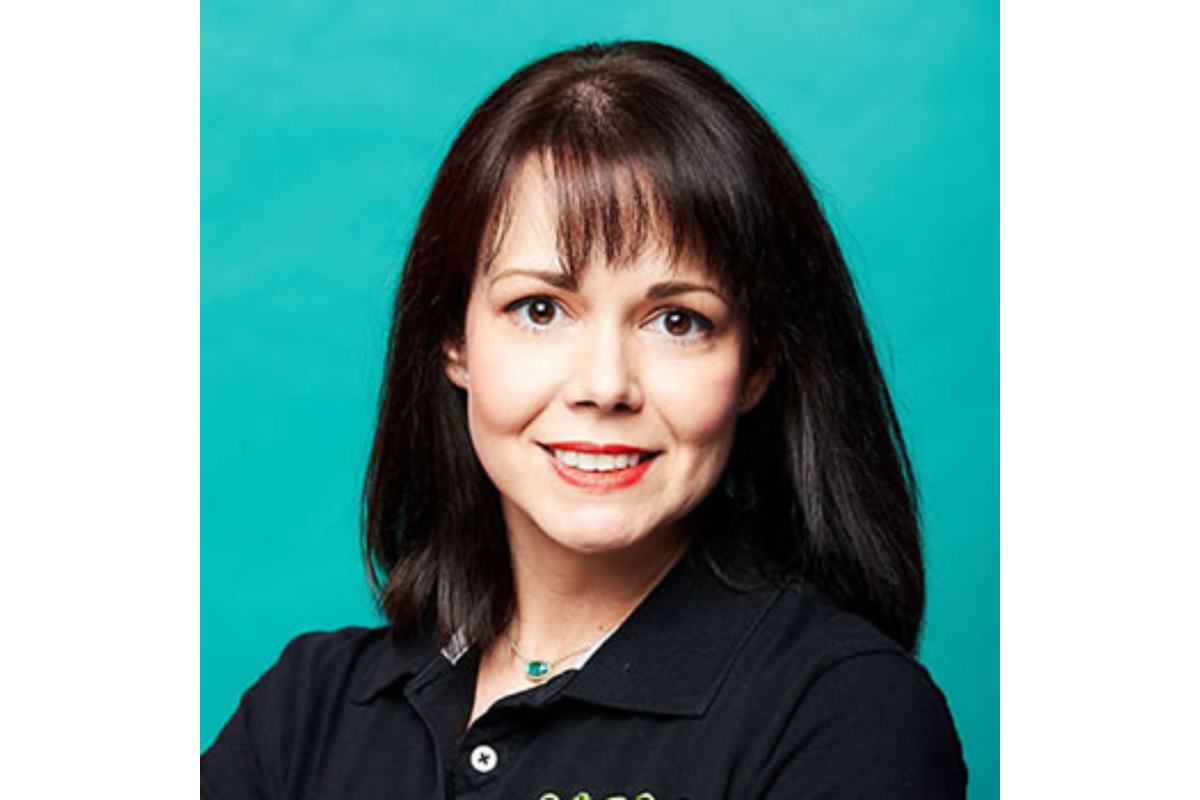
After years of interacting with the Recycling Industry Operating Standard as a manager at a RIOS-certified recycling firm, Shannon Fertitta was recently appointed executive director of the group that administers RIOS.
Fertitta, who lives in Baton Rouge, Louisiana, has been involved with the e-scrap world for over 20 years. In September, she was appointed executive director of the Global Recycling Standards Organization, the group that oversees the RIOS standard.
Originally developed through the coordination of the Recycled Materials Association – ReMA, formerly known as ISRI – RIOS provides an environmental, health and safety management standard that is tailored to recycling companies. It can be used to meet requirements of other certifications, such as the R2 standard.
E-Scrap News recently spoke with Fertitta to learn about her vision for RIOS and the perspective she brings from working at a RIOS-certified electronics recycling operation. This interview has been edited for clarity and brevity.
When and how did you come into the electronics recycling industry?
I came into the electronics recycling world pretty young. I started in my early 20s. My undergrad was in teaching, I was going to be a teacher, so I took just a part-time job with a recycler doing administrative work, data entry, office management stuff. And in doing so, observing the cool operations happening there, I got really interested in it. I wound up pursuing my career in recycling instead.
This was the early 2000s, and I realized how unique this was, especially in a place like the deep south, Louisiana. All of these abundance of computers were coming into this warehouse, and all of these pallets of computers and monitors were going out to these schools in very, very poor areas of the state. And it just hit me like a ton of bricks, and I said, this is so important what’s happening here.
Which organization were you working for?
CACRC. It’s the only nonprofit R2 and RIOS certified organization in Louisiana, doing very important work under 30,000 square feet with 20 employees. As I got older I continued growing there. I started as kind of office management, went through a sales administrative role there, was overseeing the sales teams, human resources, things of that nature. But then I had the opportunity to serve as the assistant director, so I was sort of the second in command to Nancy Jo Craig, who was my mentor, an incredible leader.
When did you first begin engaging with the certification standards?
We got R2 certified in 2010 and then shortly thereafter got the RIOS certification, because you have to have the quality, safety, health and environmental management aspect to go with your R2.
We had adopted those things, and I was deeply involved with all of the necessary measures to keep the facility in order, do all of your compliance, do all of your legal stuff, do all of your staff preparation annually, as you prepare for audits, your internal audits, your certification body audits.
It was kind of like my whole life was either preparing for audits, going through audits, or doing post-audit work. But it honestly keeps you so accountable. It makes it so that you have something to look at. You have a document. You say, “Okay, this is what we need to do.” It’s amazing to have that sort of checks and balances.
Some companies might look at certification as a burden or just something they have to do, but it seems like you really saw a positive value in it from an operational perspective.
I think we all have days where we don’t want to do it. It’s stressful, it’s really stressful, and you know that you’ve got 30 documents you’ve got to update today, you’ve got to have six meetings, and you’ve got to conduct three safety trainings this week. It does get stressful, because there is a lot of compliance, there’s a lot of boxes to check.
But it’s all so great, honestly: You do these things, you accomplish these things, and you’re just giving yourself credit for the work you’re doing. Because everybody wants their staff to be safe. Everybody wants their operations to be lucrative. You want to put out good quality materials to your customers. I mean, everybody wants these things, and you work hard to do these things, so why not give yourselves credit for that hard work you’re doing?
You started in the industry before certifications had really come on the scene. Did you see changes in industry practices as certifications became the norm?
I almost wish that I would have had a camera to take “before” pictures, just before certification, and “after” pictures, after certification. Back then it was like the Wild West. It was crazy. I mean, you just were taking everything in, there was really no guidelines, you were taking in anything with a circuit board, and you could really just send it off to anyone who was buying material and recycling material, because everybody seemed to be doing what they were supposed to be doing.
But certification makes sure they’re doing what they’re supposed to be doing, so that’s really the big difference: You become more picky and more particular about your accepted products, because then you can determine that you will have a downstream for that. You can’t take just everything, because you don’t know if you can recycle everything. Like, I’m not going to suddenly start taking solar panels if I don’t have an effective downstream.
So like I said, the before and the after is just very, very strikingly different, in a good way. You go into a facility now, and everything’s so clearly identified. You know where your focus materials are, you know where your battery processing is, it’s just wonderful, really.
RIOS seems to occupy a unique role within the electronics recycling certification sector, because it can be used to satisfy requirements of other certifications. Can you explain that role?
With electronics recycling, you have to have that QHS component. So that can either exist with RIOS, or with the three separate ISO standards. So you can get the ISO 9001, 14,001 and 45,001, you can do all three of those, or you can do the one RIOS, which embodies the components of all three of those ISOs.
Another advantage to RIOS is that it was designed specifically for recycling. ISO can apply to anyone, whether they are manufacturing a mop bucket, making drywall, whatever they’re doing, they can adopt the ISOs for their business. Recyclers, however, can use RIOS, and it was designed specifically for the operations inside of a recycling facility.
For the original iteration, in 2006, a group of very intelligent recycling people got together and said, you know what, we need to create something that is specific to what we do. People from all different parts of the recycled materials industry got together and said, let’s write this really good standard for people who recycle materials.
RIOS 2016 was written about 10 years later, and it got a nice facelift then. Probably pretty soon it’ll go through another revolution to continuously stay relevant with all of the changes that are going on in the world. So that is a huge advantage of RIOS. ISO is a very known household name in terms of how you certify your operations, but if you’re looking for something specific to recycling, RIOS is a great option.
I often think of RIOS working specifically in the electronics recycling space, but the standard has been adopted in other parts of the recycling industry as well, including in the municipal sector. Do you see more opportunities for expansion beyond e-scrap?
That is part of our strategy for the coming year. I am just in the process right now of sitting down with my board of directors and writing some strategies for the coming year. RIOS is going to be working closely with ReMA. We’re going to be sort of identifying some key partnerships that will help put us in front of those organizations, put us in front of those facilities.
We have several people on our board who are representative of metals recycling, we have people on our board who are representative of electronics. We have representatives who are tire recyclers. I don’t have a MRF on my board, but I would love to, so that’s something that I will probably start thinking about in the new year.