











Resource Recycling
  • The Latest
  • Analysis
    • All
    • Certification Scorecard
    • Industry Announcements
    • Opinion
    The electronics recycling industry is undergoing a transformation from labor-intensive manual operations to highly automated, AI-driven facilities that use advanced robotics, cleaner chemistry and digital tracking systems to extract critical materials.

    The cyber-physical MRF: AI and robotics reshape e-waste recovery

    Certification scorecard for the week of Feb. 9, 2026

    Meta-Corning deal signals IT hardware retirement wave

    Meta-Corning deal signals IT hardware retirement wave

    Malaysia clamps down on illegal e-waste imports amid probes

    Malaysia clamps down on illegal e-waste imports amid probes

    URT builds alliance to remake electronics plastics at scale

    ICYMI: Top 5 e-scrap stories from January 2026

    The electronics recycling industry is undergoing a transformation from labor-intensive manual operations to highly automated, AI-driven facilities that use advanced robotics, cleaner chemistry and digital tracking systems to extract critical materials.

    Certification scorecard for the week of Feb. 2, 2026

    Auditors warn EU may fall short on critical metals

    Auditors warn EU may fall short on critical metals

    Industry announcements for January 2026

    Industry announcements for February 2026

    ICYMI: Top 5 recycling stories from January 2026

  • Conferences
  • Publications

    Other Topics

    Textiles
    Organics
    Packaging
    Glass
    Brand Owners

    Metals
    Technology
    Research
    Markets
    Grant Watch

    All Topics

Subscribe
No Result
View All Result
Resource Recycling
  • The Latest
  • Analysis
    • All
    • Certification Scorecard
    • Industry Announcements
    • Opinion
    The electronics recycling industry is undergoing a transformation from labor-intensive manual operations to highly automated, AI-driven facilities that use advanced robotics, cleaner chemistry and digital tracking systems to extract critical materials.

    The cyber-physical MRF: AI and robotics reshape e-waste recovery

    Certification scorecard for the week of Feb. 9, 2026

    Meta-Corning deal signals IT hardware retirement wave

    Meta-Corning deal signals IT hardware retirement wave

    Malaysia clamps down on illegal e-waste imports amid probes

    Malaysia clamps down on illegal e-waste imports amid probes

    URT builds alliance to remake electronics plastics at scale

    ICYMI: Top 5 e-scrap stories from January 2026

    The electronics recycling industry is undergoing a transformation from labor-intensive manual operations to highly automated, AI-driven facilities that use advanced robotics, cleaner chemistry and digital tracking systems to extract critical materials.

    Certification scorecard for the week of Feb. 2, 2026

    Auditors warn EU may fall short on critical metals

    Auditors warn EU may fall short on critical metals

    Industry announcements for January 2026

    Industry announcements for February 2026

    ICYMI: Top 5 recycling stories from January 2026

  • Conferences
  • Publications

    Other Topics

    Textiles
    Organics
    Packaging
    Glass
    Brand Owners

    Metals
    Technology
    Research
    Markets
    Grant Watch

    All Topics

Subscribe
No Result
View All Result
Resource Recycling
No Result
View All Result
Home E-Scrap

Details on a Canadian e-plastics operation

Colin StaubbyColin Staub
February 4, 2021
in E-Scrap
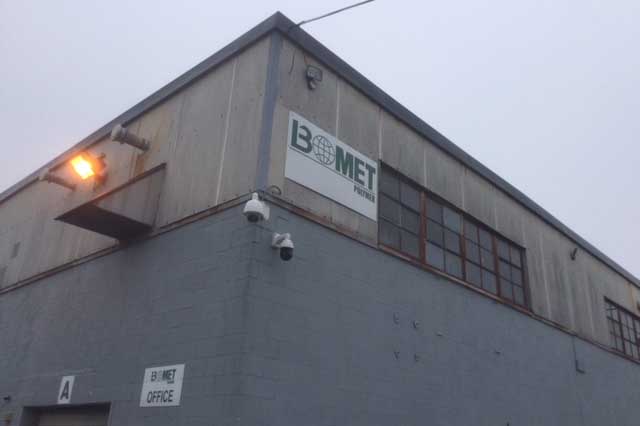
BoMet facility exterior.
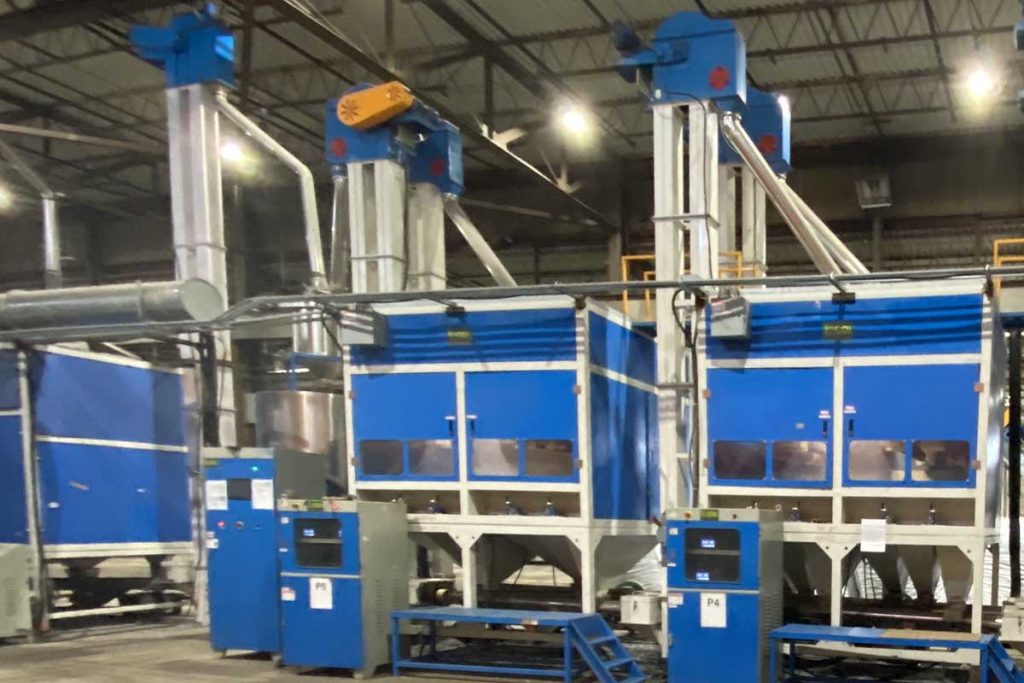
Inside the BoMet facility.
BoMET is one of a number of North American companies that saw that opportunity and are investing to expand their e-plastics processing capacity. | Courtesy of BoMET Polymer Solutions

BoMET Polymer Solutions is actively sourcing e-plastics from electronics recycling firms for the company’s Ontario processing facility, where it produces pellets and regrind for sale to manufacturers.

BoMET, which also operates an e-scrap recycling facility in Albion, N.Y., first announced the e-plastic processing project in 2018. There have been a number of hurdles along the way, and over the past year the company reorganized its expansion project, modifying some of the equipment that was planned for installation, among other changes.

In the last few months, the company began steadily processing scrap plastics from a variety of suppliers.

In an interview, Bo Zhang, CEO of BoMET Polymer Solutions, described the origins of the project and offered details on the equipment in use, e-plastic sourcing and future plans for the facility.

Facility opens as Basel controls take effect

The Brantford, Ontario BoMET facility is handling all major e-plastic resins, including ABS, PS and PE/PP. Exports of these e-plastics have been hampered by overseas import restrictions, including recent changes to the Basel Convention, an international treaty covering waste shipments.

Beginning this year, e-plastics, which are often sold as a shredded mixture of materials, are subject to new shipment restrictions under the Basel Convention. Generally speaking, scrap plastic loads that include mixtures of a variety of resins are subject to new notification requirements when exported. There are additional complexities – exports from the U.S. may not be allowed into certain countries, and the EU as a whole has banned the export of scrap plastic.

What it all means for e-scrap companies is turmoil in moving the plastic they recover from electronics.

BoMET offers a North American outlet for those materials. The company has installed what Zhang described as a “comprehensive” system that includes eight float-sink tanks to sort e-plastics. The facility also has an electrostatic separation line, an optical sorter and two pelletizing lines, Zhang said.

The float system is capable of sorting 12,000 pounds per hour, and the facility is currently running two shifts, five days per week. BoMET is planning to scale up to three shifts in the near future, Zhang said. The company is also planning to add a shredding system to handle baled plastics recovered from CRT devices, as well as a near-infrared system to sort individual grey and white plastics.

The company produces finished pellets as well as regrind, and currently most of its customers are in the international market, Zhang said, although it is making a push to sell to local end users.

The processing facility is bringing in – and paying for – e-plastics from electronics recycling companies in Canada and the U.S., and it has received more inquiries for potential scrap suppliers of late, Zhang said.

“They are all looking for domestic solutions,” Zhang said.

BoMET also formed a supply partnership with Quantum Lifecycle Partners, a major Canadian e-scrap processor, which will use the BoMET facility as a domestic outlet for its e-plastics.

Additionally, BoMET is working with Shanghai Re-Mall, a Chinese polymer engineering firm that is helping BoMET navigate the overseas market for its products. The company has expertise on quality specifications that can help BoMET ensure its materials meet criteria for importing countries, Zhang said. For example, BoMET sends regrind or pellets to Shanghai Re-Mall, which analyzes them and can guide BoMET on specific attributes that need improvement, Zhang said.

The Brantford, Ontario BoMET facility is handling all major e-plastic resins.

International markets drive project

Well before the Basel amendment, the BoMET project was spurred by the growth in overseas import restrictions for recycled materials. This kicked off with China’s Green Fence initiative in 2013 and has expanded since then, with China’s National Sword effort in 2017 and an all-out ban on imported scrap plastic in 2018.

These restrictions hit the North American recycling industry hard, leaving many companies struggling to move materials they used to send to China. Electronics companies that handle e-plastics were no exception.

“With National Sword in place, we know we are going to lose a lot of business, but in the meantime we know with dramatic change there is opportunity,” Zhang said.

The company has been active in the metals recycling space for years, but those international changes led Zhang and other company leaders to look at the plastics space as an opportunity.

“With e-scrap plastic, in the last 25 to 30 years there is no such practice here, because automatically everything went to China,” Zhang said.

That’s largely due to the cost of setting up processing facilities in North America compared with China and Southeast Asian countries. Several key changes occurred in recent years to allow development of the BoMet e-plastics facility – in particular, the processing technology has progressed to become far less labor-intensive than even six or seven years ago, Zhang said.

The cost began to pencil out, and BoMET also developed a team of experts in the field to help create the Canadian facility.

“We have to balance the practice, the technology, the equipment and the manpower,” Zhang said.

BoMET is one of a number of North American companies that saw that opportunity and are investing to expand their e-plastics processing capacity. Other recent e-plastics processing projects were undertaken by Indianapolis-based Plastic Recycling, Inc., Ontario-based eCycle Solutions and Wisconsin-headquartered Universal Recycling Technologies.

The shift in where material is processed is leading manufacturers to consider moving their operations to be closer to the supply of feedstock, Zhang said. He said multiple manufacturers are already doing this, including producers of recycled-content products such as plastic pots for the garden industry. And he predicted this will be the case for manufacturers of other recycled-content products, including clothing hangers, plastic decks and more.

“They will be setting up plants in the States and in Canada, because the material supply is here,” Zhang said. “Their market is here as well.”
 

Tags: CanadaE-Plastics
TweetShare
Colin Staub

Colin Staub

Colin Staub was a reporter and associate editor at Resource Recycling until August 2025.

Related Posts

Alberta extends materials, time for ag plastics pilot

Alberta extends materials, time for ag plastics pilot

byAntoinette Smith
December 15, 2025

The Canadian province renewed funding for the program, which in 2026 will accept silage plastic and bale wrap in addition...

Canada PROs unite to align packaging design

Canada PROs unite to align packaging design

byAntoinette Smith
November 18, 2025

Five Canadian producer responsibility organizations are joining forces to provide clear, consistent guidelines to make packaging design recyclable, with plastics...

Canadian PROs join forces to align design guidance

Canadian PROs join forces to align design guidance

byAntoinette Smith
November 17, 2025

Five Canadian producer responsibility organizations are joining forces to provide clear, consistent guidelines to make packaging design recyclable, with plastics...

EU recyclers make case for solvent-based methods

EU recyclers make case for solvent-based methods

byAntoinette Smith
October 23, 2025

Industry association Plastics Recyclers Europe is looking to raise the profile of dissolution recycling, an often-overlooked process that doesn't quite...

Closed Loop invests $10M in recycler GreenMantra

Closed Loop invests $10M in recycler GreenMantra

byStefanie Valentic
September 24, 2025

As vulnerabilities intensify across European plastics recycling markets, Closed Loop Partners (CLP) has deployed a $10 million loan to Canadian...

Aduro loss widens as pilot plant nears commissioning

Aduro loss widens as pilot plant nears commissioning

byScott Snowden
September 3, 2025

Aduro Clean Technologies reported a wider operating loss for fiscal year 2025 as it increased spending on research and pilot-scale...

Load More
Next Post

Paper and plastic exports drop again in 2020

More Posts

Oregon’s Recycling Modernization Act faces injunction

Court partially blocks Oregon EPR law, dismisses bulk of lawsuit

February 10, 2026
Chinese processing group details goals for US visit

AMP lays out vision of next-generation, AI-driven MRFs

July 24, 2024
Malaysia clamps down on illegal e-waste imports amid probes

Malaysia clamps down on illegal e-waste imports amid probes

February 6, 2026

REUSE Act heads to US House for consideration

February 9, 2026
Meta-Corning deal signals IT hardware retirement wave

Meta-Corning deal signals IT hardware retirement wave

February 9, 2026

ecoATM recycled 7.5M phones in 2025 as payouts hit $1.5B

February 10, 2026
Texas sues over dumped wind turbine blades

Texas sues over dumped wind turbine blades

February 10, 2026

APR, industry create proactive guidance for PET caps

February 12, 2026

Alpek talks PET overcapacity, soft demand

February 11, 2026
The electronics recycling industry is undergoing a transformation from labor-intensive manual operations to highly automated, AI-driven facilities that use advanced robotics, cleaner chemistry and digital tracking systems to extract critical materials.

The cyber-physical MRF: AI and robotics reshape e-waste recovery

February 12, 2026
Load More

About & Publications

About Us

Staff

Archive

Magazine

Work With Us

Advertise
Jobs
Contact
Terms and Privacy

Newsletter

Get the latest recycling news and analysis delivered to your inbox every week. Stay ahead on industry trends, policy updates, and insights from programs, processors, and innovators.

Subscribe

Welcome Back!

Login to your account below

Forgotten Password?

Retrieve your password

Please enter your username or email address to reset your password.

Log In

Add New Playlist

No Result
View All Result
  • The Latest
  • Analysis
  • Recycling
  • E-Scrap
  • Plastics
  • Policy Now
  • Conferences
    • E-Scrap Conference
    • Plastics Recycling Conference
    • Resource Recycling Conference
    • Textiles Recovery Summit
  • Magazine
  • About Us
  • Advertise
  • Archive
  • Jobs
  • Staff
Subscribe
This website uses cookies. By continuing to use this website you are giving consent to cookies being used. Visit our Privacy and Cookie Policy.