Resource Recycling
  • The Latest
  • Analysis
    • All
    • Certification Scorecard
    • Industry Announcements
    • Opinion
    Following petition, Microsoft extends Windows 10 support

    Windows AI Recall is pushing data destruction upstream

    Certification Scorecard — Week of April 27, 2026

    Five trends shaping PCR packaging to 2031

    Intel sign on company building with blue sky and trees.

    Intel boosts margins by selling what it used to scrap

    Our top stories from April 2022

    Peters-Michaud named CEO, Houghton chair of Sage Sustainable Electronics

    Closeup of a printed circuitboard

    Can modular metals recovery challenge the smelter model?

  • Conferences
    • Resource Recycling Conference
    • Plastics Recycling Conference
    • E-Scrap: The Longevity Conference
    • Textiles Recovery Summit
  • Publications
    • E-Scrap News
    • Plastics Recycling Update
    • Policy Now
    • Resource Recycling
    • Other Topics
      • Brand Owners
      • Critical Minerals
      • Glass
      • Grant Watch
      • Markets
      • Organics
      • Packaging
      • Research
      • Technology
      • Textiles
      • All Topics
Subscribe
No Result
View All Result
Resource Recycling
  • The Latest
  • Analysis
    • All
    • Certification Scorecard
    • Industry Announcements
    • Opinion
    Following petition, Microsoft extends Windows 10 support

    Windows AI Recall is pushing data destruction upstream

    Certification Scorecard — Week of April 27, 2026

    Five trends shaping PCR packaging to 2031

    Intel sign on company building with blue sky and trees.

    Intel boosts margins by selling what it used to scrap

    Our top stories from April 2022

    Peters-Michaud named CEO, Houghton chair of Sage Sustainable Electronics

    Closeup of a printed circuitboard

    Can modular metals recovery challenge the smelter model?

  • Conferences
    • Resource Recycling Conference
    • Plastics Recycling Conference
    • E-Scrap: The Longevity Conference
    • Textiles Recovery Summit
  • Publications
    • E-Scrap News
    • Plastics Recycling Update
    • Policy Now
    • Resource Recycling
    • Other Topics
      • Brand Owners
      • Critical Minerals
      • Glass
      • Grant Watch
      • Markets
      • Organics
      • Packaging
      • Research
      • Technology
      • Textiles
      • All Topics
Subscribe
No Result
View All Result
Resource Recycling
No Result
View All Result
Home E-Scrap

Takeaways from a battery collection initiative in Nigeria

Colin StaubbyColin Staub
October 29, 2020
in E-Scrap
Collect cellphone batteries for recycling.
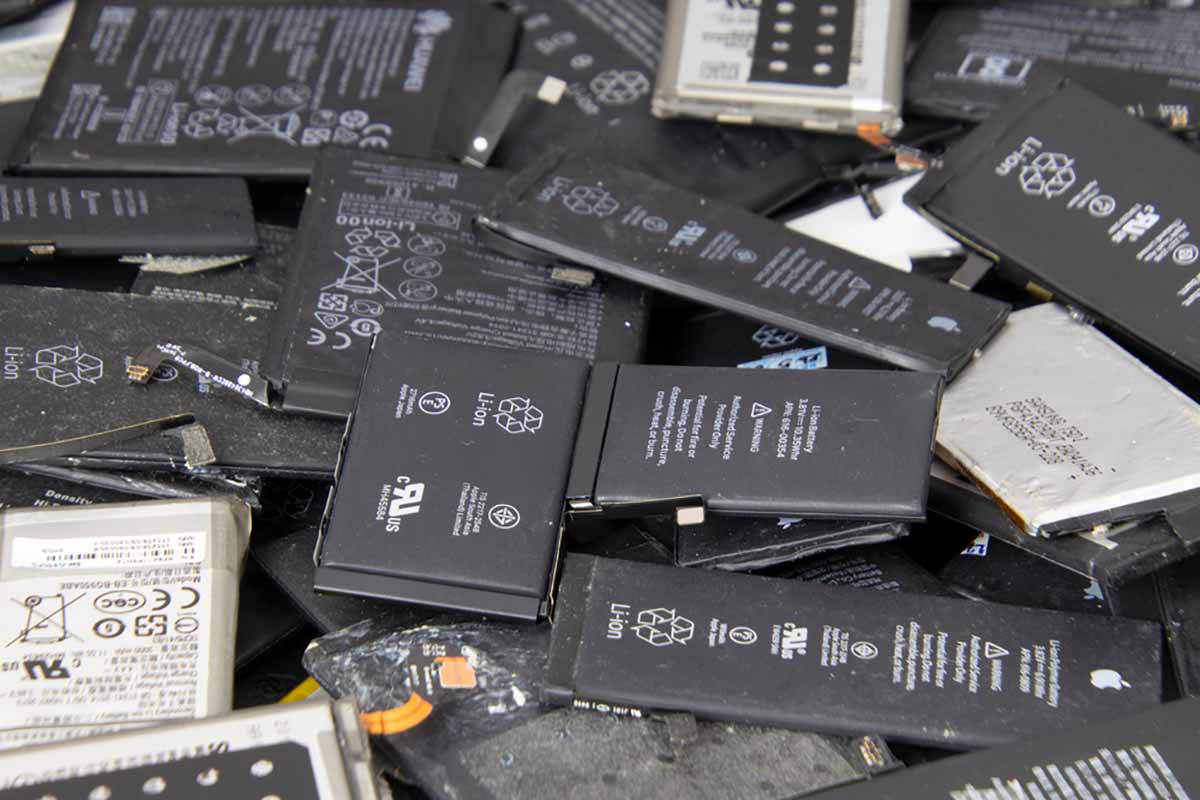
Closing The Loop’s project accumulated about 11,000 pounds of batteries, primarily from mobile phones. | Orapruek/Shutterstock

Leaders of an effort to recycle mobile phone batteries collected from West Africa recently outlined challenges and successes during their 18-month pilot project.

Closing the Loop, an Amsterdam-based company with e-scrap collection networks set up throughout Africa, provides an “offset” service for wireless industry stakeholders. Under this system, Closing the Loop facilitates collection of end-of-life phones based on the number of new ones put on the market by its customers.

In late 2017, Closing the Loop set its sights on additional types of e-scrap to collect in this fashion, starting with mobile phone batteries. The company launched a pilot project with Dutch device producer Fairphone, aiming to collect batteries from West Africa and transport them to countries with adequate processing infrastructure.

This is similar to the mobile phone “offset” service, but batteries have until now been excluded from the service “because of the extra care that needs to be taken due to their hazardous nature,” Closing the Loop wrote in a recent report covering the project.

The pilot collection program kicked off in Nigeria in 2018 and continued through April 2020.

Closing the Loop worked with Verde Impacto, a Nigerian environmental services company, to facilitate local collection of batteries. Verde Impacto worked with the informal collection sector to source batteries, and local e-scrap firm Hinckley Recycling oversaw regulatory compliance for transportation and shipping.

Throughout the 18 months of collection, the project accumulated about 11,000 pounds of batteries, primarily from mobile phones. The total also included a small quantity of laptop batteries. The batteries were delivered to a partner recycling company in Belgium.

“A key difference between phones and batteries was the extra complication related to shipping batteries, as well as the negative value of the waste,” Closing the Loop wrote in the report.

Regulatory and financial barriers

Lithium-ion battery transportation has to follow strict battery packing and storing instructions, along with other extra safety regulations that are not required for non-battery shipments, according to the report. Because this was the first project of its kind in Nigeria, local logistics operators were not very familiar with transportation requirements for these batteries, the project team found.

Another challenge came in the finances of dealing with batteries. One major cost was the price to purchase batteries from the informal sector.

“Though details cannot be shared, the price that had to be paid per kilo of batteries far exceeded the material value of the batteries after recycling,” the report states. “This was because of the cost required to motivate collectors to make the effort to safely and responsibly collect these batteries.”

Some of the funding came from existing Closing the Loop customers, including Fairphone and the Dutch government. To make the system more sustainable, Closing the Loop recommended developing a financing model such as its “Waste Compensation” system. Under this model, device producers add a small upfront fee on their products, money that is remitted to Closing the Loop to finance the “offset” collection.

Despite the challenges, the partners consider the project a success, according to the report. Closing the Loop is currently working to collect more batteries for a second shipment through this system, and it plans to involve more stakeholders from the e-scrap industry moving forward.

 

Tags: CollectionMobile Devices
TweetShare
Colin Staub

Colin Staub

Colin Staub was a reporter and associate editor at Resource Recycling until August 2025.

Related Posts

WM: Upgrades temporarily slow tons recovered

WM Q1 volumes rise despite headwinds

byStefanie Valentic
April 30, 2026

WM posted Q1 2026 revenue of $6.23 billion and free cash flow of $920 million as recycling automation and renewable...

Prescription drug bottles

National Prescription Drug Take Back Day is Saturday

byBrian Clark Howard
April 24, 2026

The federal government is urging people to properly dispose of their unwanted medications to protect human health and the water...

AT&T, Compudopt expand e-recycling program

AT&T, Compudopt expand e-recycling program

byAntoinette Smith
April 23, 2026

The communications giant will have more than 200 retail collection points, and the Texas nonprofit will process and distribute old...

Circular Services opens $61m MRF in North Texas

byStefanie Valentic
April 23, 2026

The Dallas Metroplex has a new $61 million MRF. Circular Services launched operations at the 120,000-square-foot facility this week. Construction...

GFL acquires SECURE Waste for $6.4bn

byStefanie Valentic
April 13, 2026

GFL Environmental has agreed to acquire SECURE Waste Infrastructure Corp. in a $6.4 billion deal that expands the waste hauler's...

Oregon’s battery EPR bill officially charged for implementation

byStefanie Valentic
April 10, 2026

Oregon Governor Tina Kotek signed HB 4144 into law on April 7, setting into motion the mechanics for an extended...

Load More
Next Post
Closeup of e-scrap circuitboards.

Scrap metal veteran enters e-scrap industry

More Posts

What Netflix’s ‘Plastic Detox’ gets wrong – and right

April 23, 2026
EPR fees are a market signal. Here’s what they’re telling you.

Oregon DEQ flags 250 producers for RMA noncompliance

April 21, 2026
Birch Plastics gets FDA green-light for post-industrial PP

LyondellBasell upgrade to PreZero assets on hold

April 23, 2026
Intel sign on company building with blue sky and trees.

Intel boosts margins by selling what it used to scrap

April 29, 2026

PCA keeping focus on virgin fiber products

April 27, 2026
Dow touts US PE advantage amid Iran war

Dow touts US PE advantage amid Iran war

April 24, 2026
Intel sign outside of company building.

What Intel’s blockbuster quarter means for ITAD

April 27, 2026
Float-sink technology at the Quantum Lifecycle Partners facility in Toronto, Canada enables the processing of e-plastics.

E-plastics recovery line opens in Canada

April 28, 2026
The independent ITAD at a crossroads

The independent ITAD at a crossroads

April 22, 2026
AT&T, Compudopt expand e-recycling program

AT&T, Compudopt expand e-recycling program

April 23, 2026
Load More

About & Publications

About Us

Staff

Archive

Magazine

Work With Us

Advertise
Jobs
Contact
Terms and Privacy

Newsletter

Get the latest recycling news and analysis delivered to your inbox every week. Stay ahead on industry trends, policy updates, and insights from programs, processors, and innovators.

Subscribe

Welcome Back!

Login to your account below

Forgotten Password?

Retrieve your password

Please enter your username or email address to reset your password.

Log In

Add New Playlist

No Result
View All Result
  • The Latest
  • Analysis
  • Recycling
  • E-Scrap
  • Plastics
  • Policy Now
  • Conferences
    • E-Scrap Conference
    • Plastics Recycling Conference
    • Resource Recycling Conference
    • Textiles Recovery Summit
  • Magazine
  • About Us
  • Advertise
  • Archive
  • Jobs
  • Staff
Subscribe
This website uses cookies. By continuing to use this website you are giving consent to cookies being used. Visit our Privacy and Cookie Policy.