





Resource Recycling
  • The Latest
  • Podcast
  • Analysis
    • All
    • Certification Scorecard
    • Industry Announcements
    • Opinion
    IT asset disposition and electronics recycling: Now and then

    Data center moratoriums cast development shadow

    Recycling tracking data is already on your truck

    Recycling tracking data is already on your truck

    A five star ranking with one under a microscope

    Certification scorecard — week of Nov. 9

    Data centers and AI combine to create ITAD ‘growth engine’

    Component shortages drive demand for data center hardware

    Ingram Micro again files to take company public

    Ingram Micro sees lifecycle services rise 35%

    Inside the Circle: Will we lose our shirts over CA textile EPR?

    Inside the Circle: Will we lose our shirts over CA textile EPR?

  • Conferences
    • Resource Recycling Conference
    • Plastics Recycling Conference
    • E-Scrap: The Longevity Conference
    • Textiles Recovery Summit
  • Publications
    • E-Scrap News
    • Plastics Recycling Update
    • Policy Now
    • Resource Recycling
    • Other Topics
      • All Topics
      • Brand Owners
      • Critical Minerals
      • Glass
      • Grant Watch / RFPs
      • Markets
      • Organics
      • Packaging
      • Research
      • Technology
      • Textiles
Subscribe
No Result
View All Result
Resource Recycling
No Result
View All Result
Home E-Scrap

Colorado serves as case study in landfill-ban effectiveness

Colin StaubbyColin Staub
March 15, 2017
in E-Scrap
electronics recycling

Colorado is one of just three states with an electronics landfill ban but no statewide e-scrap management program. An e-scrap executive in the state recently provided an update on how that system is working out.

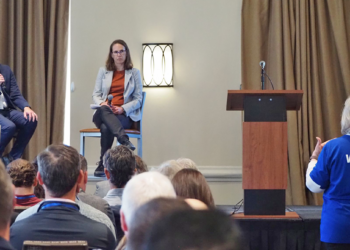
In a recent webinar, Janice Oldemeyer, president of Onsite Recycling and its Colorado I.T. Refresh division, described the local effects of Colorado’s landfill ban, which was enacted in July 2013. The webinar was presented by the Colorado Product Stewardship Council.

The landfill ban, which prohibits disposal of most household electronics devices, including CRT TVs and monitors, immediately increased the amount of electronics recycled in Colorado, Oldemeyer said. The cost to divert that material has been shouldered by local municipalities in some cases and consumers in others. The ban has also increased public awareness of the need to recycle, has increased electronics recycling options and has communicated the true cost of recycling to the customer, Oldemeyer said.

But, she added, without a legislated e-scrap collection program, the ban has led to an increase in illegal dumping of e-scrap materials, particularly along rural roads and at thrift store dropboxes. It has also led to wide variance between municipalities.

Oldemeyer pointed to several possible improvements to Colorado’s system, which essentially all come down to cost. The state could create a funding mechanism to cover the costs of handling illegal e-scrap disposal, but it’s unclear where funding would come from.

Statewide program, pros and cons

Of course, the state could also adopt a statewide e-scrap recycling program. Oldemeyer pointed out some pros and cons of the existing models.

California’s advanced recovery fee (ARF) has the benefit of communicating to consumers the true cost of recycling through point-of-sale charges, but it can also be seen as a tax. Oldemeyer also said the approach is problematic because it puts no requirements on product manufacturers.

“I think that most people would agree that producers should take some responsibility for the end of life of the materials that they manufacture,” Oldemeyer said.

Still, Oldemeyer advised against a traditional extended producer responsibility (EPR) program – a method used by numerous states – in which end-of-life responsibilities are handed to electronics manufacturers. Without an EPR program, she said, Colorado hasn’t felt the effects of the “race to the bottom” of recycling companies competing to offer e-scrap services for the lowest price, Oldemeyer said.

The competition among recycling companies in EPR states, Oldemeyer said, can have negative consequences, such as environmentally unsound recycling. It has also contributed to CRT stockpiles, Oldemeyer contended, as companies get in over their heads with no way to get rid of the devices they’ve collected.

But another presenter, Jason Linnell of the National Center for Electronics Recycling (NCER), noted the stockpile issue is complicated.

“I don’t think the state laws can be tied directly to the cases of CRT abandonment, since it’s been seen both in states with and without these program laws … where the manufacturers are funding the programs,” said Linnell, NCER’s executive director. “I think that’s more a combination of factors within the CRT recycling markets.”

Nationwide perspective: a patchwork of programs

Twenty-five states and Washington D.C. have statewide e-scrap laws, with strong coverage on the coasts, in the Midwest and parts of the South. That pencils out to about two-thirds of the country’s population covered by an electronics recycling program, said Linnell, who offered a wider look at e-scrap programs across the country.

Most, but not all, of those states with laws also have active e-scrap landfill bans, which are commonly tied to program laws, Linnell said.

E-scrap program laws have seemingly plateaued since 2010, Linnell said, when four states including New York passed e-scrap program laws. Since then, just Utah and Washington D.C. have ushered in legislated programs.

Although he praised the expansion of e-scrap laws for their part in increasing and improving electronics recycling, Linnell also pointed to some challenges with how e-scrap management is developing. The patchwork of e-scrap laws means programs vary widely, Linnell said, and that fact can cause headaches for stakeholders who are looking to operate on a national or regional scale.




Tags: CRTsEPRProcessors
TweetShare
Colin Staub

Colin Staub

Colin Staub was a reporter and associate editor at Resource Recycling until August 2025.

Related Stories

Goodwill eyes EPR revenue, starting with waste audit

byStefanie Valentic
November 12, 2026

Goodwill sustainability leaders say the nonprofit’s donation network could serve packaging and textile EPR programs, but they first need hard...

Produce packers face narrow exits under SB 54

byStefanie Valentic
November 11, 2026

Fiber, compostables, PCR and monomaterial films all come with tradeoffs for fresh produce, and no single swap will work across...

Textile EPR needs end markets, not just collection

Textile EPR needs end markets, not just collection

byStefanie Valentic
November 10, 2026

Reju CEO Patrik Frisk said textile EPR programs will fall short unless they also create demand for recycled material.

Inside the Circle: Will we lose our shirts over CA textile EPR?

Inside the Circle: Will we lose our shirts over CA textile EPR?

byBill Shireman
November 9, 2026

Some advocates have worked to block chemical recycling under the packaging law, but their strategy is going to backfire.

New CAA chief talks markets, industry support

New CAA chief talks markets, industry support

byAntoinette Smith
November 4, 2026

Interim CEO Jeff Meyers outlined the producer responsibility organization's strategy for navigating state EPR rollouts, building recycling markets and supporting...

Electronics recycling legislation evolves with devices

byStefanie Valentic
November 2, 2026

Wisconsin adds wearables, Oregon moves to a PRO model and Illinois and Hawaii broaden scope as states retool electronics EPR...

Load More
Next Post
CRTs for recycling

Reliable CRT outlet cancels furnace expansion

2026 Buyers’ Guide

Equipment, services and technology suppliers serving the recycling industry.

Browse the Guide

More Posts

PureCycle sees easing headwinds to R-PP adoption

PureCycle shifts focus, secures feedstock

November 5, 2026
NexPoint Materials to shutter Alabama plastics plant

NexPoint Materials to shutter Alabama plastics plant

November 4, 2026
Inside the Circle: Will we lose our shirts over CA textile EPR?

Inside the Circle: Will we lose our shirts over CA textile EPR?

November 9, 2026
Artificial intelligence is altering the marketplace for ITAD providers in numerous ways. | Shutterstock

AI alters ITAD economics

November 3, 2026
PET bottles for recycling

PET imports reshape US markets as demand grows

November 11, 2026
Textile EPR needs end markets, not just collection

Textile EPR needs end markets, not just collection

November 10, 2026
The missing link in e-plastic recycling

The missing link in e-plastic recycling

October 28, 2026
Modern Mining raises $40 million in IPO

Modern Mining raises $40 million in IPO

November 12, 2026
UC Riverside expands reusable takeout program

UC Riverside expands reusable takeout program

November 6, 2026
IT asset disposition and electronics recycling: Now and then

Data center moratoriums cast development shadow

November 12, 2026
Load More

About & Publications

About Us

Staff
Job Listings

Archive

Magazines

Work With Us

Advertise
Contact
Terms and Privacy

Newsletters

Get the latest recycling news and analysis delivered to your inbox every week. Stay ahead on industry trends, policy updates, and insights from programs, processors, and innovators.

Subscribe

Welcome Back!

Login to your account below

Forgotten Password?

Retrieve your password

Please enter your username or email address to reset your password.

Log In

Add New Playlist

No Result
View All Result
  • The Latest
  • Podcast
  • Analysis
  • Recycling
  • E-Scrap
  • Plastics
  • Policy Now
  • Conferences
    • E-Scrap Conference
    • Plastics Recycling Conference
    • Resource Recycling Conference
    • Textiles Recovery Summit
  • Magazines – Old
  • About Us
  • Advertise
  • Archive
  • Job Listings
  • Staff
Subscribe
This website uses cookies. By continuing to use this website you are giving consent to cookies being used. Visit our Privacy and Cookie Policy.