





This article appeared in the 2024 issue of E-Scrap News. Subscribe today for access to all print content.
Though the right to repair consumer electronics has been written into law in only a handful of states, the past year has nevertheless brought a sea change to the movement.
Oregon and Colorado both passed right-to-repair legislation last spring, two years after New York became the first state to do so and a year after Minnesota and California followed suit.
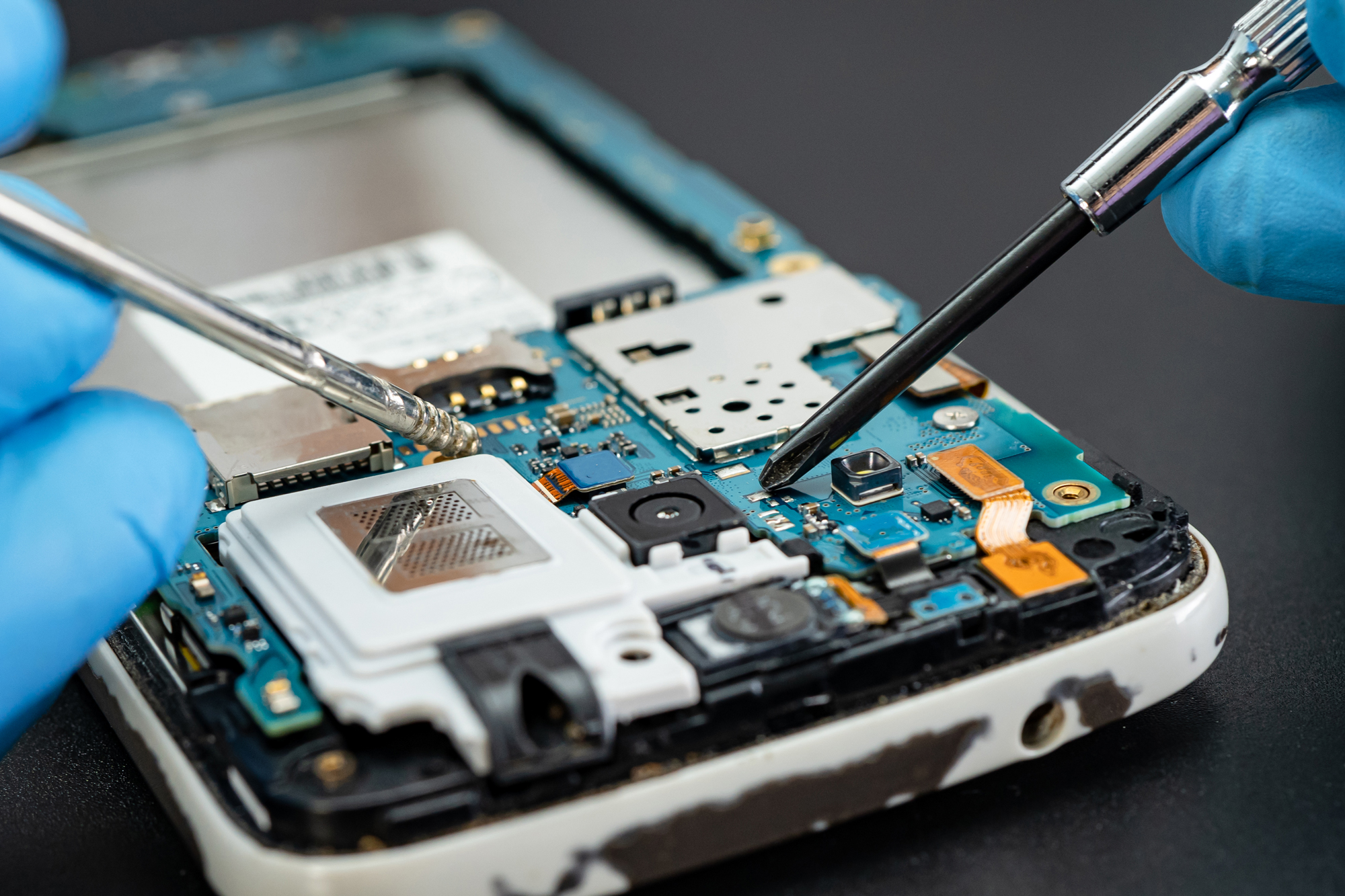
Though they differ in specifics, generally these laws require OEMs to make available to independent repair shops and consumers the parts, tools and documentation needed to fix devices. Manufacturers have traditionally controlled repair work in various ways, such as by limiting repairs to authorized providers.
While Oregon and Colorado were fourth and fifth in line, respectively, they were the first to ban the use of software to ensure a device will only operate with specific individual parts, or parts pairing, which can interfere with third-party repairs or with device functionality afterward.
“We have supported legislative efforts to protect a consumer’s right to repair their own products because doing so reduces waste, saves consumers money and offers consumers more choice when it comes to maintaining their expensive gadgets and appliances,” Justin Brookman, director of tech policy at Consumer Reports, said in a written statement after Oregon’s passage.
“With software becoming an essential element in today’s products, Consumer Reports backs laws that prevent software from becoming a tool to enforce manufacturers’ monopolies on the repair process.”
Apple voiced its opposition to Oregon’s parts pairing provision, according to TechCrunch, with John Perry, senior manager of secure system design, telling lawmakers in February that the ban will undermine security and privacy for customers.
“It’s important to understand why Apple and other smartphone manufacturers use parts pairing. It’s not to make repair more difficult,” Perry said. “It is, in fact, to make access to repair easier while also making sure your device — and the data stored on it — remain secure.”
Yet Apple broadly supported the legislation’s other provisions, further highlighting how the right-to-repair movement’s landscape has changed in the last 12 months.
Speaking alongside federal officials last October, Brian Naumann, vice president and general manager of Apple’s repair business, said the tech behemoth supported a federal right-to-repair law as long as it balances repairability with durability, security and physical safety. And Google in January endorsed an Oregon bill as a “compelling model.”
SB 542, a right-to-repair bill that died in the 2023 session and didn’t include the parts pairing provision, “represents an inclusive compromise that brings tech companies, small repair companies, environmental leaders and legislators to the table to find common ground and support the repair movement,” the company wrote in a press release. “This would be a win for consumers who are looking for affordable repair options, for the environment and for companies that want to invest in making their products more repairable and sustainable.”
Bumps in the road
That’s not to say right-to-repair has an open field among state legislatures. Out of more than 20 right-to-repair electronics bills introduced as of July, a dozen had failed in Illinois, New York, Rhode Island, Washington and elsewhere.
Corporate support has come with its bumps as well. In public comments on a right-to-repair petition to the Federal Trade Commission early this year, small repair business owners, industry associations or passionate individuals disagreed over whether the commission should set national right-to-repair rules.
The Arkansas Farm Bureau Federation (AFBF), an agricultural lobbying group, encapsulated the divide. The federation over the past year secured memorandums of understanding with John Deere and other manufacturers to make it easier for farmers to repair their equipment. It also opposed the FTC petition, saying an industry- and manufacturer-specific approach is best.
“When AFBF’s members charged the organization with outreach to equipment manufacturers on the right to repair, they expressed a preference for private sector, market-based solutions over legislation,” the group wrote to the commission. “AFBF’s members believe it is about sitting down at the table and sorting things out.”
Farm Action, another agricultural advocacy group, said it “wholly supports the petition,” pointing to the vastly increased complexity of combines and other machines. A federal rule could give explicit, consistent boundaries for what is and isn’t allowed, it said.
“Farmers know best how global equipment manufacturers like John Deere have obstructed their operations, coerced inflated repair costs from them and violated their consumer rights with the denial of basic information,” the group wrote.
In May, repair organization iFixit ended its Repair Hub partnership with Samsung after two years of effort, citing the OEM’s lack of commitment. As of June, iFixit was no longer Samsung’s designated third-party parts and tools distributor and would no longer collaborate with the company on new repair manuals.
“It’s with a heavy wrench that we have decided to end our partnership with Samsung,” iFixit said in a written statement, pointing to such problems as costly parts that are glued together. “Despite a huge amount of effort, Samsung’s approach to repairability does not align with our mission.”
Samsung didn’t return emailed requests for comment in May. In a written statement to news outlet The Verge, Samsung head of mobile customer care Mario Renato De Castro said, “We’re proud of the work we’ve done together with iFixit. We can’t comment further on partnership details at this time.”
The Verge also reported that Encompass’s SamsungParts.com became the company’s one-stop shop for self-repair.
Robert Coolidge, CEO of Encompass, in an August interview said his business is built around supplying replacement parts for consumer electronics. He saw right-to-repair laws as a benefit for consumers and manufacturers alike, given the right safety guardrails.
“Allowing consumers to repair their products gives them more brand confidence,” he said. “It puts the decision-making back to the consumer, which I think is super important.”
On the manufacturing side, self-awareness is needed “to understand truly it’s a benefit to their brand,” Coolidge added. “Manufacturers are sometimes very protective, but also are doing so because that’s the way they’ve been doing it forever.”
Encompass deals exclusively in OEM parts, and Coolidge said in his eyes, the most important aspects of right-to-repair laws are to “educate the consumer on the impact of having the right part from the manufacturer” and for consumers to know their own limitations when it comes to making repairs.
Coolidge also noted that manufacturers need to be involved in crafting legislation, because they are more qualified than lawmakers to understand which repairs are too risky to do at home and what segments are best suited to be covered by right-to-repair laws.
“Giving the consumer the right to fix what they buy, I think that’s important,” he said.
Gay Gordon-Byrne, executive director of The Repair Association, said that while safety is certainly a concern, there is a laundry list of other laws that govern the issue.
Under ownership law, the only party responsible for safety is the equipment owner, she said. OEMs also are required to build products that are safe to use, she said — including to repair.
In the past, groups such as CTIA, a trade association representing the wireless communications industry, and the Consumer Technology Association have proposed adding various guardrails, trainings and qualifications to right-to-repair legislation, Gordon-Byrne said, but those efforts have failed for the above reasons.
State-level details
Oregon’s new law requires consumer electronics and household appliance manufacturers to provide documentation, tools and parts for diagnosing, maintaining or repairing the equipment.
The parts pairing provision bans OEMs from preventing repairs using unapproved parts and from reducing “the functionality or performance of consumer electronic equipment.” The bill also notes that OEMs cannot “cause consumer electronic equipment to display misleading alerts or warnings, which the owner cannot immediately dismiss, about unidentified parts.”
The bill does not cover motor vehicles, off-road vehicles, farming equipment, medical devices, HVAC systems, solar panels or solar energy storage systems, video game consoles, electrical energy storage systems or electric toothbrushes.
The parts pairing restrictions will apply to electronics manufactured for the first time and first sold or used in the state after Jan. 1. The bill passed out of the Senate on a bipartisan vote of 25-5 in February, then passed out of the House on a 42-13 vote the next month.
In Colorado, this year’s legislation broadened the scope of the state’s right-to-repair law, which covers wheelchairs and farm equipment. The law covers all digital electronic equipment manufactured and first sold or used in Colorado on or after July 1, 2021, “that depends in whole or in part on digital electronics embedded in or attached to the product in order for the product to function as intended.” It excludes video game consoles, non-wheelchair medical equipment, motor vehicles, marine vessels and fire alarms.
“Imagine if every time your car broke down, the only option you had for repair was the dealer. That’s not a world any of us want to live in,” state Sen. Jeff Bridges, one of the bill’s sponsors, said during a committee hearing, according to Colorado Public Radio. CTIA spoke in opposition.
“The marketplace already provides a wide range of consumer choices for repair with varying levels of quality, price and convenience without the mandates imposed by this legislation,” said Michael Blank, the organization’s director of state legislative affairs.
Colorado’s law goes into effect Jan. 1, 2026.