





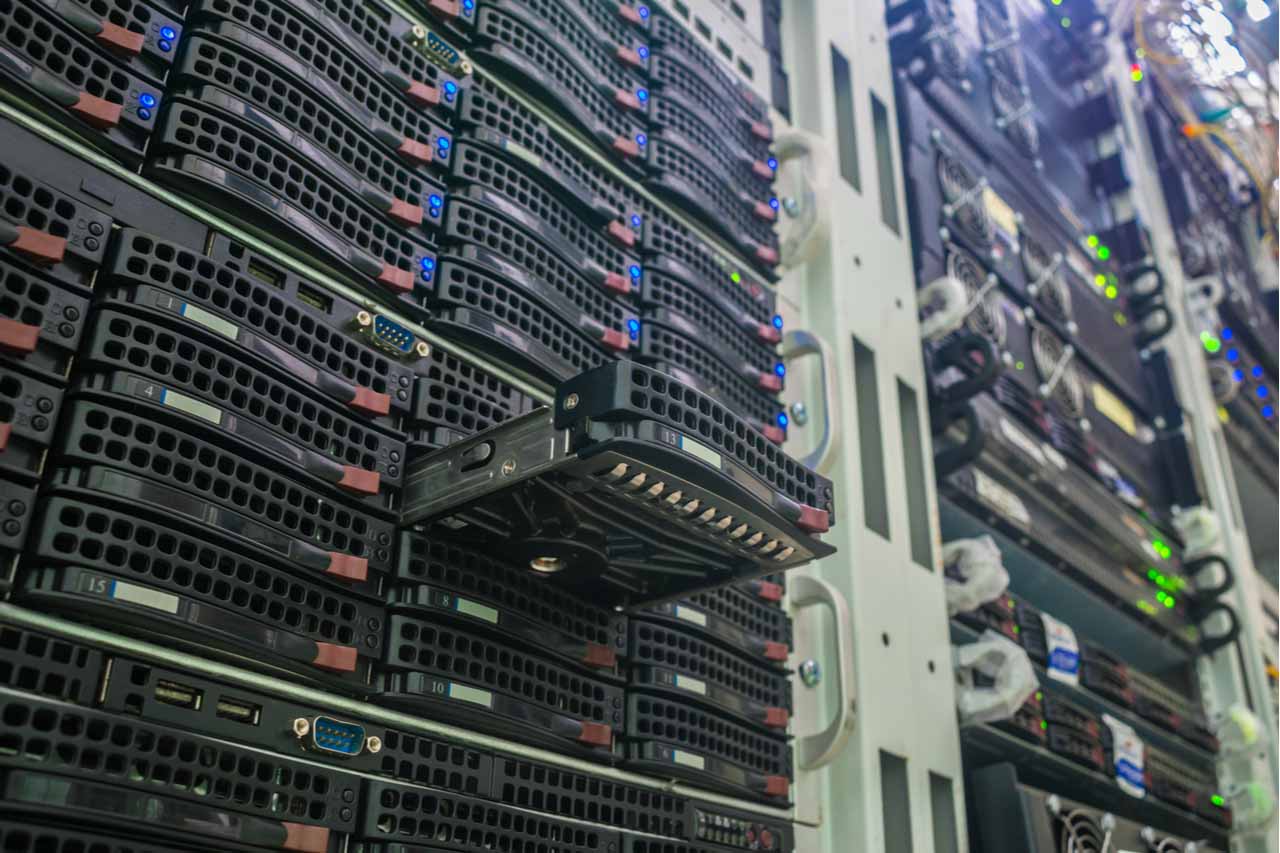
Component shortages are prompting Google and Microsoft to keep data center hardware in service longer, while some equipment previously destined for resale is now being sought again by its original owners.
Speaking at the E-Scrap Conference on Oct. 27, Lynn Jacobs of Sims Lifecycle Services said the market for refurbished components has changed considerably in less than a year. Shortages of memory, storage devices and other hardware are making replacement more difficult, prompting data center operators to reconsider equipment they would previously have retired.
“If you asked us the same question probably 10 months ago, we’d have been in a totally different situation,” Jacobs said during a panel about circular data centers.
For IT asset disposition (ITAD) companies and electronics recyclers, the change could affect how much equipment becomes available through conventional refresh cycles. At the same time, hyperscalers need more support refurbishing components they intend to keep.
Shortages change replacement calculation
Yara Barkopoulos of Google said the company historically favored newer technology, regularly refreshing its infrastructure and sending older equipment into remarketing channels. That approach is changing as Google expands its operations and has trouble obtaining replacement components.
Some older parts are no longer manufactured, making refurbishment necessary to keep existing systems operating. Barkopoulos said the practice has long been common in other segments of the IT industry but has not always been widely adopted at the hyperscale data center level.
“Now that we cannot acquire assets as easily as we had in the past, and we’re expanding our business, we’re really looking at ways how we can refurbish our inventory instead of retiring it,” Barkopoulos said.
Jacobs described similar changes among Sims’ hyperscale customers. Components previously headed for external markets are now being requested back as operators look for alternatives to buying new equipment.
Refurbishment can also offer substantial savings. Jacobs said recovered components can be returned to customers at a lower cost than new hardware, especially when processing can be performed at scale.
Sanyukta Saptasagar of Microsoft explained that the company first considers whether retired components can be reused within its own infrastructure. If internal demand is insufficient, Microsoft looks for external buyers. Recycling follows when neither option is viable.
Finding a suitable application is not always straightforward. Equipment must meet performance requirements and be compatible with the infrastructure where it will operate. The timing of its availability must also coincide with demand.
Jacobs compared the decommissioning process to assembling Lego pieces. Retired equipment arrives in inconsistent quantities and configurations, often at times that do not correspond with customer needs. That makes refurbishment planning more difficult than working with new equipment ordered to specification.
AI hardware finds second lives
The expansion of artificial intelligence infrastructure is making equipment lifecycles harder to predict. Saptasagar said newer AI technology could shorten the initial deployment of some components, although the equipment might remain useful for years afterward. A GPU removed from a demanding training environment, for example, could continue operating in inference applications or other workloads requiring less computing power.
Barkopoulos said Google sees similar possibilities for moving components between applications within its infrastructure.
Jacobs pointed to neocloud providers as another source of demand for used computing equipment. These companies can use hardware that no longer meets the requirements of the largest hyperscalers, extending its working life beyond the original deployment.
Sims is receiving requests for complete racks as well as systems assembled from refurbished components. Jacobs said some customers can reuse equipment in its existing configuration, while others need racks rebuilt around particular technical requirements.
Much of the newest AI hardware, however, has not yet reached the end of its first useful life. Jacobs said many GPUs handled by Sims are being returned to their original customers because the equipment remains valuable and demand is strong.
The industry has therefore seen little of the eventual retirement volume from today’s AI infrastructure.
Equipment becomes a theft target
Higher equipment values have also changed the risks of transporting retired hardware.
Jacobs said shipments of secondhand IT equipment attracted relatively little attention from thieves five years ago. Today, some loads have become attractive targets because of the components’ value.
Sims has increased shipment tracking and security measures in response. Jacobs said insurance- and theft-related expenses have risen, adding to the higher freight costs already affecting the business.
The additional precautions reflect a market in which used server components can be valuable enough to justify more extensive protection during transportation.
Custom hardware limits reuse
Even when equipment remains functional, finding another application can be difficult. Barkopoulos said some data center components are custom-built for individual companies, limiting the potential for resale.
She suggested that greater use of standardized components could improve future reuse opportunities, although customized hardware remains necessary when commercial alternatives cannot meet technical requirements.
Some devices can still yield usable parts even when the complete product cannot be remarketed. Barkopoulos described recovering components and materials from inside solid-state drives that are unsuitable for reuse as complete devices.
Jacobs also noted that the uneven supply of retired equipment complicates recovery. A refurbishment operation might have demand for a particular component but lack sufficient quantities of compatible hardware when the customer needs it.
Data security remains central
The growing value of used storage equipment is prompting companies to reconsider when physical destruction is necessary.
Barkopoulos described Google’s internally developed sanitization process for hard drives removed from its data centers. Drives that pass the process can be evaluated for internal reuse or external remarketing. Those that cannot be securely sanitized are shredded at the data center.
Jacobs said some customers have historically required destruction of data-bearing equipment because it was considered the safest approach. Improved sanitization procedures and more reliable asset tracking are helping companies become comfortable with reuse when security requirements can be met.
She also pointed to the importance of auditable chains of custody, particularly for customers that need assurance that their information has been securely removed.
Microsoft is pursuing additional recovery opportunities for storage devices that must be destroyed. Saptasagar said the company is working to scale the recovery of valuable materials from shredded hard disk drives, including rare-earth materials used in drive magnets.
Export restrictions raise questions
Audience questions turned to export controls and concerns about whether traditional international resale channels will remain available for high-value computing equipment.
Barkopoulos said Google is interested in keeping recovered raw materials within the United States when possible. Processing materials domestically can reduce the need to ship them overseas and return them to the country for reuse.
Saptasagar acknowledged the attention being given to supply chain resilience but offered no prediction about future restrictions.
Jacobs said Sims is seeing many GPUs returned to their original customers, with equipment generally remaining in the country where it originated. Because much of the current AI hardware remains in its first deployment, the industry has yet to see how export restrictions will affect disposition when larger volumes reach retirement.
Outside partners remain important
Google and Microsoft have invested in their own equipment recovery operations, but both companies said outside ITAD providers remain important to their programs.
Barkopoulos said Google works with external partners to remarket or recycle equipment that cannot be reused internally or returned to manufacturers. The company generally prefers to process recyclable materials in the countries where they originate.
Microsoft operates circular centers in the United States, Europe, the Middle East and Africa, and Asia-Pacific. Saptasagar said these facilities help the company process retired equipment and determine whether components can be returned to service.
Microsoft also relies on outside ITAD providers for remarketing and resale, particularly in countries where it does not operate its own circular centers.
Jacobs said hyperscalers’ rapid infrastructure expansion is keeping their internal teams focused on building capacity. Outside providers continue to support equipment recovery and refurbishment as those operations grow.
The companies described an approach that combines internal processing with third-party services, with the division of work depending partly on geography and available capacity.
Outlook
Component shortages are extending the lives of some data center assets at a time when AI investment is expanding the installed base of computing equipment. Hardware removed from one application can increasingly be used elsewhere, making the timing of future retirements less predictable.
For ITAD providers, the immediate demand is shifting toward refurbishment and returning equipment to its original owners. Electronics recyclers face a less certain timetable for material recovery, particularly from AI systems that have yet to complete their first deployment. How long operators continue retaining those systems will influence the volume and value of equipment eventually reaching the market.