

Alphabet is spending billions on servers and networking equipment while expanding sales of its AI computing systems to customers operating their own data centers. Its third-quarter disclosures detail a growing hardware investment and an external sales business expected to accelerate in 2027.
Chief Financial Officer Anat Ashkenazi said capital expenditures reached $51.4 billion in the third quarter of 2026, with most directed toward technical infrastructure. Servers and networking equipment accounted for about 65% of infrastructure investment, with data centers making up the balance.
Alphabet maintained its full-year capex guidance of $195 billion to $205 billion. Spending is expected to increase significantly in 2027, Ashkenazi said, with details due on the fourth-quarter earnings call. She also flagged higher depreciation and data center operating costs, including energy, as continuing pressures on earnings.
Depreciation meets faster processors
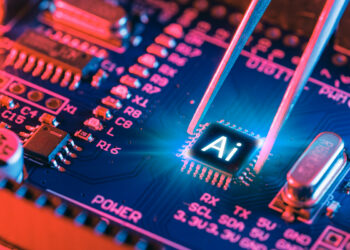
Ashkenazi said Alphabet depreciates servers and networking equipment over six years. Meanwhile, Google is reporting substantial performance gains between generations of its tensor processing units, or TPUs, specialized processors designed for AI workloads.
Google Cloud CEO Thomas Kurian said TPU 8t delivers up to 2.7 times better training performance, while TPU 8i offers 80% better inference price-performance than the previous generation. Those improvements put the competitiveness of earlier systems under closer scrutiny, particularly in installations where power costs and available capacity influence hardware selection.
Processors extend hardware footprint
Google is supplying TPU systems for customer data centers and expanding distribution through Oracle and Crux AI, a venture involving Blackstone. Kurian identified demand from AI developers and financial firms, among other customers, extending the hardware’s reach across organizations with different procurement and operating arrangements.
The products are complete systems incorporating storage and networking, supported by optimized software. Their integrated architecture makes software availability and support after transfer important to future remarketing prospects. External deployments also make customer contracts a useful focus for tracking who will control equipment recovery.
Ashkenazi distinguished the TPU sales business from Alphabet’s own infrastructure investment. Google builds inventory ahead of delivery, with cash returning as customers are billed. Kurian said component procurement follows signed contracts, tying that inventory to committed customers.
The company expects TPU system sales to continue scaling in the fourth quarter, followed by a meaningful revenue increase in 2027. That growth would place more Google-designed equipment in customer and partner facilities, adding an external fleet to follow alongside Alphabet’s own infrastructure.
A growing external fleet
The fourth-quarter earnings call should establish the scale of Alphabet’s 2027 spending plans. CEO Sundar Pichai also described strong demand for TPU systems across a range of customers, supporting continued expansion of the external hardware business.
For disposition planning, that external fleet deserves attention alongside Google’s own equipment releases. Its expansion could broaden the customer base for specialized AI hardware recovery, with remarketing opportunities shaped by support arrangements and the transfer provisions attached to system sales.