




Editor’s note: Electronics recycling will be featured in sessions at the 2026 E-Scrap: The Longevity Conference in New Orleans October 26-28.
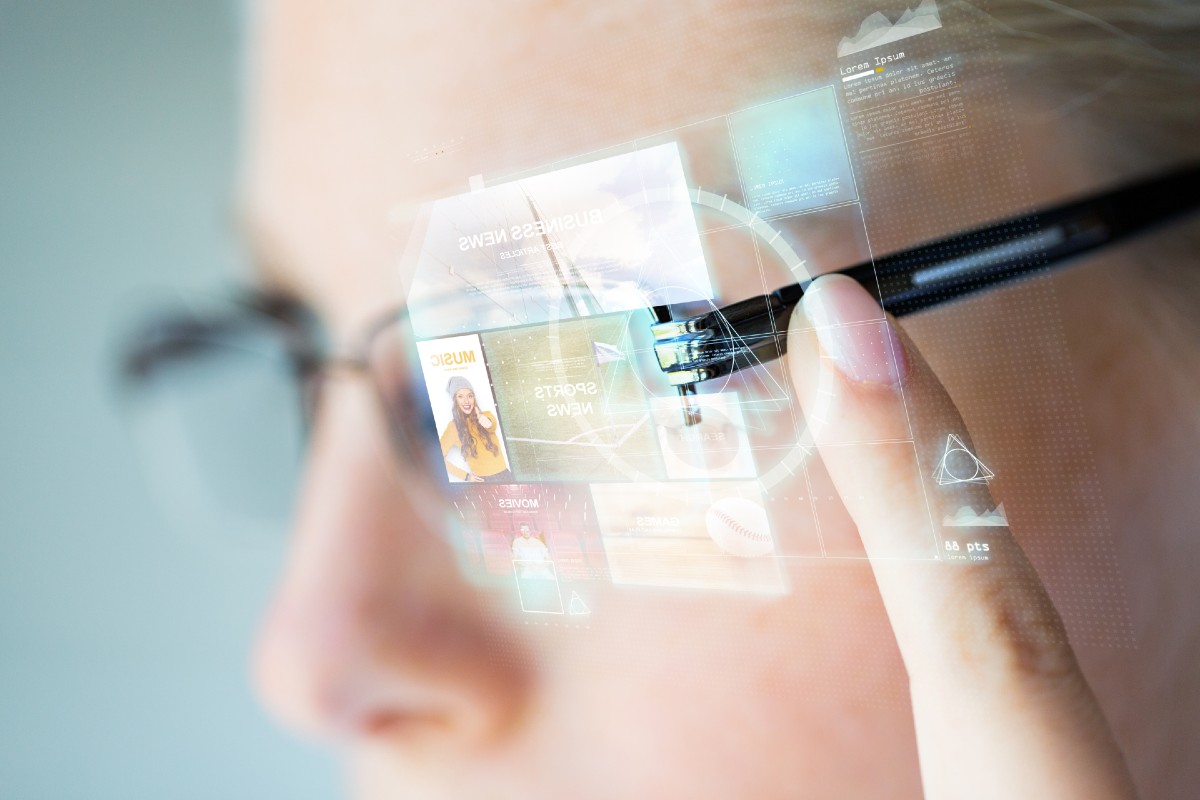
Amazon is preparing to put cameras on the faces of thousands of delivery drivers. Its Smart Delivery Glasses use cameras, computer vision and AI to guide delivery associates, scan packages and document deliveries. The system includes a controller worn in the driver’s vest with a swappable battery. Amazon expects more than 20,000 of the devices to be in the field by the end of 2027.
The volume is still small compared with laptops and phones, but the data question is not. A Bloomberg Opinion column reported that the glasses could make several thousand captures during a typical driver’s shift, with images uploaded to Amazon’s Wellspring platform. Those captures can include customers, homes and other people encountered along a delivery route. Eventually those glasses will be replaced, repaired or retired. What happens then?
I use connected sensing devices to describe hardware that captures information about people or their surroundings and transmits it to other systems. That information may include images and audio, as well as location, biometric or environmental data. Smart glasses fit that definition. So do smart rings, fleet cameras and industrial wearables.
For end-of-life purposes, these devices share several characteristics. They handle data and run on batteries. Their residual value can also be uncertain.
Today’s connected sensing devices are still a small end-of-life stream by volume. But they are early examples of a much larger class of hardware to hit the market, and ITAD and electronics recycling do not yet have established processes for every category.
Commercial deployments are already here
Amazon is the clearest example, but it is not alone. As of May, five Domino’s franchise operators had equipped more than 1,000 delivery vehicles with Netradyne’s AI video and telematics technology. RPM Pizza alone had installed more than 600 of Netradyne’s dual-facing Driver•i D-215 fleet cameras. Its drivers use their personal vehicles, so Netradyne and RPM developed a removable suction-cup mounting system powered through the vehicle’s 12V outlet.
MTM Transit has deployed Motive’s dual-facing AI dashcams across a fleet of more than 1,500 passenger vehicles. In a Motive case study, MTM’s senior director of maintenance called the devices plug-and-play and said his team got installation in Denver down to about 15 minutes per vehicle.
Industrial deployments are developing as well. AcuraFlow reported this year that it had deployed more than 900 Vuzix smart glasses across its North American customer network.
These applications differ, but the devices have something important in common for ITAD. They are deployed and managed separately from the larger equipment around them. They can be removed and reassigned, then eventually retired in batches.
Electronics built into vehicles raise similar data questions but normally leave service through automotive salvage channels and are a separate topic.
Erasure exists, but disposition raises another question
While I initially thought data sanitization would be the obvious weak point, research changed my view. Major wearable manufacturers do provide erasure procedures. Apple Watch supports remote erase through enterprise mobile device management. Apple says MDM unenrollment can unpair, reset and erase a managed watch. A watch can also be erased without its paired iPhone, but doing so leaves Activation Lock in place. That creates a practical difference between an enterprise-managed fleet and an individual device arriving without its original account or phone.
Google documents factory resets for Wear OS watches, and Samsung does the same for Galaxy Watches. Ray-Ban says a factory reset of Meta glasses permanently erases captures and associations between the glasses and the user’s Meta account.
The existence of a reset procedure does not settle the disposition question. NIST’s current media-sanitization guidance recognizes a manufacturer factory reset as a possible Clear method for devices with embedded storage when rewriting is not supported. Clear and Purge are separate sanitization methods, a distinction that is important when media will leave organizational control. NIST also emphasizes validation and a documented sanitization program.
An ITAD provider receiving a homogeneous fleet of managed Apple Watches may therefore have a workable path. A mixed load of glasses, rings, cameras and wearables from several manufacturers presents a different problem.
Can the provider determine what each device stores? Can account and activation relationships be cleared without the original user? Can the appropriate sanitization method be performed at scale and the result documented?
Those questions are more useful than assuming the devices cannot be erased.
A service shutdown can retire working hardware
Connected devices introduce another end-of-life trigger. The service behind the hardware can disappear.
Humane’s Ai Pin provides a clean example. Humane shut down its consumer Ai Pin service on Feb. 28, 2025. The hardware stopped connecting to Humane’s servers and lost its principal cloud-dependent functions, including AI queries, calls and messaging. Humane offered no trade-in or replacement program and encouraged owners to recycle the devices through e-waste programs. Refunds were available to customers whose devices had shipped on or after Nov. 15, 2024. The hardware did not suddenly wear out. The business changed.
For connected sensing devices, a business event can therefore trigger end of life before physical failure. A service shutdown can affect an installed population at once instead of individual devices retiring gradually. It can also reduce reuse options while leaving owners responsible for the physical hardware.
The economics differ by product. Apple operates a trade-in program for eligible Apple Watches, while devices without trade-in value can be recycled. Oura pays shipping for its Ring recycling program but provides no trade-in value for devices returned through it.
Connected sensing devices therefore cannot be classified broadly as negative-value e-scrap. Some retain meaningful reuse value. Others may reach recycling with little residual value after support ends. Better recycler-level data are still needed to determine where that crossover occurs.
Consumer devices create a collection problem
For recyclers, batteries may be the more immediate concern. EPA has documented the cost of lithium-ion battery fires in waste and recycling facilities. The consequences have included major property losses and operational disruption, along with higher insurance costs.
The available evidence does not show that watches, rings or smart glasses account for a significant share of those fires today. Millions of additional small battery-powered products, however, eventually have to enter a collection system somewhere.
The policy treatment varies by jurisdiction. The EU’s WEEE framework has operated under open scope since 2018, and EU battery rules apply to batteries incorporated into products.
US programs are less uniform. Washington’s and Oregon’s programs cover defined lists of products such as computers, TVs and tablets; wearables are not on them, even after Oregon expanded its list this year. California has moved in another direction. Beginning in 2026, its program explicitly covers many battery-embedded products.
The practical issue differs from one jurisdiction to another. Some programs already provide a framework for these products. Elsewhere, product definitions written around earlier generations of electronics may leave gaps.
The five-to-10-year outlook
I expect connected sensing devices to spread well beyond today’s watches, rings and smart glasses. IDC forecasts 13.6 million smart glasses will ship globally in 2026, an increase of 41.4% from 2025. By 2030, it expects annual shipments to reach 27.3 million. Smart-ring shipments are forecast at 4.9 million this year and 6.3 million in 2030.
Smartwatches provide a useful counterpoint. IDC forecasts 159.7 million units in 2026, but that would represent a 2.8% decline for the year. The largest established sensing-device category is not growing at the same rate as smart glasses.
Meta has announced its Muse Charm, a physical interface for its Muse agent. OpenAI has confirmed that it is developing hardware, although a court filing says its first device will not ship before the end of February 2027.
Medical devices show how far the asset universe could extend. Houston Methodist uses BioButton wearable sensors across all 2,653 non-ICU beds at its eight hospitals.
A rechargeable, reusable multi-patient version has also received FDA clearance. Medical devices typically move through specialized biomedical channels, but reusable sensing hardware of this kind shows that devices carrying regulated health data can return for another use.
My concern is that the disposition industry may be preparing for more of the hardware it already knows while the mix of hardware itself is changing.
The technical outlines of the problem are becoming clear and what is not yet known is whether ITAD executives, recyclers and the enterprises deploying these devices recognize it. Are connected sensing devices being treated as data-bearing assets or as small e-scrap? Are enterprise buyers considering disposition when they put these devices into the field?