





Pipe maker and recycler Advanced Drainage Systems (ADS) bought 388 million pounds of recycled plastic in fiscal 2026, representing 38% of its total resin purchases – the lowest share in five years.
In its most recent sustainability report, the company cited a “particularly economically challenging year for ADS recycled material given the state of virgin resin pricing.” Still, ADS said it aims to buy 1 billion pounds of recycled material per year by fiscal 2032, “and we expect to see improved performance against our goal in Fiscal 2027.”
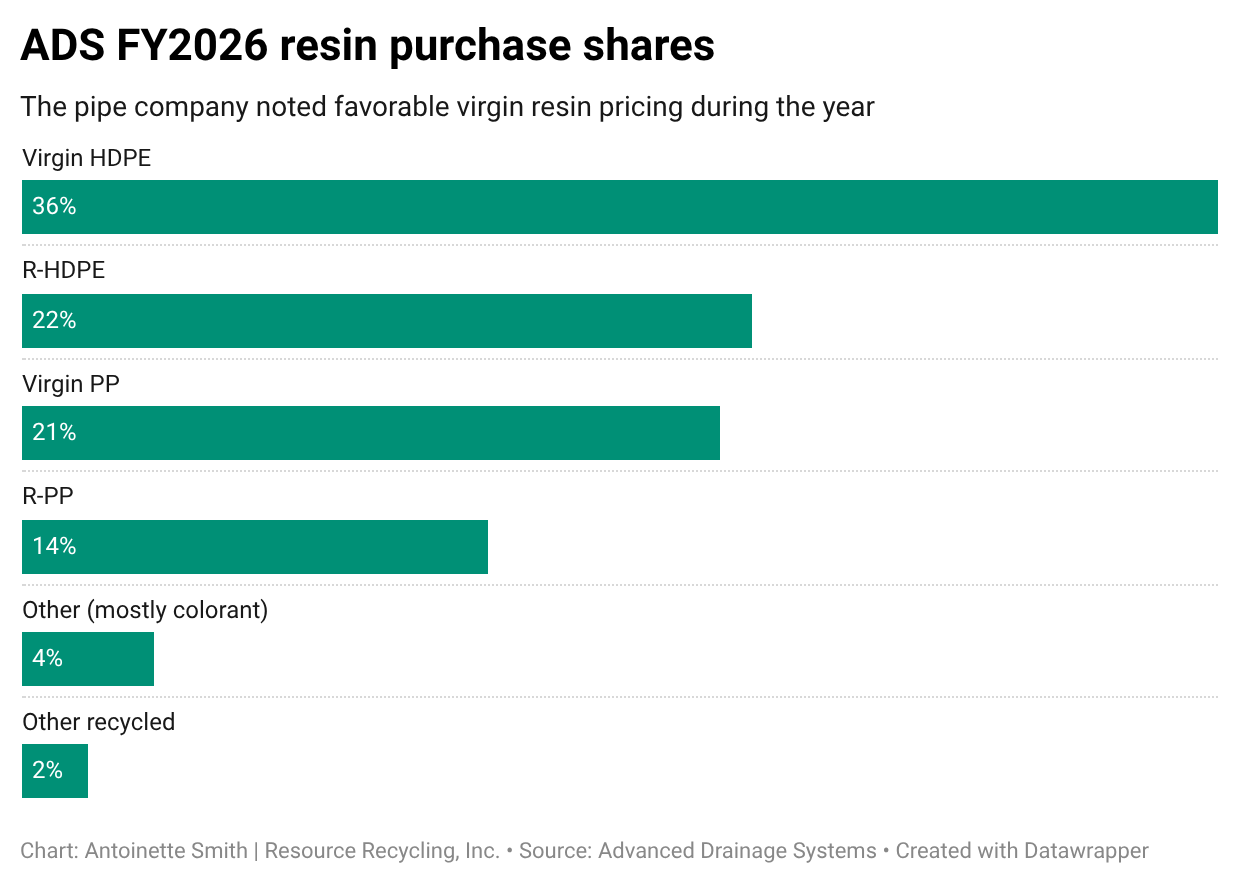
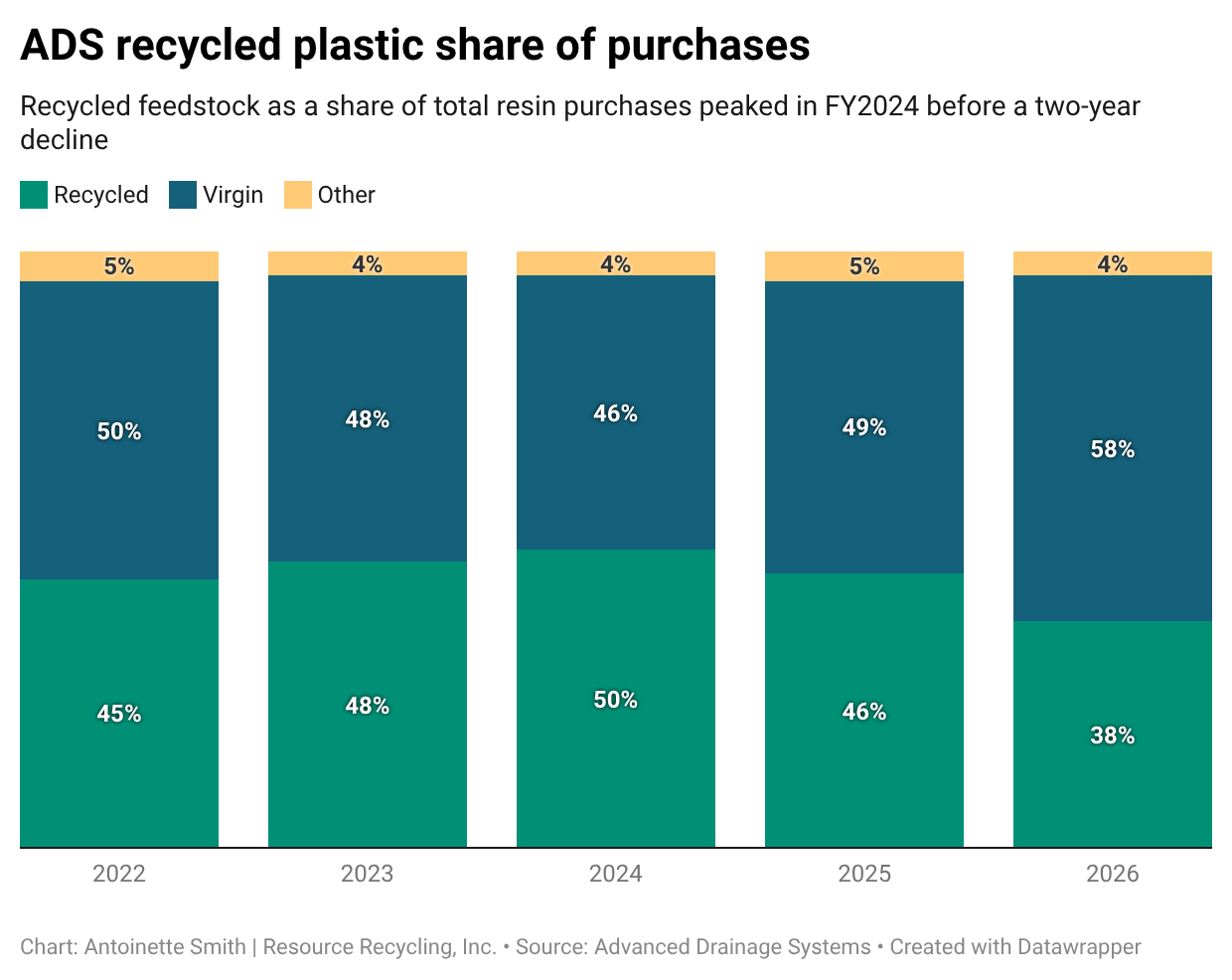
In comparison, ADS bought 540 million pounds of recycled material in fiscal 2025, for 46% of its purchases.
Although the 2026 report did not quantify the “improved performance,” during the two most recent investor updates, ADS executives noted that the June ramp-up of a $30 million recycling plant expansion in Cordele, Georgia, has helped to offset the war-driven price spikes in virgin resin.
Recycling activity ‘bears a lot of fruit’
In May during the company’s full-year fiscal 2026 update, and a month before the expected ramp-up of the expansion, CFO Scott Cottrill called out the “magnitude and breadth and speed” of price increases for virgin polyolefins.
To help mitigate the rapid run-up in pricing, ADS leveraged its buying power in the virgin market to get the best possible pricing, as well as “pivoting to the recycled material quite quickly over the last 60 days, honestly, faster than I thought we could.”
Cottrill added, “So our timing couldn’t be better on this recycling activity.” He acknowledged that fiscal 2026 “was a much more friendly virgin resin market for us. So you saw us toggle a little bit more towards the virgin and [away from] the recycled side of the house. What you see us now doing is toggling back to the recycled resin.”
The Georgia expansion comes amid an emphasis on creating agile supply chains, on both a small and a large scale. In addition to providing the flexibility of using the most cost-effective raw materials, the “significant expansion” in the company’s recycling capacity puts vertically integrated production closer to other ADS facilities in the Southeast, Cottrill said.
During the same May call, CEO Scott Barbour said, “This recycling activity for us is a long-term operational component of the company. It really bears a lot of fruit in these inflationary times like this and mitigates a lot of cost. And so we’re flexing that pretty hard.”
And during an August investor call, Barbour reiterated that the company is “pivoting to get to 50% recycled [purchases] again or as fast as we can go.” The share of recycled resin peaked at 50% in fiscal 2024. (ADS fiscal years end each March 31.)
Purchasing power
ADS is the largest buyer of post-consumer color HDPE bales, and the report said the company is responsible for about 30% of US color HDPE bale purchases. ADS internally reprocesses 57% of the recycled plastics it consumes, the report noted, with other recycling partners providing the remaining share.
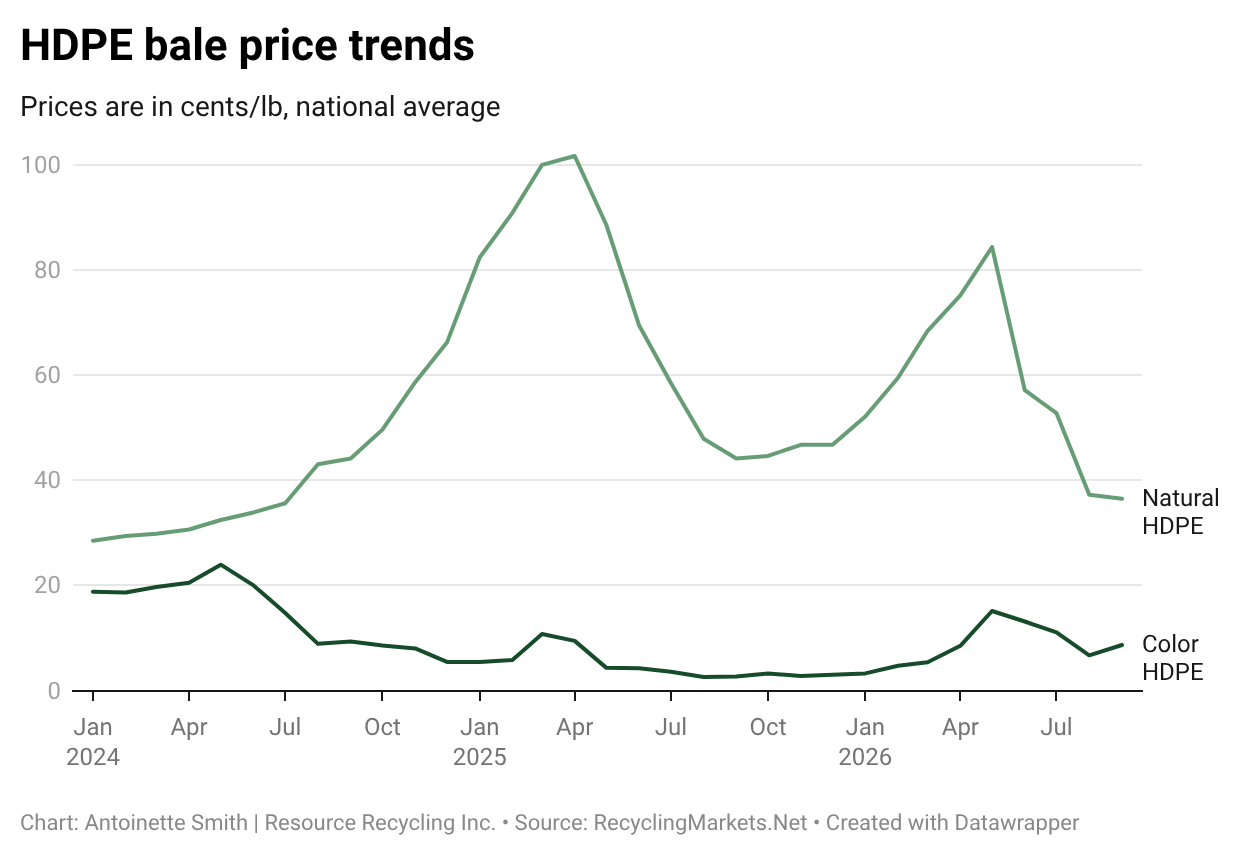
In late spring and early summer, US pricing for color HDPE bales spiked, along with virgin PE prices responding to severe supply constraints relating to the US-Israel war in Iran.
At the same time, ADS was preparing to ramp up its new capacity in Georgia, which was expected to begin in June.
May bale prices were at a national average of 15.38 cents/lb, nearly double the prior month, according to RecyclingMarkets.Net data, and remained at 11-13 cents/lb in June and July, before dropping by 42% in August.
In contrast, natural HDPE bales spiked in March-May with the onset of the war and then eased by 33% in June, tracking virgin PE pricing trends.
The color HDPE bale market contains only a handful of buyers, and tends to be more seasonal than its natural-color counterpart. So a major buyer ramping up purchases ahead of new capacity can have a significant effect on pricing in the short term.
In addition, revenue share from “remanufactured products,” containing recycled plastic, has been dropping each year since fiscal 2022. That year remanufactured products reached 57.2% of total revenue, and in fiscal 2026 they sank to 46.8%.
The primary reason for the decrease in the remanufactured product line is the growing share of sales of HP pipe, a polypropylene-based product that cannot contain recycled material due to regulatory standards. The company’s political action committee (PAC) supports candidates who back objectives including encouraging the use of recycled materials.
ADS also maintains a relationship with The Recycling Partnership to help increase equitable access to recycling while ADS provides a responsible end market.