




For global packaging and recycling company ALPLA, designing a recyclable package now starts well before the package even exists — with the initial customer price quote.
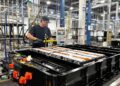
Based near Atlanta, Jonathan Dineen leads the ALPLA North American design team, known internally as the “studio A-team” – invoking the image of an ambitious, motivated group of experts assembled to solve complex problems.
“We basically do everything from front-end to conceptual design work,” said Dineen, head of design and innovation for North America at ALPLA, during an interview. “I myself am an industrial designer by background, so concept design is near and dear to my heart, as well as the other part of my title, which is innovation.”
His team’s work includes reverse engineering, design for manufacturing, design optimization, and modeling and simulation to test and analyze product design ahead of a pilot or actual production, he said.
Still, “a lot of [product development] happens almost before our designers really get involved,” he said. “A lot of it really dials down to the business case,” starting with the pricing in the initial customer quote, which considers the appropriate resins for the product specifications.
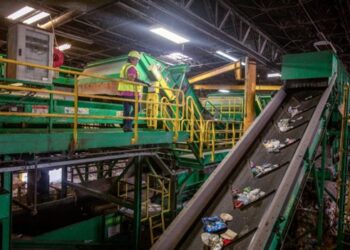
That’s why involving the entire packaging value chain – designers, engineers, color houses, resin suppliers, MRFs and even the end user – is vital to creating a truly circular economy, he said.
Recyclability moves to forefront of design
Having detailed discussions and exploring the factors influencing pre-design decisions can help inform package design within sustainability metrics. “Understanding that psychology” helps designers determine what they can change about the packaging – color, labels, potential shifts in messaging – and how.
Historically packaging design has treated recyclability as an afterthought, he said. But with increasing sustainability requirements, “we bring the conversation up front,” he said. For example, during the design-quote process, “we ask more and better questions about the full package,” including labels and closures.
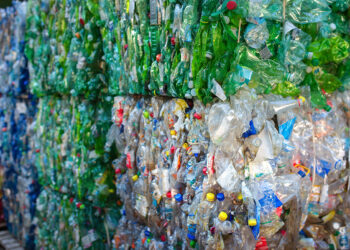
As an example, Dineen pointed to the switch from green Sprite beverage bottles to clear PET to increase availability of higher-quality post-consumer material. Another example is sorting technology innovations that developed to better identify and separate black plastics, which have historically challenged optical sorters.
Designing a full package system – the ideal scenario – allows ALPLA to control more of the decisions required to ensure recyclability, he said. But even without control over the whole process, the company aims to conduct discussions earlier with customers, “because sometimes they make decisions that are out of our hands.”
For example, if ALPLA designs and produces a bottle, the customer may then use a label from another producer that complicates whole-package recyclability. And ultimately consumers blame the brand, and the brand blames the packager, he said. “So asking the right question, shifting everything to the very front end of the design process,” discussing potential issues earlier and with more stakeholders – resin suppliers, MRFs, colorant suppliers – is vital, he said.
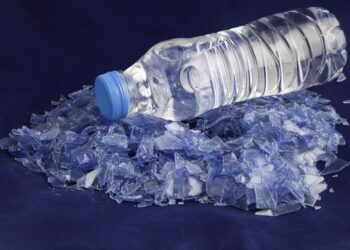
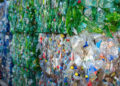
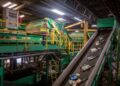
Closing that loop also is leading ALPLA to build out its own recycling capacity. The company runs PET and HDPE mechanical recycling operations in all regions to help feed its own production of plastic packaging. Including locations in Mexico, South America, Asia, Europe, the Middle East and Africa, the company has a global recycling capacity of about 400,000 metric tons (mt) a year and plans to expand to 700,000 mt/year by 2030.
In 2025, 23.7% of the company’s plastic feedstock was sourced from post-consumer material, according to its sustainability report. Although the total was just shy of the 2025 target of 25%, 26.7% of total PET volumes were RPET, and RHDPE represented 22.8% of the company’s HDPE purchases. In the same report, ALPLA extended its goal to 30% PCR share by 2030.
Dineen acknowledged the challenge of “trying to just appease the sheer volume” of PCR needed. “I think that’s why a lot of these companies like us or even our brand-owner customers have walked back some of their goals, whether it’s publicly or silently – because we didn’t realize the difficulty or the nature of the beast that was really being asked,” he said.
Even so, he pointed out that despite the disconnect between the industry’s original voluntary targets and the market realities, such aspirational goals “are meant to stretch and push us.”
Up all night
Making sure his team is focusing on the big picture is always a top concern, he said. “That’s one of the things that keeps me up at night: How do we get a better, wider lens of understanding? Because I feel like everybody is trying. I really do feel people are trying to make the right decisions.”
Developing more sustainable packaging – say, lightweighting a plastic bottle – has knock-on effects. Will the new packaging design affect the way filled bottles are loaded onto a pallet, potentially resulting in fewer bottles being loaded onto a truck?
“You may be thinking you’re making one sustainable decision without even realizing something so simple as ‘now I’m putting more trucks on the road,’ which increases carbon emissions and your carbon footprint.” So creating a bigger bottle could actually be the best option, he said.
Flexible packaging is another challenge. Multi-material formats may have been selected originally to meet product shelf-life requirements, so a single-material option could increase food waste. Motor oil packaging presents yet another challenge, he said, with its unsuitability with traditional mechanical recycling systems.
“We have to keep chugging away and ideating and innovating to try and come up with other options to solve problems in those areas,” Dineen said.