





Resource Recycling
  • The Latest
  • Podcast
  • Analysis
    • All
    • Certification Scorecard
    • Industry Announcements
    • Opinion
    Partnership ups quality control on device-sales platform

    Certification scorecard — Week of November 23

    Safe disposal of household hazardous waste

    E-scrap feedstock competition mixed amid investments

    Open pit copper mine in Arizona.

    Trump touts aggressive US critical mineral goals

    From claims to custody: PCR procurement grows up

    Certification scorecard — week of Nov. 16

    Adam Gendell

    PET producers ride ‘local for local’ wave

  • Conferences
    • Resource Recycling Conference
    • Plastics Recycling Conference
    • E-Scrap: The Longevity Conference
    • Textiles Recovery Summit
  • Publications
    • E-Scrap News
    • Plastics Recycling Update
    • Policy Now
    • Resource Recycling
    • Other Topics
      • All Topics
      • Brand Owners
      • Critical Minerals
      • Glass
      • Grant Watch / RFPs
      • Markets
      • Organics
      • Packaging
      • Research
      • Technology
      • Textiles
Subscribe
No Result
View All Result
Resource Recycling
No Result
View All Result
Home Plastics

Newsom nixes recycled content claims bill

Antoinette SmithbyAntoinette Smith
September 28, 2026
in Plastics, Policy Now, Recycling
Newsom nixes recycled content claims bill

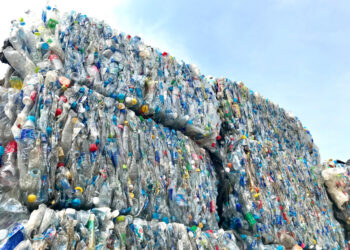
SnapASkyline / Shutterstock

California Gov. Gavin Newsom has vetoed a bill that would have tightened standards for recycled content claims for products including plastic food containers. 

Sponsored by Californians Against Waste (CAW), AB 2253 was opposed by packaging groups including the American Institute for Packaging and the Environment (Ameripen) and the American Beverage Association. Both chambers of the state legislature passed the bill in August, with roughly twice as many yes votes as no each time. 

In his veto memo, Newsom wrote: “I share the author’s goal of ensuring that environmental marketing claims are accurate and that consumers can trust the products they buy. However, I am concerned that expanding these documentation requirements will unduly burden manufacturers and suppliers already facing economic headwinds caused by federal tariff and trade policy actions. Adding new, complex compliance requirements at this time risks compounding those pressures, with little benefit to consumers.”

In a press release, Assemblymember Tasha Boerner (D-San Diego), who advanced the bill, said: “People believe businesses are being honest about their products, oftentimes paying more for sustainable products because they align with their values. However, businesses are lying about the recycled content in their products, frequently buying recycling credits and falsely claiming that their product has ‘100% recycled content.’ Consumers deserve honest information. Our planet and consumers cannot afford environmental deception.”

Kayla Robinson, legislative director of CAW, said in a statement: “It’s disappointing that California is passing up an opportunity to bring basic truth and accountability to recycled-content claims. Consumers deserve to know whether the products they buy actually contain recycled material, not whether a company has purchased credits or relied on an accounting scheme. We will continue working to ensure that ‘made with recycled content’ means what Californians reasonably expect it to mean.”

The bill would have expanded the existing requirements for plastic food containers to all products that make recycled content claims. In addition, the bill would require claims to state the actual recycled content, using methodologies including an identity-preserved, segregated model; a controlled blending model; a rolling average percentage method; or proportional attribution that aligns with ISO standards.

“Californians deserve to know exactly what we are buying so we can make informed decisions. When companies misrepresent their products or deceptively market their recycling efforts, consumers cannot trust sustainability claims. AB 2253 ensures consumers can support real sustainability if they choose to, and helps restore trust to product labels,” Boerner said in an Aug. 31 press release, when the bill headed to Newsom’s desk. 

Ameripen, however, praised the action. Lynn Dyer, president of the industry association, said in a statement: “AMERIPEN appreciates Governor Newsom’s thoughtful decision to veto AB 2253. We share the Governor and Assemblymember Boerner’s goal of ensuring that recycled-content claims are accurate and that consumers can trust the information they see. AMERIPEN supports the use of verifiable accounting methods for recycled content allocation and reporting and also looks to a federal framework for on-package claims. On-package recycled content claims are already covered under the Federal Trade Commission’s “Green Guides,” and this bill would have put California law at odds with the federal guidance, creating unnecessary state-specific complexity.” 

The California Legislature can override a governor’s veto with a two-thirds majority vote in both chambers, but it must do so before the two-year legislative session adjourns. But the legislature has not successfully overridden a gubernatorial veto since 1979, according to CalMatters.

Mass balance under the microscope

A bill analysis acknowledged that opponents say AB 2253 demonizes mass-balance accounting. In this method, manufacturers can “track the certified materials as they move along the value chain and attribute the inputs of a production process, like certified recycled plastic, to outputs of that production process through certified bookkeeping. Although the material’s physical features are mixed and cannot be told apart within the mix anymore, their sustainability and GHG emission data remain assigned to the batches of materials in the bookkeeping,” according to the International Sustainability & Carbon Certification (ISCC).

The analysis stated that the bill’s opponents felt “AB 2253 would eliminate a compliance tool that California’s own programs and the state’s international trading partners already rely on. The industries most affected, packaging manufacturers, food producers, material suppliers, and retailers, are not using mass balance to evade accountability. They are using it because these accounting systems are designed to match how manufacturing actually works. When materials are blended and inputs cannot be physically separated once mixed, the recycled content must be tracked across the production run rather than isolated in a single product. Accordingly, AB 2253 does not strengthen recycling. Instead, it creates a compliance wall that imposes enormous costs.” 

In a July column for Resource Recycling, consultant Bill Shireman echoed these sentiments. “Supporters of California’s AB 2253 want products labeled ‘recycled’ to contain physically traceable recycled material. At first glance, that sounds reasonable. But manufacturing systems do not work that way.”

He went on to say that recycled materials often are combined with other inputs, which is best captured using mass-balance accounting. “Without that accounting method, much of the recycled content becomes difficult or impossible to verify in a practical and affordable way. The result is predictable. Recycling becomes more expensive. Affordability is reduced. Investment becomes riskier. Less recycled material is used. The value of collected materials declines. Markets weaken. And more waste ends up on land, in the ocean, or exported to nations where labor and environmental standards are lax, at best. That is the opposite of what we want.”


Tags: CaliforniaLegislation & Enforcement
TweetShare
Antoinette Smith

Antoinette Smith

Antoinette Smith has covered commodity plastics and supply chains for more than a decade, with a special focus on economic impacts and consumer behavior. She brings a balanced, thoughtful view to recycling stories, and isn't afraid to ask "why?" Contact Antoinette at antoinette@resource-recycling.com.

Related Stories

Report on global e-scrap trade

E-scrap trade restrictions complicate processing, exports

byDavid Daoud
November 25, 2026

New restrictions on international shipments are encouraging domestic recycling investment while limiting overseas markets for discarded electronics and recovered materials.

The changing role of ITAD

The changing role of ITAD

byDavid Daoud
November 23, 2026

ITAD's boundaries are expanding as data-center decommissioning, governance moving closer to operations, materials-company interest, cross-border e-waste rules and AI-driven automation...

Northeast recycled commodity values hit 5-year lows

Washington fines producers $246K for recycled content shortfalls

byStefanie Valentic
November 20, 2026

Washington regulators fined 38 plastic producers a combined $246,548 for missing the state’s minimum postconsumer recycled content (PCR) requirements on...

Flexible film recycling presents promise, challenges

byPaul Lane
November 20, 2026

During a US Flexible Film Initiative webinar, players across the supply chain explored what more needs to be done to...

The AI tsunami

The AI tsunami

byJim Puckett
November 19, 2026

AI data centers and the devices they make obsolete could generate 8.6 to 13.1 million metric tons of e-waste a...

Thrift’s seat at the textile EPR table

byStefanie Valentic
November 19, 2026

Under California’s textile EPR law, every Goodwill in the state counts as a producer, even when new goods are under...

Load More
Next Post
Diversion Dynamics: Policy needed to reach full charge for vape recycling

Disposable vapes banned in California

2026 Buyers’ Guide

Equipment, services and technology suppliers serving the recycling industry.

Browse the Guide

More Posts

Closeup of PP with a chasing arrows recycling symbol.

PureCycle, WM sign rare 3-year bales contract

November 16, 2026

E-scrap feedstock competition mixed amid investments

November 19, 2026

Thrift’s seat at the textile EPR table

November 19, 2026
Northeast recycled commodity values hit 5-year lows

Washington fines producers $246K for recycled content shortfalls

November 20, 2026

Flexible film recycling presents promise, challenges

November 20, 2026
Open pit copper mine in Arizona.

Trump touts aggressive US critical mineral goals

November 19, 2026

Massachusetts town turns landfill into solar-plus-storage site

November 23, 2026
Solarcycle, Korea Zinc merge in critical mineral venture

Solarcycle, Korea Zinc merge in critical mineral venture

November 18, 2026
A call to action: End markets and EPR

Recycling policy moves toward implementation

November 19, 2026
Clarios-Ecobat deal consolidates battery plants

Clarios-Ecobat deal consolidates battery plants

November 20, 2026
Load More

About & Publications

About Us

Staff
Job Listings

Archive

Magazines

Work With Us

Advertise
Contact
Terms and Privacy

Newsletters

Get the latest recycling news and analysis delivered to your inbox every week. Stay ahead on industry trends, policy updates, and insights from programs, processors, and innovators.

Subscribe

Welcome Back!

Login to your account below

Forgotten Password?

Retrieve your password

Please enter your username or email address to reset your password.

Log In

Add New Playlist

No Result
View All Result
  • The Latest
  • Podcast
  • Analysis
  • Recycling
  • E-Scrap
  • Plastics
  • Policy Now
  • Conferences
    • E-Scrap Conference
    • Plastics Recycling Conference
    • Resource Recycling Conference
    • Textiles Recovery Summit
  • Magazines – Old
  • About Us
  • Advertise
  • Archive
  • Job Listings
  • Staff
Subscribe
This website uses cookies. By continuing to use this website you are giving consent to cookies being used. Visit our Privacy and Cookie Policy.