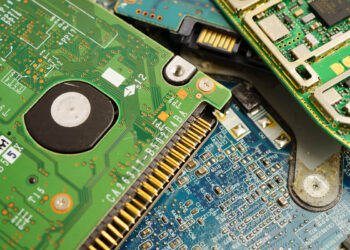





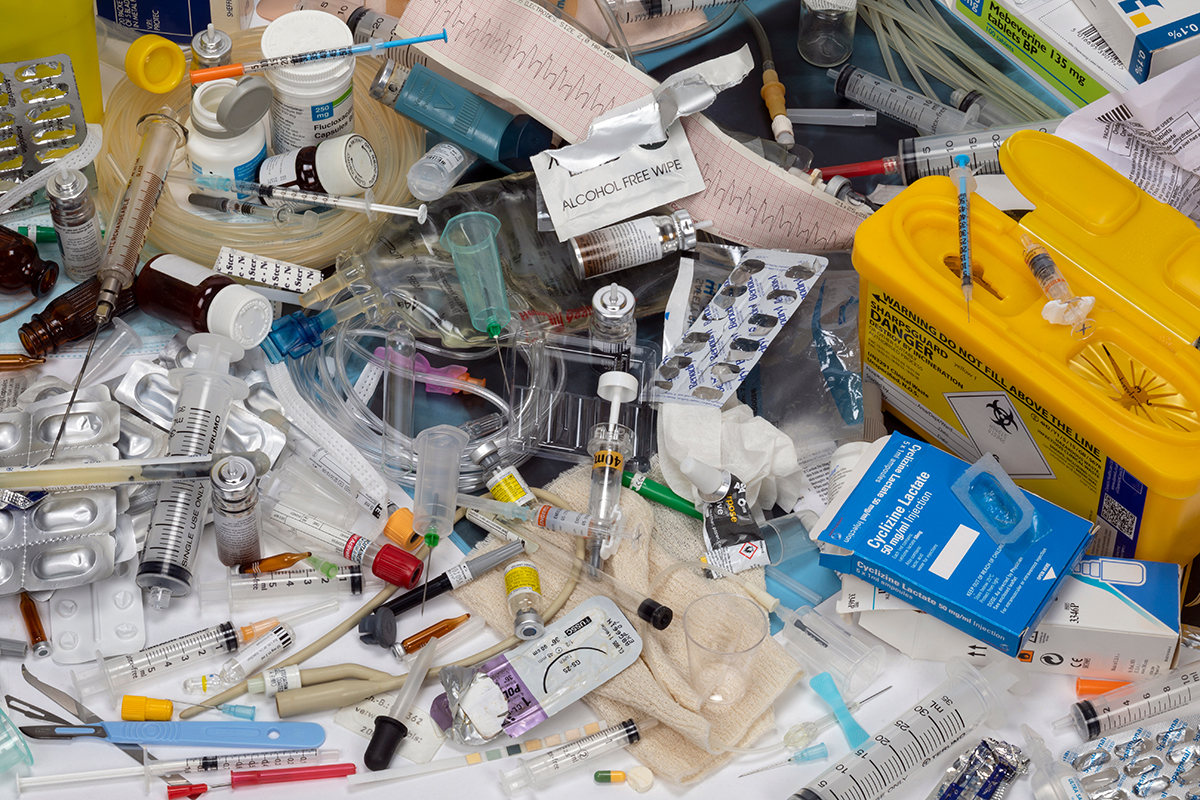
A new report out of Europe calls for people across the health care value chain to help reduce the ever-growing volume of medical e-scrap.
The report from the Digital Health in the Circular Economy (DiCE) found that manufacturers, providers, policymakers and patients can all do their part to reduce e-scrap without impacting safety. The four-year project considered design, collection, logistics, refurbishment and recycling in laying out what DiCE leaders consider a “practical blueprint” for bringing circularity to health care.
The onset in recent years of digital devices — tens of millions of diabetes sensors, blood pressure monitors, surgical instruments and similar products just in Europe — has created a need to curb the landfilling of these items, according to Pascal Leroy, director general of the Belgium-based Waste Electrical and Electronic Equipment (WEEE) Forum.
“The rapid growth of this market is creating a largely overlooked problem: a fast-growing stream of electronic waste,” he said. “DiCE has shown how to mitigate that problem and recover increasingly precious and strategically critical raw materials.”
Contamination and privacy concerns result in a lot of medical devices ending up as health care waste, leaving them to be incinerated without extracting the reusable components or minerals they contain. Extending product lifetimes, the authors found, would deliver greater environmental benefits.
To recover more minerals, the report makes five recommendations:
- Design medical devices so they can be repaired, refurbished or remade
- Introduce digital product passports and bills of materials to improve recovery
- Expand collection and return systems through pharmacies and other facilities
- Better align device regulations with sustainable product design so environmental goals complement patient needs
- Develop circularity indicators that reward lifetime extension, reuse and repair rather than recycling alone
To help achieve these goals, DiCE developed a five-step Circular Design Guide with clinicians, engineers and users. The document is meant to help teams integrate circular thinking into existing systems — making devices cleanable, for example, or allowing for them to be disassembled to retrieve at least some components.
The project also compiles lifecycle assessments examining the impacts of certain products. While circuit boards, batteries and displays make up the bulk of materials from these devices, the report found redesigning health care systems can have a bigger impact than redesigning the devices to make these parts more retrievable.
Among the examples the researchers found:
- Reusable electrocardiogram leads reduced environmental impacts by at least 81% compared to disposable ones, with efforts focused on sterilization after introduction
- Electronic pharmaceutical labels reduced the climate impact of drugs by about 27% by keeping medicine in use when label information changed
- Powered surgical staplers allowed for shorter procedures and hospital stays, reducing the climate impact of surgery by 12%
- More than 60% of the study participants were willing to return devices when convenient collection was accessible
The bottom line, the authors concluded, is circularity can be improved without impacting patients.
“The healthcare sector increasingly depends on digital technologies, yet many devices are designed to be used and discarded,” said Tamara Hoveling of TU Delft, lead author of the Circularity Design Guide. “The challenge this project faced was to preserve clinical performance and patient safety while extending product life, recovering valuable materials and reducing environmental impacts. Delivered by the DiCE project is the first integrated blueprint for circular designing of medical devices.”
The report involved 414 people from 20 organizations across nine European countries. It gathered data from October 2022-September 2026.
Globally, more than 600 million wearables shipped in 2025, including medical devices; that number could grow to more than 2 billion by 2050, based on current trends. Their expected refresh cycle is 1-3 years.
There exists no formal health care e-scrap tracking in the US; Health Care Without Harm estimates the total volume of waste just from US hospitals to exceed 5 million tons a year. On the plastic side, estimates have the US health care system going through 2.1 million metric tons of single-use plastics a year.