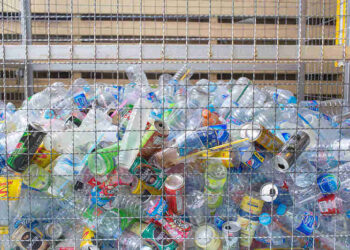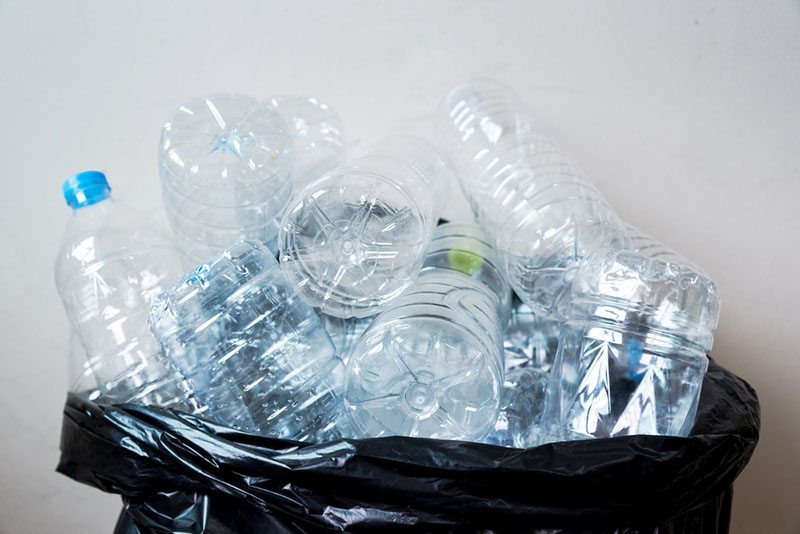






Major lapses in self-reporting and inspections have left an incomplete record of how much recycling happens across New York state, according to Comptroller Thomas DiNapoli.
A report from his office found that between January 2021 and December 2023, 32% of the 1,065 recyclables handling and recovery facility (RHRF) reports the state Department of Environmental Conservation (DEC) should have received didn’t come in. New York’s nearly 400 statewide facilities are required to submit reports every year.
The report found nearly two-third of submitted reports were incomplete, omitting either total material tonnage received, residue rate or recyclable tonnage. Some reports didn’t tabulate how much waste was disposed of rather than recycled.
Auditors found many reports to either be inaccurate or lack support for the claims made:
- 21% of total materials reports were accurate and supported by adequate documentation
- 15% of recyclable materials were accurate and supported
- 9% of residue reports were accurate and supported
Auditors also found that 35% of the state’s RHRF facilities were not inspected during the three-year period, and that several mistakes — such as inaccurate date reporting and incorrect facility classifications — were found in those inspections that were submitted
“Reliable recycling data is essential to understanding how much waste is being diverted from landfills and incinerators through recycling,” DiNapoli said. “If recycling data is incomplete or inaccurate, the state can’t effectively evaluate whether recycling efforts are working or track their impact in reducing waste and its environmental impact.”
The comptroller’s office called upon the DEC to make several changes. Among them, the report said the DEC should create procedures to determine the accuracy of reported figures and require staff to follow up when data points are left blank (as the residue rates were on 60% of the annual reports). The report also calls upon the DEC to develop procedures to guide inspectors and document the work they do.
A DEC response said that the office generally accepts the audit’s findings, and it will work to develop a web-based facility interface for more accurate reporting and data transfer. But the DEC claimed some reporting deficiencies were overstated.
The state uses this information to calculate greenhouse gas emissions, among other functions. The DEC claims about 12% of the state’s total emissions come from solid waste, but the report said that amid inadequate reporting and record-keeping, that number is likely higher.
The DEC has set a goal of an 85% reduction in waste sent to landfills or combustion facilities by 2050. Despite 97% of the state’s homes having access to recycling, the state only has a recycling rate of around 15%, according to the SUNY College of Environmental Science and Forestry in Syracuse.
A proposed extended producer responsibility bill in the state, the Packaging Reduction and Recycling Infrastructure Act, would require companies with a gross revenue of at least $5 million to develop a packaging reduction and recycling plan, while also helping fund municipal recycling programs. That bill has not been passed through three legislative sessions; the state Senate has passed it, but it hasn’t been brought up for vote in the state Assembly.
This is not the first recycling-related issue within the Empire State this year. Earlier this summer, the MTA Office of the Inspector General found that haulers working with New York City Transit mishandled hundreds of thousands of dollars’ worth of recyclables in recent years.